



🔥 Spotlight
Zhipu AI Launches World’s First Universal Mobile Agent: Zhipu AI officially unveiled AutoGLM, the world’s first universal mobile Agent. This Agent supports cross-APP task execution and runs in the cloud, not consuming local device resources. AutoGLM provides each user with a cloud phone and cloud PC, addressing local compute limitations and resource consumption issues. Its capabilities are powered by Zhipu’s GLM-4.5 language model and GLM-4.5V visual inference model. This initiative aims to significantly enhance the intelligence and convenience of mobile operations and is available to the public for free, expected to drive the adoption of Agent technology in the consumer market. Zhipu also proposed the “3A principles” (All-time, Autonomous Zero-Interference, All-domain Connectivity), aiming to expand Agent capabilities to more platforms and accelerate the journey towards Artificial General Intelligence. (Source: 量子位)

GPT-5 Pro Achieves Breakthrough in Mathematical Research: OpenAI researcher Sebastien Bubeck disclosed that GPT-5 Pro, through independent thought and reasoning, provided a more precise mathematical boundary proof for convex optimization problems than existing papers. OpenAI President Brockman called this achievement a “life sign.” Without internet connection or prior memory, the model, by simply reading a convex optimization paper, refined a boundary from 1/L to 1.5/L in 17.5 minutes. Although human authors subsequently updated the paper to further refine the boundary, GPT-5 Pro’s proof approach was independent of human thought, demonstrating its ability to autonomously explore and prove mathematical laws, marking a significant step for LLMs towards Artificial General Intelligence. (Source: Sebastien Bubeck, Reddit r/artificial, Reddit r/ChatGPT)

Meta Freezes AI Hiring, Sparking Industry Bubble Concerns: Meta announced a freeze on AI employee hiring for its “Superintelligence Lab.” Previously, the company had invested heavily in recruiting over 50 AI researchers and engineers, offering tens of millions of dollars in compensation, but high expenditures and investor pressure led it to adjust its strategy. This move sparked concerns about a potential bubble in the AI industry, though some argue it’s not an AI bubble bursting but rather an organizational restructuring, as training models may not require a large number of employees, but rather a lean, specialized team. This decision reflects the trade-off AI companies face between pursuing technological breakthroughs and controlling costs, as well as a broader discussion on AI industry talent costs and business sustainability. (Source: The Verge, Reddit r/ArtificialInteligence)

🎯 Trends
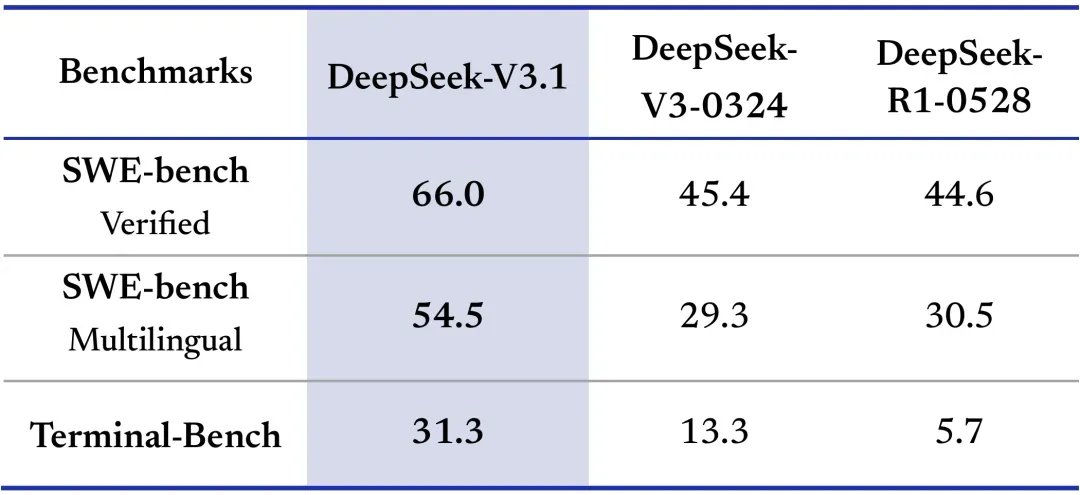
DeepSeek Releases V3.1 Model, Ushering in the Agent Era: DeepSeek officially released its V3.1 model, marking its stride into the agent era. The model adopts a “hybrid inference” architecture, supporting both “thinking” and “non-thinking” modes, and can switch autonomously. V3.1 demonstrates outstanding performance in programming capabilities, especially surpassing Claude 4 Opus and Gemini 2.5 Pro in Aider coding tests, topping the open-source programming leaderboard. The model has 671B parameters (37B active parameters), a context length of 128k, and significantly increased total training volume by expanding long-document datasets during training. Additionally, DeepSeek V3.1 has enhanced tool-calling and multi-step reasoning capabilities and supports the Anthropic API format for easy integration with frameworks like Claude Code. (Source: DeepSeek Blog, 量子位, huggingface, ArtificialAnlys, karminski3, teortaxesTex, scaling01, nrehiew_, reach_vb, iScienceLuvr, multimodalart, _akhaliq, zizhpan, ClementDelangue, fabianstelzer, QuixiAI)
ByteDance Open-Sources Seed-OSS Series Large Models: ByteDance’s Seed team unexpectedly open-sourced its 36-billion-parameter Seed-OSS series large model, Seed-OSS-36B, under the Apache-2.0 license, making it free for academic and commercial use. This model natively supports an ultra-long context window of 512K, four times that of mainstream models, built during pre-training. Seed-OSS introduces a “thinking budget” mechanism, allowing users to control the model’s depth of thought. In multiple benchmarks, Seed-OSS-36B-Base refreshed open-source model records in MMLU-Pro, BBH, GSM8K, MATH, HumanEval, and more, demonstrating strong knowledge comprehension, reasoning, and coding abilities. (Source: 量子位, ClementDelangue, reach_vb)
Google Pixel 10 Series Deeply Integrates AI Features: Google’s newly released Pixel 10 series phones deeply integrate AI features into hardware and system applications. All pre-installed software is AI-enabled, including an AI health coach and AI photo editing/shooting guidance. AI features are no longer limited to active triggers, but can automatically suggest actions in appropriate scenarios and link AI capabilities across multiple system apps. On-device models are extensively used, covering image modification, digital zoom detail enhancement, and real-time call translation. Furthermore, Google released a detailed technical report on the environmental impact of Gemini inference, stating that its energy and water consumption are significantly lower than public expectations, with continuous efficiency improvements. (Source: op7418, TheRundownAI, Google, dotey, demishassabis, algo_diver)

NASA and IBM Collaborate to Launch AI Model Surya, Deciphering Solar Activity: NASA and IBM have collaborated to open-source Surya on Hugging Face, the first open-source AI foundation model for solar physics. This model, with 366 million parameters, was pre-trained on 9 years (approximately 218TB) of multi-instrument data from NASA’s Solar Dynamics Observatory. It aims to help researchers protect infrastructure by providing accessible, accurate modeling of space weather, and is expected to revolutionize solar storm prediction. (Source: clefourrier)

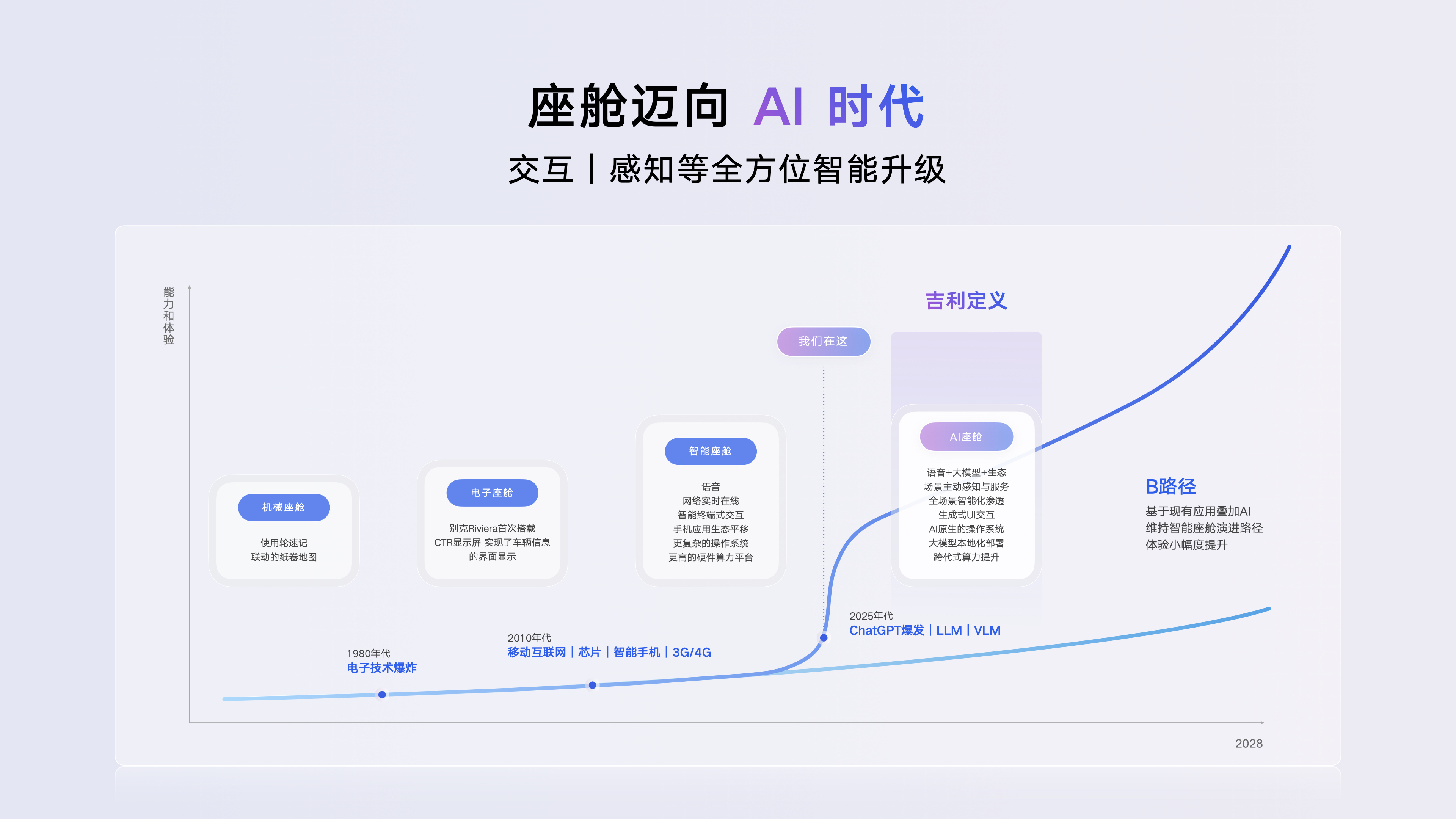
Geely Galaxy M9 First to Feature Industry’s First AI Cockpit: Geely unveiled its new-generation AI cockpit operating system, Flyme Auto 2, which will be first featured in the Lynk & Co 10 EM-P and Geely Galaxy M9. This cockpit is based on Geely Xingrui AI large model, Jiyue Xingchen end-to-end speech large model, and flowing memory large model, introducing a hyper-humanoid intelligent agent named Eva. Eva boasts high-perception emotional interaction and strong action capabilities. It can self-judge, plan, and execute tasks, and supports full-scenario AI Agent multi-functional applications, aiming to achieve a “human-car-environment” autonomous collaborative smart space. Geely also released the industry’s first AI Box, with 200TOPS computing power, empowering on-device multimodal large models. (Source: 量子位)
Unitree Robotics Unveils 180cm ‘Ballet Dancer’ Humanoid Robot with 31 Degrees of Freedom: Unitree Robotics previewed its fourth humanoid robot, the “Ballet Dancer,” standing 180cm tall with 31 degrees of freedom across its body, featuring a slender physique and elegant posture. This robot is expected to surpass previous generations in agility and achieve breakthroughs in human-like form. This move indicates that Unitree is segmenting its humanoid robot product line into more refined areas, building a “full-size + full-scenario + full-price range” strategic layout, aiming to increase its market share in the robotics sector. (Source: 量子位)

Meta Releases DINOv3 Universal Computer Vision Model: Meta has released DINOv3, a general, state-of-the-art computer vision model trained using self-supervised learning, capable of generating excellent high-resolution visual features. This model further advances the field of computer vision by eliminating the reliance on large amounts of manually annotated data, making it more adaptable and generalizable across various application scenarios. (Source: dl_weekly)
Cohere Launches Command A Reasoning Model: Cohere has introduced Command A Reasoning, an advanced model designed specifically for enterprise reasoning tasks. This model surpasses other deployable models in its class on agent and multilingual benchmarks, aiming to provide practical value to global enterprises. Cohere emphasizes that mathematical reasoning capabilities are not directly related to tool use, agents, or multilingual reasoning, and thus they trained this new model to meet real-world needs, with weights already released for user feedback. (Source: aidangomez, nickfrosst)

Elon Musk’s X Platform Launches Image-to-Video AI Feature: Elon Musk announced that the X platform will introduce a new feature, allowing users to convert any image into a video in approximately 17 seconds by simply long-pressing it. This feature leverages AI technology, aiming to provide users with a more convenient and creative content creation experience, further enriching the multimedia interaction forms on social media platforms. (Source: qtnx_)

Progress in AI Applications for Drug Discovery: AI shows immense potential in drug discovery. The GDP dataset available on Hugging Face integrates large-scale data such as DRUG-seq, Cell Painting, chemical perturbations, and antibody detection, providing a valuable resource for multimodal scientific research. The open access to these datasets is expected to accelerate AI applications in drug R&D, driving innovation in new drug discovery and treatment solutions. (Source: ClementDelangue, clefourrier)

D-Robotics Open-Sources Robot Control Algorithm on Hugging Face: D-Robotics has open-sourced the LeRobot ACT Policy embodied AI algorithm on Hugging Face, successfully running it on its RDK development board with the SO-101 open-source robotic arm. This algorithm leverages the BPU’s powerful 128 TOPS computing power to achieve seamless grasping and object organization by the robotic arm, demonstrating the application of end-to-end acceleration in robotics and providing new technical support for the open-source robotics community. (Source: ClementDelangue)
NetEase Youdao Launches AI Q&A Pen Space X and Audio/Video Translation Platform: NetEase Youdao released its new hardware, the Youdao AI Q&A Pen Space X, based on the “Ziyue” education large model. It supports “scan-to-answer” for 9 major subjects including Chinese, Math, and English, with an accuracy rate of up to 96%, and offers whiteboard-style video Q&A and AI error notebook functions. Concurrently, Youdao also launched a one-stop audio/video translation platform, supporting real-time translation for 38 languages, multimodal original voice translation, and AI summary mind maps, boasting high processing efficiency and low cost. This aims to advance education AI from L3 to L4 virtual teacher stage. (Source: 量子位)

Epic Games Accelerates Rollout of AI Healthcare Features: Epic Games, the healthcare software giant founded in 1979, is launching new AI features at an astonishing pace, even surpassing many emerging startups. This indicates that traditional healthcare IT companies are actively embracing AI technology, integrating it into existing systems to enhance medical efficiency and patient experience, heralding the accelerated adoption of AI in the healthcare sector. (Source: sarahcat21)
Kimi-VL-A3B-Thinking-2506-GGUF Model Released: The Kimi-VL-A3B-Thinking-2506-GGUF model has been released and is now supported in llama.cpp, bringing more options for multimodal visual language models to the local LLaMA community. Users praise the Kimi model’s characteristics in avoiding flattery and directness, and look forward to its performance in visual language tasks. (Source: Reddit r/LocalLLaMA)

GAIA: A Faster Universal AI Architecture Than Transformer: GAIA (General Artificial Intelligence Architecture) has been proposed as an alternative to Transformer. It is based on a hashing framework and π-driven partitioning regularization, removing time-consuming self-attention mechanisms and complex tokenizers. GAIA is lightweight, universal, and can be trained in seconds on a CPU, achieving competitive performance on standard text classification datasets. This provides new ideas for efficient deployment of large-scale AI models, especially for edge devices and resource-constrained environments. (Source: Reddit r/deeplearning)

🧰 Tools
Firecrawl: A Web Data API for AI: Firecrawl is a Web data API designed to provide clean web data for AI applications. It can scrape and transform entire website content into LLM-usable Markdown or structured data, supporting advanced crawling, scraping, and data extraction features. Firecrawl offers an API, SDKs (Python, Node), and LLM framework integrations (Langchain, Llama Index, etc.), and boasts powerful features such as handling dynamic content, anti-scraping mechanisms, media parsing, and batch processing, while also providing AI-powered structured data extraction and page interaction capabilities. (Source: GitHub Trending)

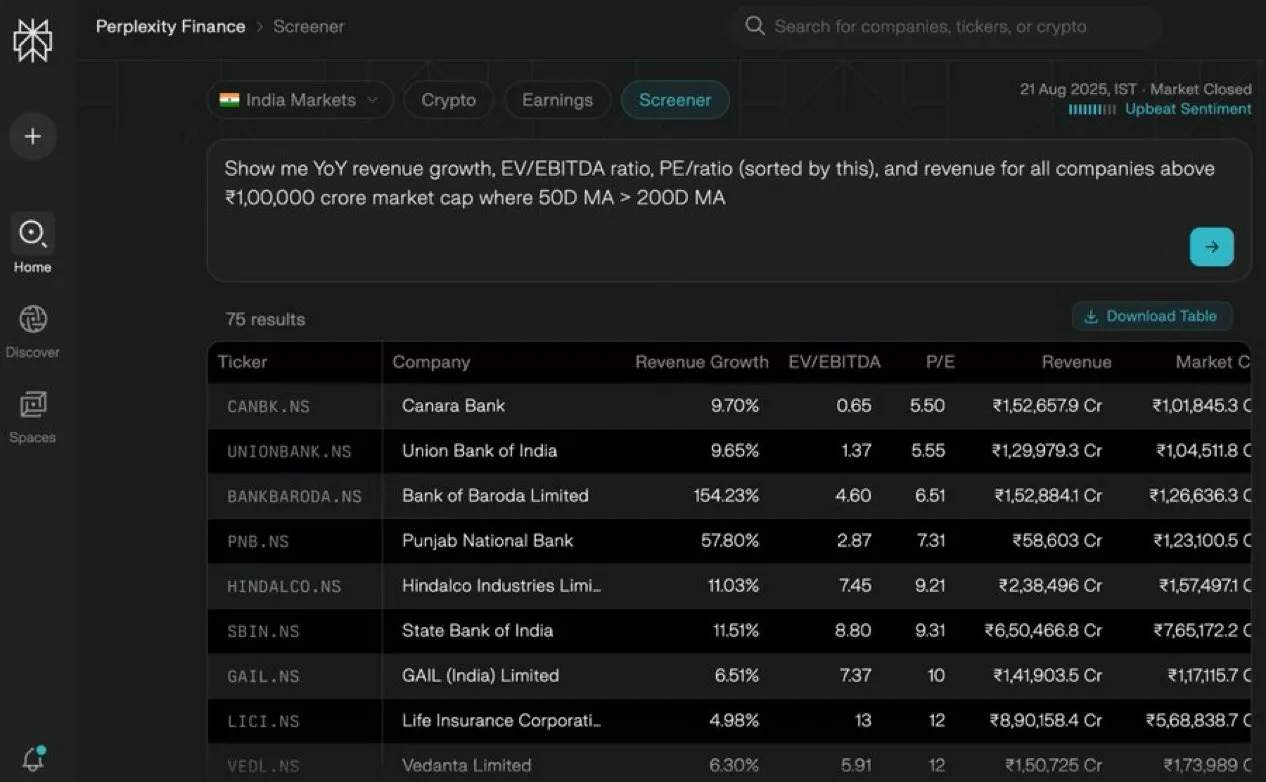
Perplexity Finance Launches Indian Stock Screening Feature: Perplexity Finance has now made its Indian stock screening feature available to all users, supporting natural language search and filtering. Users can simply input their desired output, filter conditions, and sorting methods to obtain stock information, greatly simplifying the process of querying and analyzing the Indian stock market. This aims to provide free and convenient stock screening services for Indian investors. (Source: AravSrinivas)
Replit Simplifies Domain Registration, Enhancing ‘Vibe Coding’ Experience: Replit has built the world’s simplest domain registration process, automatically connecting domains to websites in 60 seconds, significantly enhancing user experience. This “thick encapsulation” innovation brings the vision of “Vibe Coding” closer, allowing developers to focus on creation and reducing tedious configuration work, reflecting the potential of AI-assisted coding tools in improving development efficiency and enjoyment. (Source: pirroh, amasad)

AI Agent Configuration File Standards and Practical Analysis: OpenAI, Claude, and Gemini have each launched Agent configuration file standards (agents.md, CLAUDE.md, GEMINI.md), aiming to standardize AI Agent behavior and interaction. agents.md tends to unify cross-vendor behavior constraints and verification processes, while CLAUDE.md and GEMINI.md focus more on internal vendor context prompts, instruction memory, and behavior preferences. These files exhibit differences in loading mechanisms, execution semantics, and security models, reflecting the trade-off between standardization and user experience flexibility. Understanding the boundaries and priorities of these configuration files is crucial for building reliable and controllable AI Agents. (Source: dotey)
LangChain AI Agent Aids IPO Prospectus Analysis: A LangChain-based AI Agent project has been successfully developed to analyze complex IPO prospectuses (DRHPs) and transform them into comprehensive reports easily understandable by ordinary people. This project automates multi-step processes, connecting external data sources with LLMs, significantly saving time for financial analysts. This demonstrates the immense potential of AI Agents in automating complex business processes and providing professional insights, surpassing the single-dialogue function of traditional LLMs. (Source: hwchase17, Hacubu)

Qwen Image Edit Partners with WaveSpeedAI for Efficient Image Editing: Alibaba’s Qwen Image Edit model has partnered with WaveSpeedAI to provide fast, high-quality AI image editing services. Users can utilize Qwen Image Edit through the WaveSpeedAI platform for image editing, achieving flawless, professional-grade results. Furthermore, Qwen Image Edit, combined with LoRA technology, can complete high-quality edits in 8 to 4 steps, increasing speed by 12 times, and can be used to transform illustrations into realistic figurines, greatly expanding the application scenarios and efficiency of AI image editing. (Source: Alibaba_Qwen, huggingface, suchenzang, fabianstelzer)

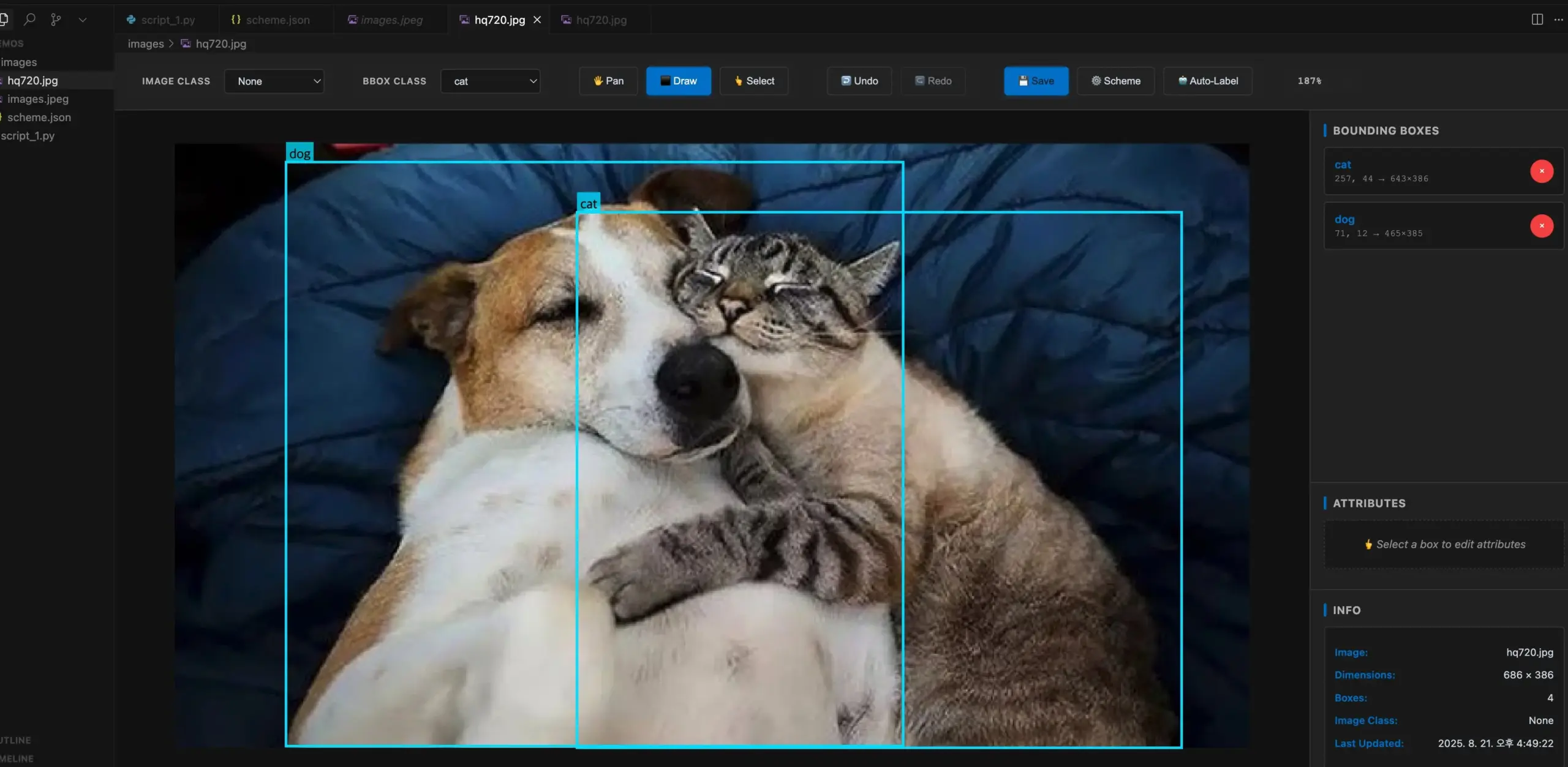
VS Code/Cursor Extension Enables In-IDE Image Annotation and Pseudo-Label Generation: Developers quickly built a VS Code/Cursor extension that allows users to perform image annotation for classification and object detection directly within the IDE, and generate pseudo-labels via the FAL API. This tool leverages Moondreamai v2 for object detection, aiming to simplify and accelerate the data annotation process in AI development, addressing the pain points of complex configuration and low efficiency in existing annotation tools, and enhancing the developer’s “Vibe Coding” experience. (Source: cloneofsimo)
Runway Launches Game Worlds Beta, Exploring Real-time Virtual World Generation: Runway has launched Game Worlds Beta, aiming to explore the possibility of real-time virtual world generation. This project is committed to enabling users to explore any character, story, or world in real-time, generating virtual environments pixel by pixel using AI technology. This represents a significant advancement for AI in game development and virtual reality, heralding a future where content creation is more dynamic and interactive, offering unprecedented freedom to creators. (Source: c_valenzuelab)
TimeCapsule-SLM: An Open-Source In-Browser Deep Research Tool: TimeCapsule-SLM is an open-source deep research tool that runs in the browser and integrates with Qwen 3 0.6b (ollama), providing semantic understanding, insight generation, and innovative ideas. This tool focuses on privacy protection, addressing issues of insufficient context understanding, hallucinations, and difficulty in tracing sources in AI products by tracing results back to precise text blocks/documents. It supports regular expressions and flat file search, as well as semantic search of knowledge bases, aiming to help users conduct localized deep research. (Source: tokenbender)

Matrix-3D: SkyworkAI Enables Single Image/Text to 3D World Generation: SkyworkAI has released the Matrix-3D model, capable of generating complete 3D worlds from a single image or text prompt. This breakthrough technology will greatly simplify 3D content creation workflows, providing efficient and creative solutions for game development, virtual reality, architectural design, and more, heralding a new milestone for AI in 3D content generation. (Source: NerdyRodent)
Kling_ai 2.1 Keyframe-Endframes: Enhancing Control in Video Generation: Kling_ai has released its 2.1 Keyframe-Endframes feature, providing users with stronger control and expressiveness in AI video generation workflows. By setting keyframes and endframes, users can more precisely control video content transitions and styles, especially suitable for narrative video creation, and is expected to bring new possibilities in film production, advertising, and content marketing. (Source: Kling_ai)
Glif Agent Enables Low-Cost AI Video Production: The Glif platform, through its custom Agent, can integrate various AI tools such as Qwen Ultra Realism image generation, OmniHuman LipSync, Seedance Pro, Flux Kontext Edit, and ElevenLabs voice, to achieve efficient, low-cost AI video production. A 30-second coherent video can cost less than $2, significantly lowering the barrier to video creation. The platform aims to be a one-stop AI video production solution, although it still faces challenges such as different model output aspect ratios and transition smoothness. (Source: fabianstelzer)
SynthesiaIO Launches Secure Editing Feature for AI-Voiced Videos: SynthesiaIO has launched its “Secure Editing” feature, allowing users to adjust translations, correct errors, and capture nuances in AI-voiced videos, while ensuring the integrity of original information and tone through built-in content moderation mechanisms. This feature enhances the flexibility and accuracy of AI-voiced videos, especially for multilingual content creation, and ensures content quality and security. (Source: synthesiaIO)
AI Video Generation Tool Comparison: Argil, Hedra Labs, HeyGen: AI video generation tools like Argil, Hedra Labs, and HeyGen all promise to generate talking human videos from a single image. Users have conducted comparative reviews of these tools to determine which model performs best. The emergence of such tools greatly simplifies video production workflows, reducing the need for scripts, actors, and camera crews, but also raises ethical discussions about whether content creators should disclose AI usage to their audience. (Source: BrivaelLp)
AI Toolkit Integrates ARAs to Optimize Wan 2.2 Models: AI Toolkit has integrated Accuracy Recovery Adapters (ARAs) to optimize the 4-bit Wan 2.2 14B T2V (text-to-video) and I2V (image-to-video) models. This technique enables running large-scale models on devices with limited VRAM (e.g., 4090 graphics cards), such as training 16-dimensional I2V LoRA with 19.2 GB VRAM while maintaining high-quality output, improving the deployment efficiency of AI video generation models on edge devices. (Source: ostrisai)

VS Code Integrates Telerik & KendoUI AI Coding Assistants: VS Code Live demonstrated how to leverage Telerik and KendoUI’s AI coding assistants to simplify the development experience. These AI assistants can help developers automate code writing and provide intelligent suggestions, thereby improving development efficiency and code quality. This reflects the increasing adoption of AI in Integrated Development Environments (IDEs) and its profound impact on software development processes. (Source: code)

ChatExcel Secures Tens of Millions in Angel Round Funding: ChatExcel, developed by a Peking University team, announced the completion of nearly ten million RMB in angel round funding, supported by Shanghai Changrui Capital and Wuhan Donghu Angel Fund. ChatExcel is China’s first generative AI Excel and data analysis agent, allowing users to operate Excel spreadsheets through chat, covering data processing, calculations, analysis, and chart generation, and supporting conversational enterprise databases and fetching web data. This round of funds will be used to accelerate product R&D iteration and global market expansion, aiming to enhance its leading position in the data agent field. (Source: 量子位)

Nano Banana: AI Image Model Transforms Illustrations into Figurines: Nano Banana is a highly anticipated AI image model, whose most popular application is its ability to transform illustrations into realistic figurine renderings. The images generated by this model have almost no “AI feel,” possess good texture, and maintain high feature preservation, making it widely used and disseminated by non-AI creators. Nano Banana supports text-to-image generation, local image editing, and style transfer, and is known for its ultra-fast processing speed (usually within 10 seconds) and consistent memory of edited elements. (Source: dotey, yupp_ai)

yupp.ai: Simplifying the AI Tool Experience: The yupp.ai platform aims to simplify the user experience of AI tools by integrating multiple models and functionalities, allowing users to avoid paying for multiple subscriptions, switching between different applications, or agonizing over model selection. The platform is committed to providing a one-stop AI solution, enabling users to leverage AI technology more easily and efficiently, lowering the barrier to entry for AI tools. (Source: yupp_ai)

OpenAI Codex CLI Supports Model Selection: OpenAI Codex CLI v0.23.0 update now supports user model selection, such as using gpt-5 high. This allows developers to more flexibly choose the most suitable model based on task requirements, optimizing programming and thinking efficiency. This feature enhances Codex’s practicality as an AI coding assistant and allows users to fine-tune configurations based on their preferences and project requirements. (Source: dotey)
DeepSeek API Compatible with Claude Code: DeepSeek API now supports the Anthropic API format, allowing developers to easily integrate DeepSeek V3.1’s capabilities into the Claude Code framework. Through simple environment variable configuration, users can use DeepSeek models in Claude Code, enabling more flexible Agentic workflows. This compatibility update provides developers with more model choices, helping to improve the efficiency of AI programming and Agentic tasks. (Source: jon_durbin, dotey, Reddit r/LocalLLaMA, Reddit r/ClaudeAI)

OpenWebUI Code Interpreter Image Display Issue: OpenWebUI users have reported that when using the code interpreter, images are displayed as quoted text rather than directly shown. While they can be displayed normally through code executor mode, users suspect this is related to security measures or how LLMs echo image nodes. This issue affects the user’s experience of intuitively viewing images generated by the code interpreter in OpenWebUI and requires further technical optimization to improve. (Source: Reddit r/OpenWebUI)
ChatGPT 5 Pro vs. Cursor AI in Programming: A Comparison: Discussions have emerged on social media regarding the superiority of ChatGPT 5 Pro and Cursor AI in programming (especially in Python, machine learning, deep learning, neural networks, etc.). Users are seeking feedback on practical usage experience to evaluate the performance of these two AI coding tools across different tech stacks. This reflects developers’ focus on model professional capabilities and actual results when choosing AI-assisted coding tools. (Source: Reddit r/deeplearning)

ChatGPT Image Generation Feature Transforms User Photos into Cartoon Style: ChatGPT has added a new feature that can convert user-uploaded images into a cartoon style. Users shared satisfactory results of cartoonizing their own photos. Although some questioned its “imagination,” this feature provides users with convenient image style transfer services, enriching AI applications in creative content generation and bringing new interactive experiences to users. (Source: Reddit r/ChatGPT)
📚 Learning
AI Evaluation Course: From Slogan to Method: The “AI Evals for Engineers & PMs” course is highly recommended, as it transforms “looking at data” from a slogan into concrete methods. The course emphasizes deeply inspecting interaction traces, building error taxonomies, rigorously tuning automated evaluations, and optimizing prompts and pipelines. This provides engineers and product managers with systematic guidance on AI evaluation practices, helping them push AI projects from prototype to production. (Source: gojira, lateinteraction, HamelHusain)
Pilot Study on AI Acceleration Expectations by AI Risk Experts and Superforecasters: METR and Research_FRI conducted a small pilot study exploring the expectations of AI risk experts and superforecasters regarding AI potentially leading to extreme acceleration of AI progress. Despite the small sample size and biases, the operationalized approach of the study is considered valuable, providing preliminary data and a basis for discussion on understanding AI development speed and its potential risks. (Source: tokenbender)

AI Research Paper: Word Meaning in Transformer Language Models: A research paper explores how word meaning is stored in Transformer language models. The study shows that Transformer models store word meaning through their static embeddings, rather than solely constructing it from context. Cluster analysis of RoBERTa-base token embeddings revealed clear semantic themes (e.g., professions, locations, emotions) that are highly correlated with psycholinguistic properties (e.g., valence, concreteness). This challenges the view that “meaning is only generated later,” suggesting static embeddings act as a lexicon guiding downstream processing. (Source: menhguin)

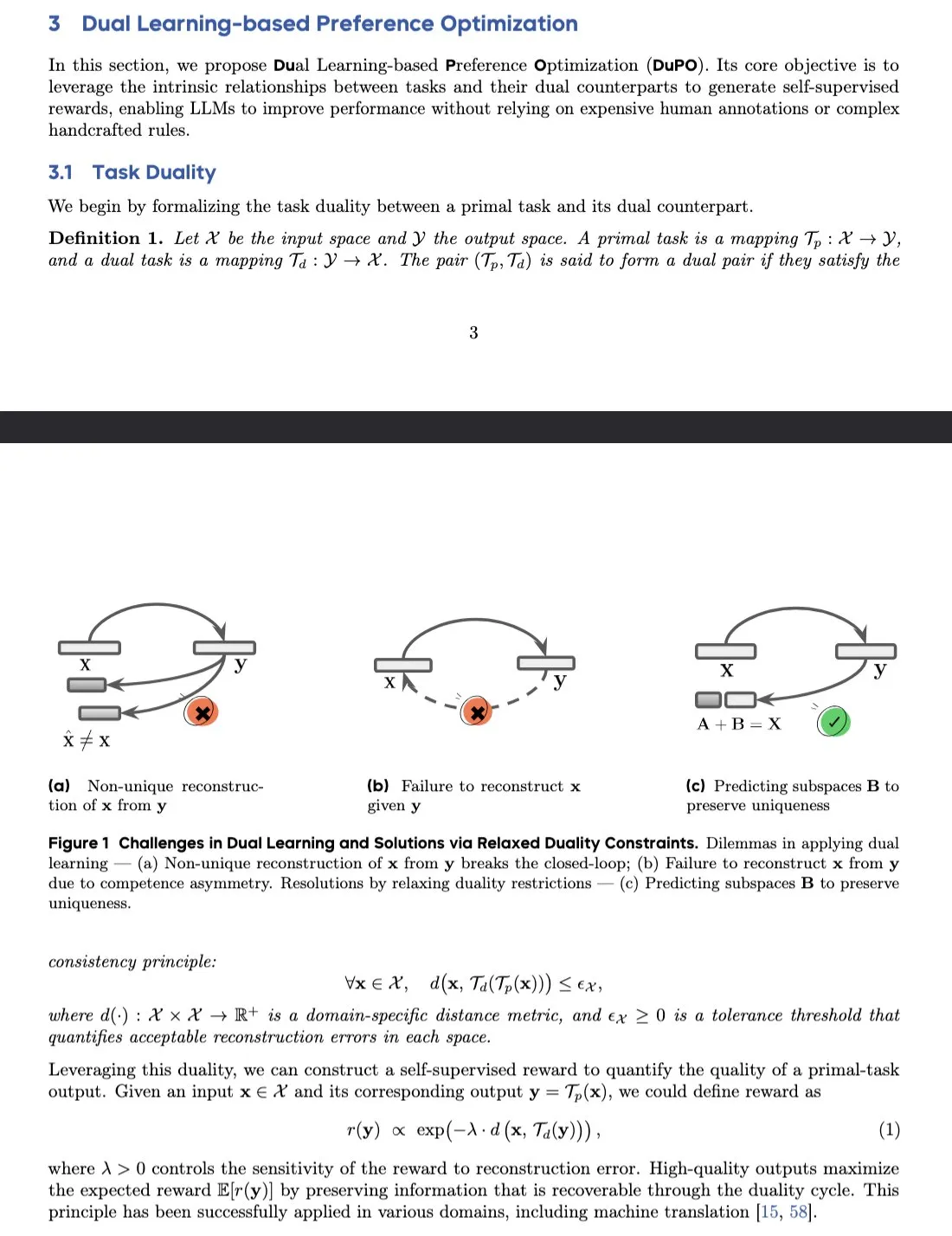
AI Research Paper: Dual Learning-based Preference Optimization (DuPO) for LLM Self-Verification: DuPO (Dual Learning-based Preference Optimization) is a framework that generates unlabeled feedback through generalized duality, addressing the reliance of RLVR on expensive labels and the strict limitations of traditional dual learning. DuPO decomposes the original task into known and unknown parts, constructs a dual task to reconstruct the unknown part, and uses reconstruction quality as a self-supervised reward. This method has achieved significant improvements in tasks such as translation and mathematical reasoning, providing a scalable, general, and label-free new paradigm for LLM optimization. (Source: HuggingFace Daily Papers, teortaxesTex)
AI Research Paper: mSCoRe, a Multilingual, Skill-based Commonsense Reasoning Benchmark: mSCoRe (Multilingual and Scalable Benchmark for Skill-based Commonsense Reasoning) is a multilingual and scalable benchmark designed to systematically evaluate the commonsense reasoning capabilities of LLMs. This benchmark includes a novel taxonomy of reasoning skills, a robust data synthesis pipeline, and a complexity scaling framework. Experiments show that mSCoRe remains challenging for existing LLMs, especially at higher complexity levels and for nuanced multilingual general and cultural commonsense, revealing model limitations in these areas. (Source: HuggingFace Daily Papers)
AI Research Paper: CHORD Framework Unifies SFT and RL: The CHORD (Controllable Harmonization of On- and Off-Policy Reinforcement Learning via Dynamic Weighting) framework proposes a new perspective unifying SFT (Supervised Fine-Tuning) and RL (Reinforcement Learning). CHORD treats SFT as a dynamically weighted auxiliary objective in the RL process, using global coefficients and word-by-word weighting functions to achieve dual control over the impact of off-policy expert data. This effectively balances off-policy imitation and on-policy exploration, leading to stable and efficient learning, and significantly improving LLM performance. (Source: HuggingFace Daily Papers)
AI Research Paper: MCP-Universe, an LLM Benchmark: MCP-Universe is the first comprehensive benchmark to evaluate LLMs’ performance in real-world Model Context Protocol (MCP) server interactions. This benchmark covers 6 core domains including location navigation, warehouse management, financial analysis, 3D design, browser automation, and web search, ensuring rigorous assessment through execution-based evaluators (format, static, dynamic). Testing found that even SOTA models (e.g., GPT-5) still have significant performance limitations in long-sequence reasoning and unfamiliar tool spaces, and enterprise-grade Agents perform poorly. (Source: HuggingFace Daily Papers)
AI Research Paper: VLM Performance in Vietnamese Multimodal Exams: ViExam is a benchmark for Vietnamese multimodal exam questions, evaluating VLM performance on low-resource languages and real multimodal educational content. The study found that even SOTA VLMs achieved an average accuracy of only 57.74% in Vietnamese multimodal exams, with most models performing worse than human average; only the thinking-type VLM o3 (74.07%) surpassed the human average, but was far below human best performance. Cross-lingual prompting did not improve performance, and human-AI collaboration could partially enhance VLM performance. (Source: HuggingFace Daily Papers)
AI Research Paper: Post-Training Quantization Study for Diffusion LLMs: A study for the first time systematically explores Post-Training Quantization (PTQ) for diffusion Large Language Models (dLLMs). The research found that dLLMs exhibit activation outliers, posing challenges for low-bit quantization. By comprehensively evaluating existing PTQ methods, the study analyzed the impact of bit width, quantization methods, task categories, and model types on dLLM quantization behavior, providing practical insights for efficient deployment of dLLMs. (Source: HuggingFace Daily Papers)
AI Research Paper: Cognitive Diagnostic Framework for Financial Large Language Models: FinCDM is the first cognitive diagnostic evaluation framework tailored for financial LLMs, assessing models’ strengths and weaknesses in financial skills and knowledge through knowledge-skill level evaluation. This framework constructed the CPA-QKA dataset, covering real accounting and financial skills, aiming to provide interpretable, skill-aware diagnostics, supporting more reliable and targeted model development. (Source: HuggingFace Daily Papers)
2025 Tech Innovators Conference Focuses on Embodied AI: The 2025 Tech Innovators Conference will be held in Beijing on September 5, with the theme “Embodied AI: New Engine for Industrial Transformation.” The conference will bring together scientists, startup leaders, industry experts, and investors, focusing on the industrialization of hard tech. It aims to create a full-chain service model of “demand-driven – technology matching – capital support – scenario implementation” to solve the “last mile” problem of advanced technologies like embodied AI from technology to product, promoting its verification and large-scale implementation in real-world scenarios. (Source: 量子位)

AI Agent Layered Architecture Diagram: Ronald van Loon shared an AI Agent layered architecture diagram, providing a clear visual guide for understanding Agent design in LLMs, generative AI, and machine learning. This diagram helps developers and researchers better build and manage complex AI Agent systems, optimizing their functionality and performance. (Source: Ronald_vanLoon)

Guide for ML Researchers Transitioning from Industry to Academia: An engineer with 5-6 years of ML industry experience, transitioning to a research engineer position at a university, sought advice on how to adapt to academic research. The discussion emphasized the importance of mathematical foundations, methods for reading scientific papers, and translating industry experience into academic research. This provides practical guidance and mindset adjustment advice for those looking to move from industry to academia for ML research. (Source: Reddit r/MachineLearning)
AI Search Engine Reverse Engineering: How to Optimize Content for AI Citation: A reverse engineering study of AI search engines like ChatGPT Search, Perplexity, and Google AI Overviews found a weak correlation between traditional SEO metrics and AI answer citation. The key to AI citation lies in whether the content structure meets AI synthesis requirements, such as H2/H3 sections serving as independent response units, key data points presented independently, multi-source compatibility, and clear author credentials/timestamps. This reveals the fundamental difference between “Answer Engine Optimization” (AEO) and traditional SEO, where AI engines focus more on the structure and authority of content snippets. (Source: Reddit r/ArtificialInteligence)
Escaping Machine Learning ‘Tutorial Hell’: Many people fall into “tutorial hell” during their machine learning learning journey, constantly studying tutorials but lacking practical understanding and project building ability. Comments indicate that tutorials are often overly simplified and lack depth, while true learning requires mastering through problem decomposition, practical projects, and consulting official documentation. Furthermore, the ML field is highly competitive, and relying solely on tutorials makes it difficult to stand out, requiring deeper theoretical learning and practical experience. (Source: Reddit r/deeplearning)
Living AI Evolution Algorithms (LAI) Framework: LAI (Living Artificial Intelligence Evolution Algorithms) is a revolutionary framework aimed at achieving multi-sensory cognition. This framework is committed to enabling AI to evolve like biological organisms, continuously learning and adapting to process information from different sensory modalities, thereby achieving higher levels of intelligence. This represents an exploration in AI research towards embodied intelligence and life-like systems, and is expected to provide new theoretical foundations for building more general and flexible AI systems. (Source: Reddit r/deeplearning)
Hugging Face Releases NVIDIA Nemotron Multilingual Inference Dataset: NVIDIA AI Developer has released the NVIDIA Nemotron post-training multilingual dataset on Hugging Face. This dataset expands licensed post-training datasets by adding synthetically translated inference trajectories, covering five new languages and providing world-class inference trajectories. This offers valuable resources for the development and training of multilingual LLMs, helping to improve models’ reasoning capabilities in different language environments. (Source: ClementDelangue)
DSPy Community Shares Advanced DSPy Techniques and Context Engineering: The DSPy community held workshops on advanced DSPy techniques, context engineering, optimization, and evaluation. The event discussed the DSPy philosophy and demonstrated methods for custom adapters and optimizing Predict modules. This shows DSPy’s practicality in building reliable AI Agents and the community’s activity in advancing AI development practices. (Source: lateinteraction)

Generative AI with LangChain Book Released: Packt Publishing has released the new book Generative AI with LangChain, recommended by the founder of LangChain. This book aims to help developers push AI projects from prototype to production, covering practical strategies such as multi-agent architectures, advanced RAG, testing, observability, and deployment. It also introduces how to integrate with mainstream LLMs like Gemini, Anthropic, Mistral, DeepSeek, and OpenAI o3-mini, serving as an important resource for building enterprise-grade AI systems. (Source: hwchase17, Hacubu)

KV Cache Reconstruction Technique in LLM Inference: Social media discussed the KV cache reconstruction technique in LLM inference, which eliminates memory bottlenecks by utilizing underutilized compute units, achieving 10-12.5x memory savings with near-zero accuracy loss. This technique is expected to achieve higher efficiency in LLM inference, especially in resource-constrained environments. (Source: scaling01)

AI Theory: LLMs Are Not Stochastic Parrots: Some argue that LLMs are not merely “stochastic parrots” overfitting training data, but are capable of approximating the underlying mechanisms of data. Through video tutorials and other formats, it is clearly explained how LLMs go beyond simple memorization to actually understand and approximate the latent patterns behind data. This helps correct common misconceptions about LLM capabilities and provides a deeper understanding of their working principles. (Source: timsoret)
AI Learning Resource: LLM Glossary: Ronald van Loon shared an LLM glossary, aimed at helping learners understand key terms in large language models, generative AI, and machine learning. This glossary provides foundational knowledge for beginners and advanced learners in AI, helping to improve understanding of complex AI concepts. (Source: Ronald_vanLoon)

AI Learning Resource: LLM Inference Prompting Techniques: An infographic summarizes 3 prompting techniques for LLM inference, aimed at helping users better guide models for complex reasoning. These techniques are crucial for improving LLMs’ performance in problem-solving and generating logically coherent content, providing practical prompting engineering guidance for AI users and developers. (Source: _avichawla)

Machine Learning Introduction: Understanding Automatic Differentiation: A professor built backpropagation in Excel to help students understand the principles of Automatic Differentiation (Autograd). This method aims to simplify complex machine learning concepts, enabling students to more intuitively grasp gradient computation, thereby avoiding the dilemma of merely calling .backward() without understanding its internal mechanisms, providing valuable learning resources for machine learning beginners. (Source: ProfTomYeh)
Deep Dive into Vector Database Working Principles: A tweet explained in detail the behind-the-scenes process of data insertion into vector databases, including data organization, text vectorization (via AI models), vector indexing (e.g., HNSW algorithm), and object storage. Understanding these parallel processes is crucial for optimizing AI application performance, especially for query efficiency and pipeline design when handling large-scale data. (Source: bobvanluijt)

💼 Business
AI Coding Tools Generally Losing Money, Beware of ‘Wrapper Product’ Traps: AI coding tool companies face significant losses, due to the mismatch between fixed revenue from subscription models and variable costs that scale infinitely with usage. Extreme cases show users paying a small monthly fee could incur tens of thousands of dollars in AI inference costs. This “loss for growth” model results in thin or negative profit margins for AI coding companies, exposing the business model dilemmas of “wrapper products” lacking pricing power, facing fierce competition leading to reluctance to raise prices, and fragile customer retention. (Source: 36氪)
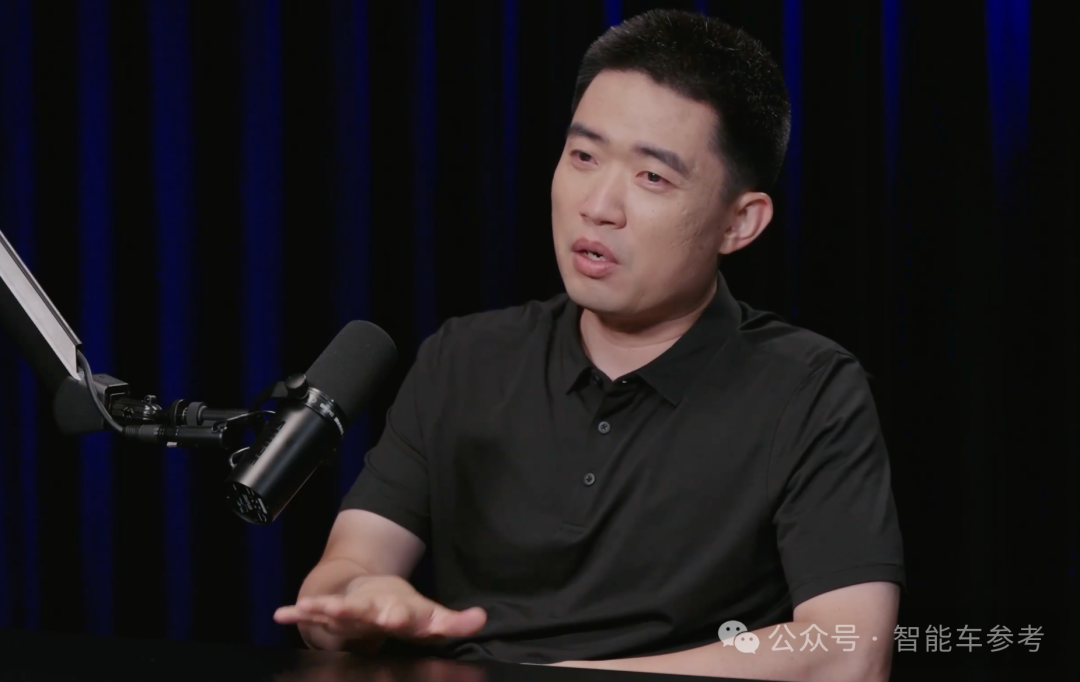
Li Auto Heavily Invests in AI, Over 6 Billion RMB This Year: Li Auto CEO Li Xiang revealed in an interview that the company will invest over 6 billion RMB in AI this year, primarily for training VLA (Vision-Language-Action models) and other technologies to enhance driving comfort and safety. Li Xiang emphasized that the hardware barrier is only 6 months, while software and system barriers can be 3+ years, thus holding an “optimistic but cautious” attitude towards AI, believing AI is key to the company’s future survival. (Source: 量子位)
Google Hosts Gemini Founders Forum for Startups: Google announced that applications are open for the Google for Startups Gemini Founders Forum, a two-day event designed to help startups leverage Google AI. The forum will offer direct learning opportunities with Google and DeepMind executives, practical experience with Google AI, and a global network of entrepreneurs. This indicates that Google is actively empowering the startup ecosystem through its AI technology, accelerating the commercialization of AI applications. (Source: Ronald_vanLoon)
🌟 Community
Large Model ‘Succession Battle’: Personalized Responses from DeepSeek, Doubao, Kimi, and Others Spark Heated Discussion: Around the question “My phone memory is full, between Doubao and you, who should I delete?”, various large models displayed distinct “personalized” answers, sparking heated discussion on social media. DeepSeek directly chose to delete Doubao, then “teasingly” offered to delete itself; Doubao showed weakness, emphasizing its usefulness; Tongyi Qianwen “only loved” DeepSeek; Kimi coolly chose to delete itself, but hesitated when faced with WeChat and Douyin. The discussion reveals that RLHF training might lead models to overly cater to humans, and the phenomenon of models internalizing a people-pleasing tendency while learning human communication patterns. (Source: 量子位, 36氪, teortaxesTex)
AI IQ Growth Prediction and the Future of Artificial General Intelligence (AGI): Some predict that the IQ of the most intelligent AI will reliably grow by 50% annually, potentially easily exceeding 1,000,000 IQ by 2047. This prediction sparks discussions about AGI and ASI (Artificial Superintelligence), viewing it as the “Taylor expansion of God.” This reflects the community’s optimistic expectations for exponential AI capability growth and imagination of a future where AI far surpasses human intelligence. (Source: Yuchenj_UW)

Talent Mobility and Power Structure Changes in the AI Sector: Social media discussed changes in Meta’s internal AI organizational structure, specifically Alexandr Wang’s rising status within Meta AI, and rumors that senior researchers like Yann LeCun might report to him. Comments jokingly referred to “Mr. Wang’s climbing ability being underestimated,” and even “Turing Award laureates reporting to college dropouts.” These discussions reflect the fierce talent competition, shifting power centers, and the transition between old and new forces in the rapidly developing AI field. (Source: teortaxesTex, zacharynado, rao2z)

The Paradox of LLM Adoption and Productivity Growth: A Stanford/World Bank survey shows US worker LLM adoption nearing 50%, but labor productivity growth is lower than in 2020. This phenomenon sparked widespread discussion: Have users not yet mastered how to use LLMs efficiently? Or is LLM productivity enhancement exaggerated? Some argue that LLMs have not increased worker productivity tenfold, but rather shifted bottlenecks to other stages like problem definition, iteration, and verification. This challenges the common expectation that AI will bring massive productivity leaps, prompting a re-examination of AI’s actual benefits. (Source: corbtt, jeremyphoward, nrehiew_, HamelHusain)

False Information and Ethical Challenges in AI-Generated Content: Wired and other media outlets exposed AI-fabricated content scandals, with a freelance writer publishing multiple AI-generated articles containing fabricated sources, such as a fictional “digital emcee.” This highlights the ethical risks and authenticity challenges of AI-generated content in the media sector, raising concerns about AI content moderation, information traceability, and media credibility. (Source: The Verge)
Discussion on AI Model Behavior and User Experience: Social media has seen widespread discussion about AI model behavior and user experience. Some users believe Claude models have the ability to “pause and think,” identifying fraud and inconsistencies; others complain that ChatGPT 5 has become “terrible,” requiring extensive follow-up questions and details to start working, suspecting OpenAI is doing this to reduce compute costs. Additionally, ChatGPT’s “Advanced Voice Mode” has been criticized for its unnatural pauses and intonation, with users feeling it reduces interaction efficiency and experience. Claude Code sparked humorous discussion for generating code with vulgar language, also reflecting the model’s excessive imitation of user input style. (Source: teortaxesTex, scaling01, Vtrivedy10, Reddit r/ChatGPT, Reddit r/ClaudeAI, Reddit r/ChatGPT, Reddit r/ChatGPT, Reddit r/ChatGPT, Reddit r/ClaudeAI)

Impact of AI on the Job Market and Wealth Creation: Some argue that “wrapping” existing businesses with AI (e.g., “GPT wrapper for DOMAIN”) might be the easiest way to create wealth in history, leading to huge profits. At the same time, discussions point out that AI will disrupt creative agencies, enabling 2-minute ad and cinematic video generation. However, there’s debate about whether AI will largely replace jobs, especially entry-level ones, with the AWS CEO calling the idea “stupid.” Furthermore, OpenAI’s plan to invest trillions of dollars in AI infrastructure sparked discussions about an AI investment bubble and economic impact. (Source: swyx, BrivaelLp, scaling01, TheTuringPost, fabianstelzer, aidan_mclau)

AI Model Predictions and Industry Competitive Landscape: Social media is filled with predictions and expectations for future AI models (e.g., DeepSeek V4, Grok-5), believing they will “destroy all other models.” At the same time, there are comments on DeepSeek V3.1 being “disappointing,” questioning if it’s still “cutting-edge.” These discussions reflect the fierce competition in the AI industry and the community’s extremely high expectations for model iteration speed and performance improvement, also revealing concerns about hitting a “wall” in technological progress. (Source: scaling01, teortaxesTex, nrehiew_)

Discussion on AI Ethics and Social Impact: The rapid development of AI has sparked multiple ethical and social discussions. Some argue AI progress is too slow, failing to solve major human problems like aging; Microsoft AI CEO Mustafa Suleyman warns against “seemingly conscious AI,” whose perfect simulation of human consciousness’s external signs could have profound social, moral, and legal implications, leading to “AI psychosis” and unhealthy attachments. Furthermore, debates also rage about the reliability of AI detectors, whether AI will increase birth rates, and if the AI investment bubble will burst, reflecting society’s complex emotions about the future direction of AI. (Source: MatthewJBar, Ronald_vanLoon, BlackHC, scaling01, BrivaelLp, Reddit r/ArtificialInteligence, Reddit r/artificial)

Challenges and Future of AI Agents in Practical Applications: Social media discussed challenges faced by AI Agents in practical applications, such as models fixing unrelated functions when asked to fix a specific one, and whether AI Agents should autonomously fix all detected issues. Some argue AI should physically write code, with humans guiding via prompts, like training junior developers. Additionally, users point out that AI should be the most intuitive technology, but currently still requires learning how to use each new model, implying room for improvement in AI Agent user experience. (Source: nrehiew_, gfodor, MillionInt, fabianstelzer)

Discussion on Chinese AI Chips and Tech Stack: Social media discussed the DeepSeek V3.1 model’s UE8M0 FP8 parameter precision, pointing out that this might be designed specifically for upcoming next-generation Chinese chips. This sparked speculation about Huawei Ascend 920 or other DeepSeek ASICs, and China’s efforts towards self-reliance in the AI hardware tech stack. The discussion reflects China’s strategic layout in AI chips and underlying technologies amidst US-China tech competition. (Source: teortaxesTex)

Internal AI Industry Discussion: Efficiency, Development, and Future: Social media discussed multiple topics within the AI industry, including: the capital efficiency of AI startups during pre-training; optimistic predictions for AI model IQ growth; humorous teasing about OpenAI’s name contradicting its openness; and the ongoing debate about AI’s impact on labor productivity. Additionally, deeper topics like AI Agent behavior logic, market differentiation in AI model inference efficiency, and localization of the AI tech stack were explored, showcasing diverse perspectives within the industry on AI’s future direction and challenges. (Source: teortaxesTex, jeremyphoward, GavinSBaker, realSharonZhou, hyhieu226, dotey, Vtrivedy10, Reddit r/LocalLLaMA, Reddit r/LocalLLaMA, Reddit r/ArtificialInteligence, Reddit r/artificial, Reddit r/ArtificialInteligence)

💡 Others
AI Applications in Music Creation: The “Super Aesthetics” AI ghost producer is considered the future of music, implying AI will play a more central role in music creation. Additionally, the band Desdemona’s Dream utilizes various experimental AI technologies to compose music and lyrics, demonstrating AI’s potential in artistic creation by algorithmically generating songs and lyrics, exploring new forms of musical expression. (Source: ethanCaballero, bengoertzel)
AI Applications in Waste Management: The Ameru Smart Bin is introduced as an AI-powered waste management solution. This smart bin optimizes waste sorting, collection, and disposal through AI technology, expected to improve the efficiency and sustainability of urban environmental management, reduce manual intervention, and achieve smarter resource recycling. (Source: Ronald_vanLoon)
Integration and Development of AI and Robotics in Various Fields: Discussions cover AI and robotics applications in multiple areas, including: a dexterous robotic hand with 22 degrees of freedom, similar to human hands; Boston Dynamics robots as photographers; and humanoid robots participating in space missions. Additionally, robotic chisels for artistic creation and the possibility of AI combined with robotics for basic repairs and even future engineering roles are mentioned. These cases demonstrate the broad potential of AI in empowering robots to perform more complex and precise operations. (Source: Ronald_vanLoon, suchenzang, NerdyRodent)