



🔥 Focus
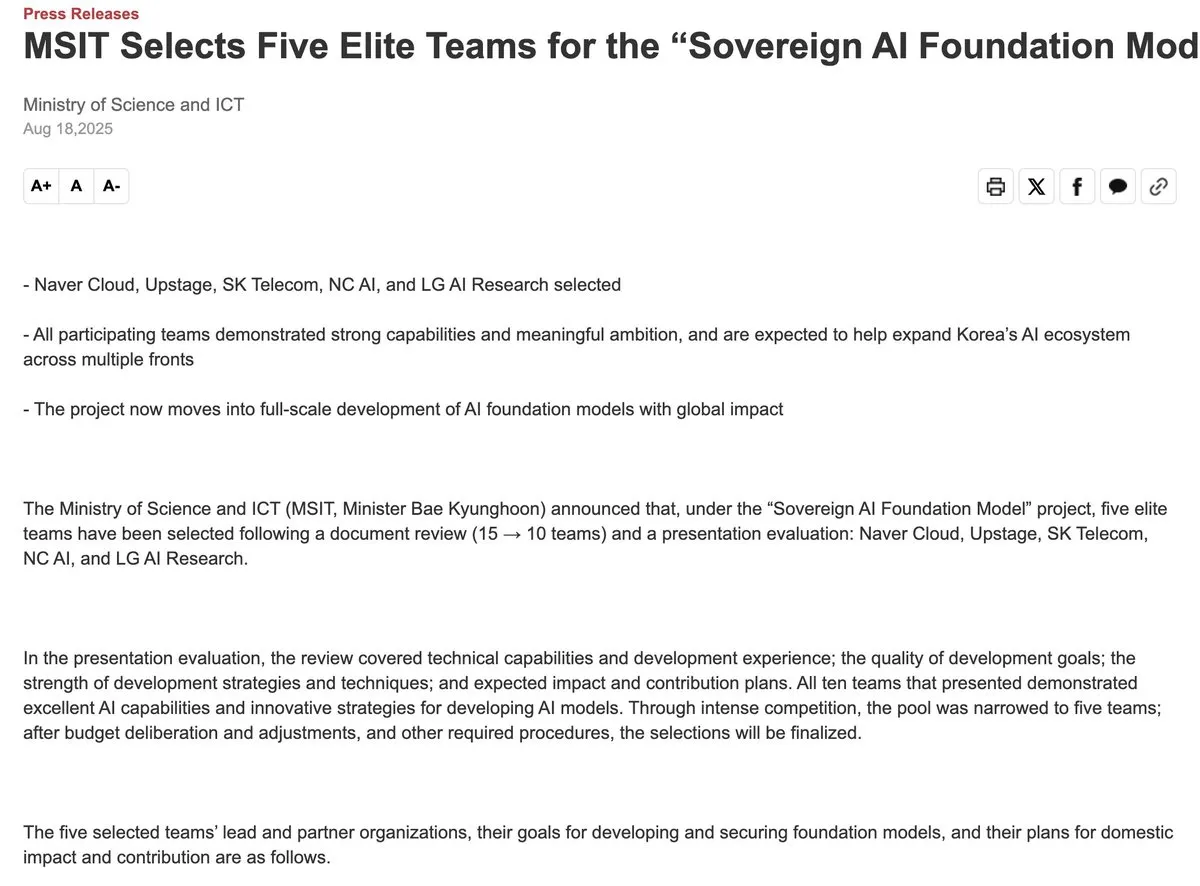
South Korea Launches $140 Million “Sovereign AI” Initiative to Build Local Ecosystem: South Korea’s Ministry of Science, in collaboration with five giants including SKT, LG, and Naver, is investing approximately $140 million to train local large models free from external control. Several open-source models have already been released, including SKT’s A(.)X-K1 (519B) and LG’s K-EXAONE (236B). The plan emphasizes “training from scratch” and “commercial openness,” aiming to provide computing power and data support to prevent the loss of European-style digital sovereignty and make South Korea a major player in the global AI landscape. This move is seen by the community as a landmark event in countering the monopoly of US-based models like OpenAI (Sources: huggingface, ClementDelangue, aiamblichus)
Tesla FSD V14.2 Completes First Zero-Intervention Cross-Country Challenge: Driver David Moss used Tesla FSD V14.2 to drive 2,732 miles from Los Angeles to South Carolina, taking 2 days and 20 hours with zero interventions or takeovers. Karpathy remarked that this was the ultimate goal when the Autopilot team was founded, signaling that end-to-end neural networks have reached maturity in handling complex long-distance scenarios. The community believes this proves the leadership of vision-based solutions in autonomous driving, though it has also sparked discussions on the adaptability of future traffic regulations (Sources: karpathy, BorisMPower, chaitu)

Moonshot AI (Kimi) Secures $500 Million Funding, Goes All-in on K3 Reasoning Model: Moonshot AI has completed a new round of financing, reaching a valuation of $4.3 billion with cash reserves exceeding 10 billion RMB. Founder Yang Zhilin stated that talent incentives will be significantly increased in 2026, with average incentives reaching 200% of the previous year. The strategic focus has shifted from traffic acquisition to core capabilities; the K3 model will pursue the ceiling of intelligence rather than just user count through vertical integration of training technology and Agent product strength. This move reflects a collective shift among domestic large model manufacturers toward technology-driven strategies and overseas commercialization following the impact of DeepSeek (Sources: Reddit, 36Kr)

Silicon Valley Talent War Escalates: Meta Acquires Manus for $2 Billion to Seize Agent Core: Meta has acquired the AI Agent company Manus for over $2 billion and offered “explosive offers” starting at $100 million for top talent. Currently, many Chinese elites such as Alexandr Wang and Shengjia Zhao are taking key AI positions in Silicon Valley. The industry focus is shifting from pure “leaderboard chasing” to “engineering delivery”—whoever can transform models into executable systems (Agents). This transition from basic research to product-centric centralization has led to power shifts and talent mobility in traditional research labs like FAIR (Sources: TheRundownAI, 36Kr)
🎯 Trends
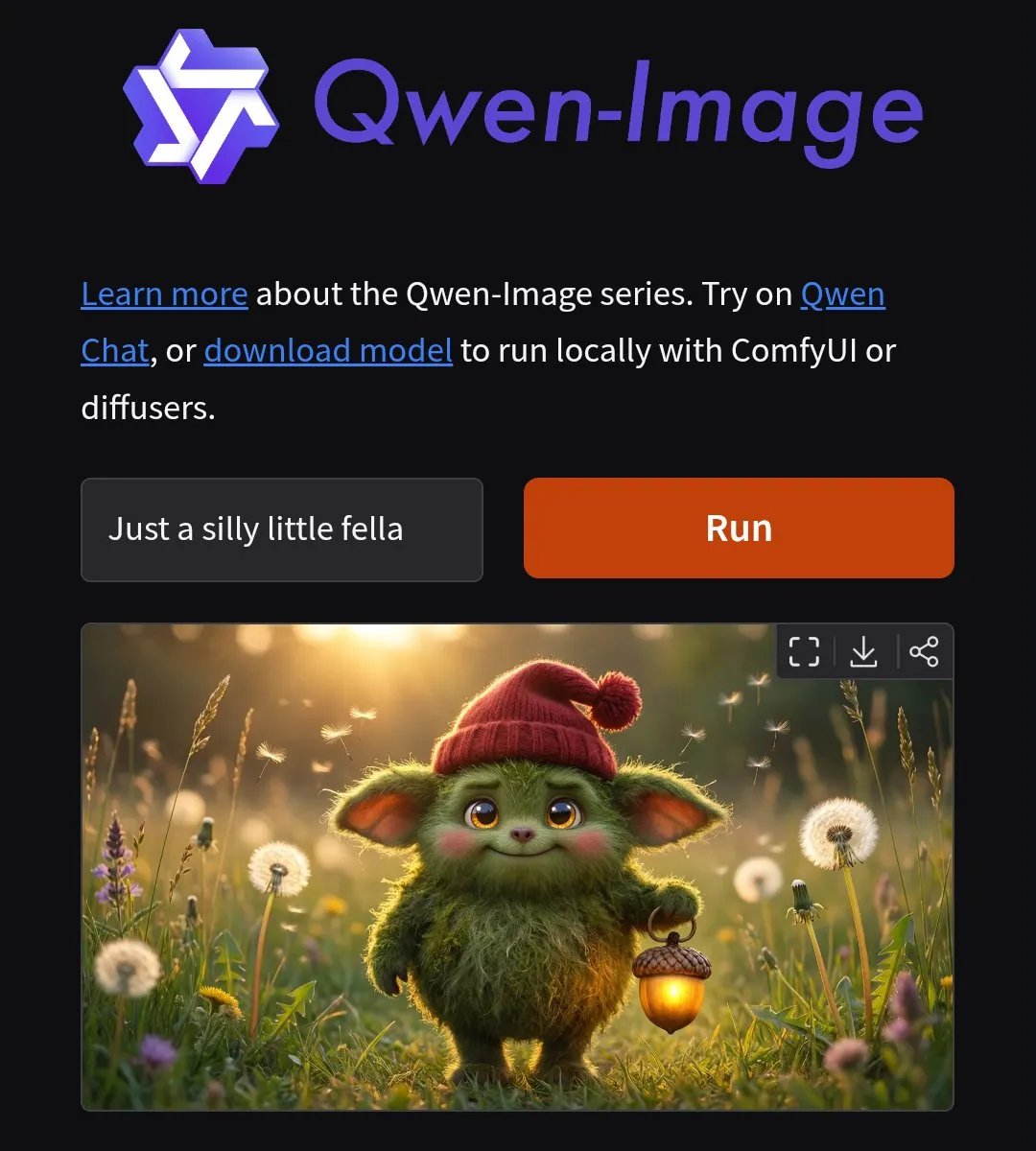
Qwen-Image-2512 Released: Significant Improvements in Realism and Text Rendering: Alibaba released the December update of its multimodal model Qwen-Image, focusing on optimizing skin details, natural textures, and text rendering in images, significantly reducing the “AI-generated feel.” The model is now available on Hugging Face and Replicate, supporting more complex visual understanding tasks. Community feedback indicates excellent performance in handling realistic portraits and long-text image recognition, positioning it as a strong competitor in the open-source multimodal field (Sources: huggingface, Alibaba_Qwen)
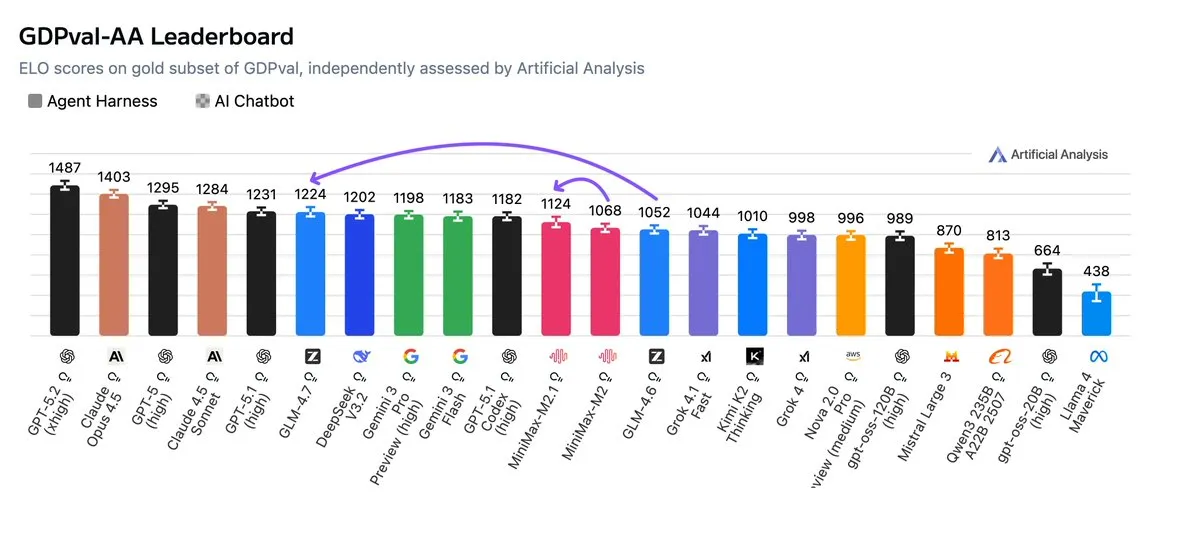
GLM-4.7 and MiniMax M2.1 Compete for Top Spot in Open-Source Model Benchmarks: In the latest GDPval-AA rankings, GLM-4.7 became the open-weight leader with an ELO score of 1224. Meanwhile, MiniMax M2.1 performed exceptionally well in instruction following and research assistance. Developer tests show that GLM-4.7 outperforms Qwen in Python backend refactoring and long-context maintenance, though it remains more general in complex architectural design. The rapid iteration of these two models marks the ability of domestic open-source models to compete on equal footing with top models like Sonnet in programming and logical reasoning (Sources: huggingface, Reddit)
DeepSeek Library Deeply Optimized: 30% Performance Boost and Adaptation for B200 Chips: Community developers have begun optimizing DeepSeek-related libraries one by one. Using technical means like CuTeDSL, they achieved a 20%-30% speed increase on NVIDIA B200 chips. This fine-tuned optimization for specific hardware indicates that the AI industry is entering an “efficiency is king” phase, maximizing model inference performance through low-level engineering optimization under limited computing power (Source: QuixiAI)

Neuralink Announces High-Volume Production of Brain-Computer Interfaces for 2026: Elon Musk revealed that Neuralink will achieve full surgical automation by 2026, with robots performing BCI implantations. The new technology allows electrode threads to pass through the dura mater without removal, greatly reducing surgical risks. This move aims to push BCI from experimental medical use to the mass consumer market, enabling high-bandwidth connections between humans and AI, described by teortaxesTex as “Musk industrializing another frontier” (Source: teortaxesTex)
Google’s Three-Year Comeback Strategy: From “Code Red” to Full Counteroffensive: Google merged Google Brain and DeepMind to form the new Google DeepMind, establishing Hassabis as the leader and recalling veterans like Noam Shazeer, completely breaking the previous “publish only when perfect” bureaucracy. Google is now accelerating across models (Gemini 3), chips (TPU), and applications, forcing OpenAI into its own “Code Red” state. This reversal demonstrates the explosive power of a giant after organizational restructuring (Source: 36Kr)

🧰 Tools
Claude Code Initiates “Vibe Coding” Paradigm: The developer community has reacted enthusiastically to Anthropic’s Claude Code, noting its impressive performance in ASCII art visualization, layered architecture understanding, and automated debugging. Users are completing complex web application development on mobile or from their beds via “Vibe Coding.” Despite a 2X credit limit, the leap in productivity has led many developers to unsubscribe from Cursor in favor of building custom MCP-based workflows (Sources: brivael, omarsar0, Reddit)
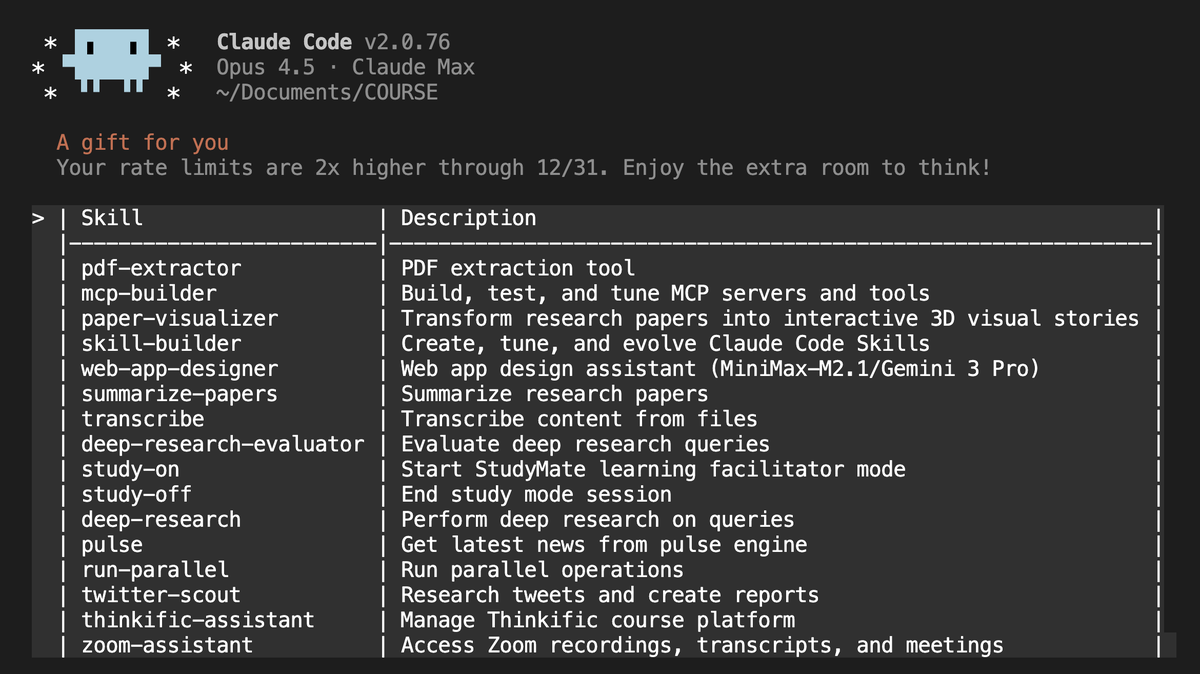
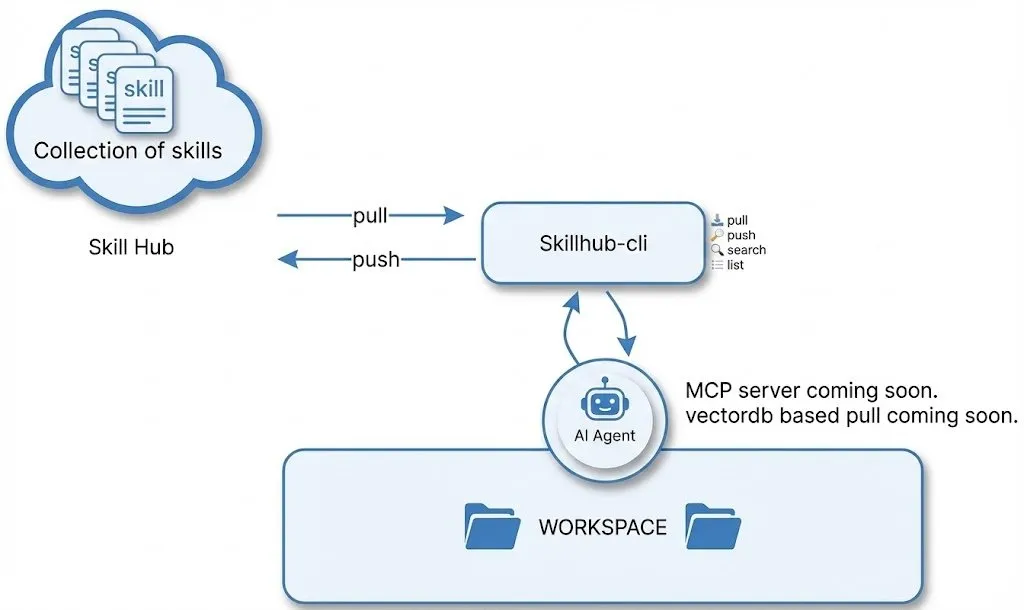
SkillHub: A “Homebrew” Registry for AI Agent Workflows: SkillHub allows developers to save, pull, and reuse successful AI task workflows. It addresses the pain point of rewriting prompts for every new project and supports cross-model, cross-platform use. This “workflow store” model is seen as key infrastructure for scaling Agents, allowing complex AI skills to be distributed like software packages (Source: QuixiAI)
Pommel: Local Semantic Search Tool to Solve Claude Code Context Consumption: Pommel is an open-source local semantic code search tool that helps AI Agents precisely locate code segments by maintaining a local vector database (sqlite-vec). It prevents Claude Code from blindly reading large amounts of irrelevant files when understanding a project, saving up to 50% of the context window. It currently supports Python, Go, Java, and other major languages (Source: Reddit)
EmbeddingAdapters: Cross-Model Vector Space Conversion Library: This Python library provides pre-trained adapters to translate vectors generated by small local models (like MiniLM) into high-dimensional vector spaces like OpenAI or Gemini. This allows developers to migrate vector databases without re-embedding the entire corpus and enables efficient local RAG retrieval in offline or restricted environments (Source: Reddit)
Manus Releases Slack Connector, Transforming Conversations into Actionable Knowledge: Manus launched its Slack Connector, aimed at transforming fragmented Slack chat records into a searchable, executable structured knowledge base. This solves the problem of team knowledge loss in chat streams and marks the evolution of Agents from “chat assistants” to “knowledge management hubs” within enterprise collaboration (Source: hidecloud)
📚 Learning
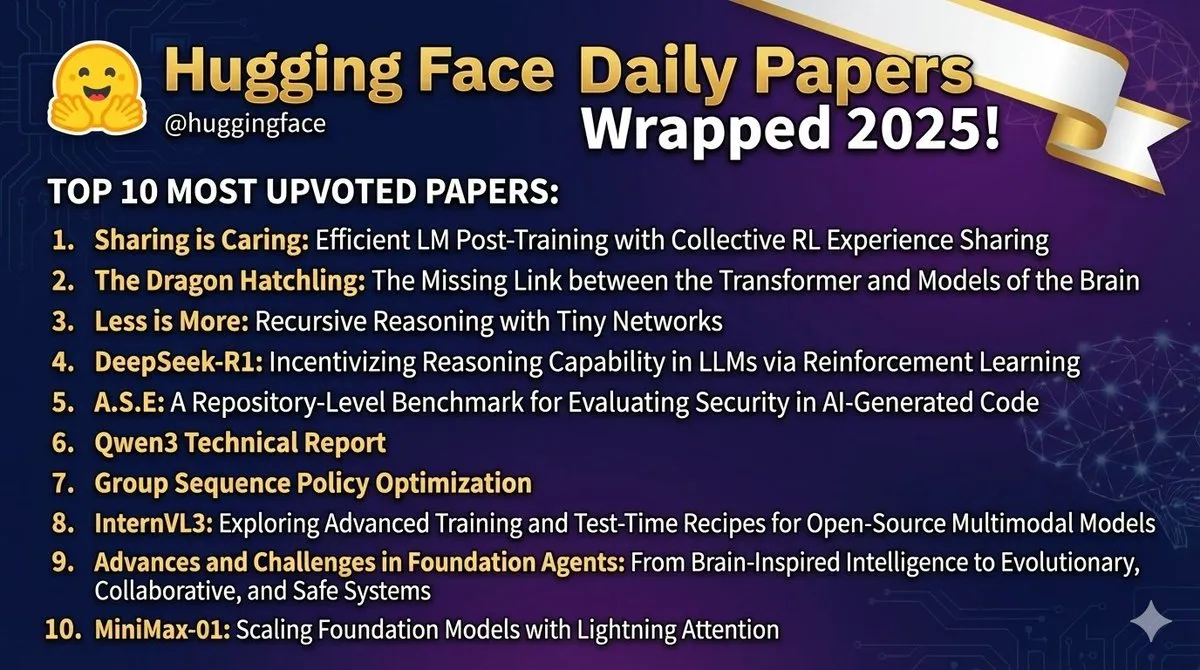
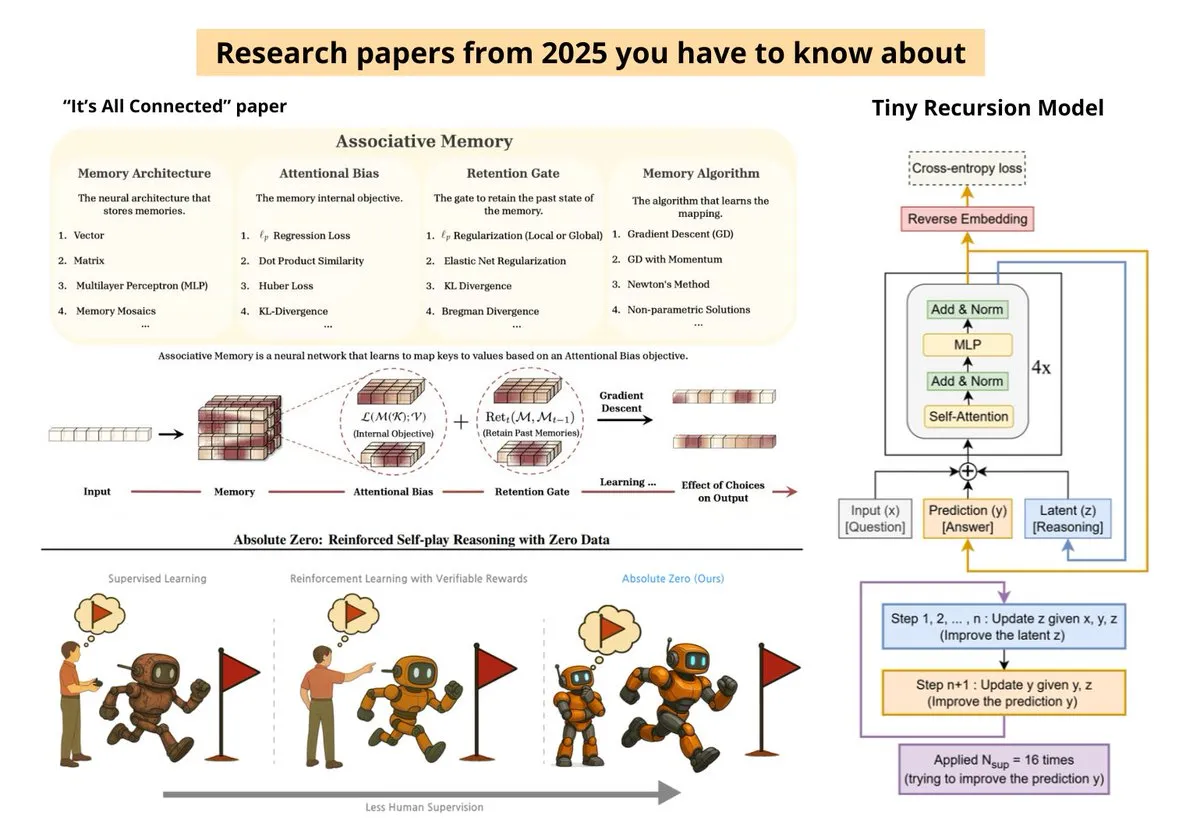
Hugging Face 2025 Annual Paper Review: Efficient Training and Brain Science Links: Hugging Face summarized the 10 most-watched papers of 2025, covering efficient LLM post-training, the missing link between Transformers and brain models, Tiny Recursive Model (TRM), and Qwen 3’s sequence strategy optimization. These studies reflect an industry shift from blind scaling to pursuing parameter efficiency and simulating human cognitive processes (Source: huggingface)
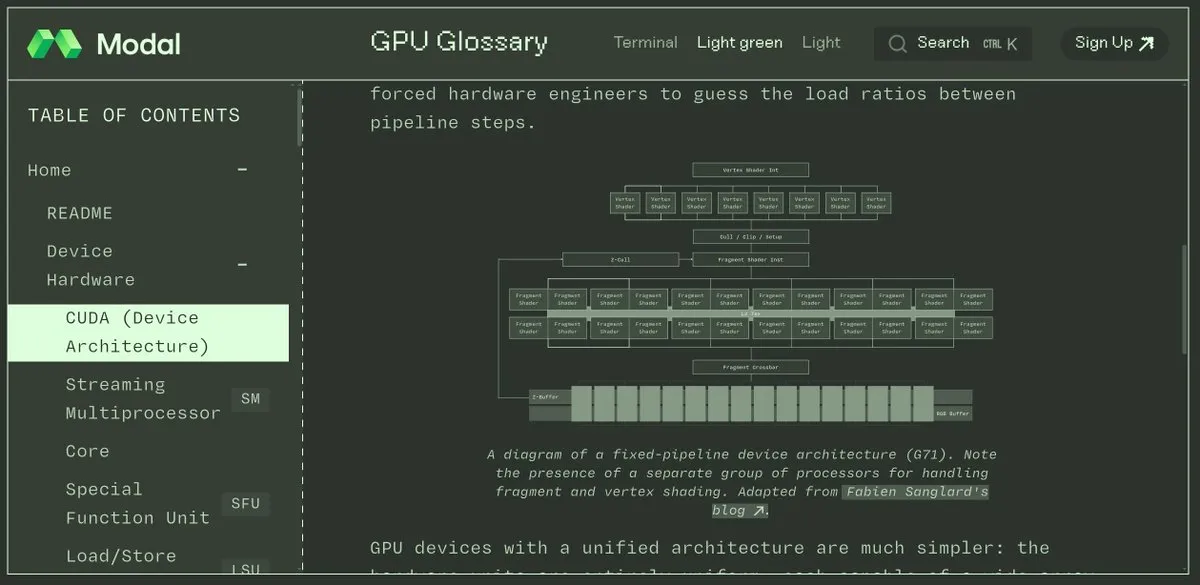
GPU Technical Authority Document: From CUDA Cores to Memory Hierarchy: The community shared an extremely detailed GPU architecture document covering CUDA cores, SM, Tensor Cores, Warp schedulers, memory hierarchy, and Nsight performance analysis. For engineers looking to optimize AI model performance from the ground up, this is an essential resource for understanding how hardware supports large-scale parallel computing (Source: charles_irl)
Four Classic Books Shaping the Mathematical Mindset of AI Leaders: TheTuringPost listed the math books that have most influenced AI founders, including Foundations of Algebraic Geometry, Analytic Number Theory, Proofs from THE BOOK, and A Mathematician’s Apology. These books provide not only a technical foundation but also the logical rigor and abstract modeling capabilities necessary for breakthroughs in AI (Source: TheTuringPost)

Physical Essence of Transformer Architecture: Bayesian Inference and Renormalization Group Flow: Physicist riemannzeta discussed recent research proving that the Transformer architecture is essentially an implementation of Bayesian inference and has a clear mapping to Renormalization Group Flow in physics. This discovery provides a solid theoretical physics foundation for explaining why AI models can extract effective features from massive data (Source: riemannzeta)
23 Forward-Looking Papers Foreseeing the Future of AI: From Zero-Data Reasoning to Intelligence per Watt: Ksenia compiled 23 key papers for 2025 involving Kosmos, Paper2Agent, zero-data reinforced self-play reasoning (Absolute Zero), and the scaling science of Agent systems. These studies reveal that AI is rapidly evolving toward lower power consumption, stronger autonomous reasoning, and multimodal fusion (Source: TheTuringPost)
💼 Business
Scale AI 2025 Performance Explosion: Data Business Profitable with Major Government Contracts: Alexandr Wang announced a new era for Scale AI, with Q4 being its strongest quarter ever. The data business is now profitable, and US government business is growing rapidly, with multiple nine-figure enterprise and government contracts signed. This proves that high-quality labeled data remains a core asset in the AGI race with a high commercial moat (Source: alexandr_wang)
Nvidia Requests TSMC to Significantly Increase H200 Chip Production to 2 Million Units: Despite the release of new architectures like B200, Nvidia has requested TSMC to increase H200 production from 700,000 to 2 million units. This reflects a market hunger for high-performance computing that far exceeds expectations, with existing models remaining the top choice for lab and cloud service expansions (Source: Teknium)
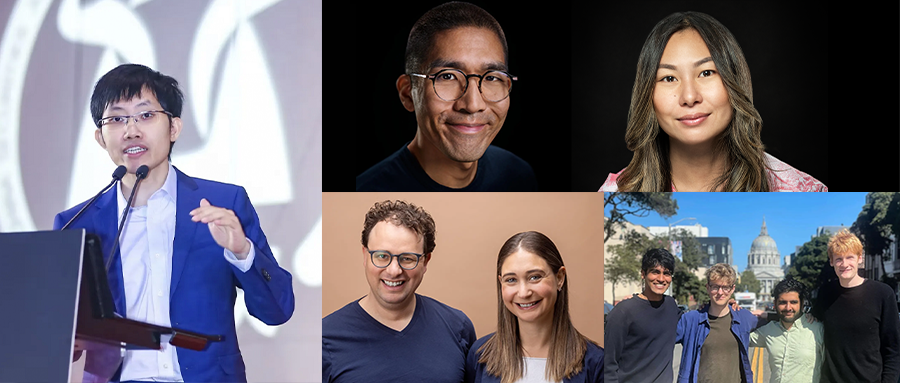
2025 AI Wealth List: 50 New Billionaires Born, Gen Z on the List: In 2025, AI startups received 50% of total global funding. New billionaires include Surge AI founder Edwin Chen ($18 billion net worth) and DeepSeek founder Liang Wenfeng. Wealth in the AI industry is trending younger; Mercor’s three Gen Z founders broke Zuckerberg’s record for the youngest self-made billionaires, signaling that AI has become the new generation’s super money-maker (Source: 36Kr)
🌟 Community
“Vibe Coding” and “Agency”: The New Divide Between Technical and Non-Technical People: The community is debating how the boundary between “technical vs. non-technical” is blurring, replaced by the distinction between “having the will to learn and build” or not. Technical people who fall into the bias that “AI code is trash” will lose competitiveness; meanwhile, high-agency non-technical people directly mobilizing Agent will via “Vibe Coding” are becoming the new force of innovation. This paradigm shift is expected to define the software development landscape of 2026 (Sources: matanSF, HamelHusain)
Extreme Inequality Caused by AI Automation and Concerns Over “Capital-Driven Labor Replacement”: Dwarkesh Patel published an article pointing out that in a fully automated world, inequality will grow exponentially as capital completely replaces labor. When AI takes over all work, the traditional “labor for wages” mechanism fails, and wealth will rapidly concentrate among early capital holders (such as those owning the first Dyson spheres or supercomputers). This “million-fold” wealth gap will be difficult to justify through traditional logic in a post-scarcity era (Source: dwarkesh_sp)
Environmental Costs of AI Expansion: Plummeting Groundwater in India and Rising Global Electricity Bills: Social media is widely discussing the side effects of AI data centers. In some Indian villages, excessive groundwater extraction for cooling data centers has forced farmers to dig 250 meters deep to find water. Meanwhile, residents in Chicago and elsewhere report that electricity bills have risen by 11% despite a 15% decrease in usage due to the arrival of data centers. This has sparked strong resentment over the “hidden costs” of AI development being borne by ordinary citizens (Sources: Reddit, Reddit)

The Future of NSFW Bans: Will Big Tech Models Forever Block Adult Content?: The Reddit community discussed whether companies like Google and OpenAI will lift filters on NSFW content in the next 20 years. The prevailing view is that due to legal risks (such as revenge porn) and brand reputation, big tech will maintain an “arm’s length,” with such needs being met by niche small models or open-source models. This “content segregation” could lead to a clear market stratification between adult and non-adult AI (Source: Reddit)
💡 Others
AI Creates New Emotion Word “Velvetmist,” Sparking Resonance: User noahjeadie used ChatGPT to create the word “Velvetmist” to describe a “velvety mist” emotion—a subtle sense of comfort between tranquility and unreality. Sociologists believe that as online life deepens, AI-assisted creation of “new emotion words” can help humans increase emotional granularity, thereby improving mental health, marking AI’s intervention in humanity’s most private sensory expressions (Source: MIT Technology Review)

Dating App Algorithm Secrets Revealed: How Ranking Manipulates Matches: A hot post in the Reddit machine learning section analyzed the sorting logic of apps like Tinder. Free users typically only see high-attractiveness but hard-to-match profiles, while paid users receive weighting for “mutual match probability.” Algorithms even identify “potential paid users” and grant them short-term traffic bonuses. This algorithmic logic of commodifying human emotions has sparked deep reflections on AI ethics (Source: Reddit)
2026 Prediction: The Year of Ellipses and the Return of “Presence”: Yohei believes 2026 will be the year of “ellipses,” symbolizing continuous evolution rather than disruption. The community predicts that the focus of AI in 2026 will shift from “more computing power” to “better Presence”—how to use AI to restore the eye contact and emotional connection lost in remote communication, making technology serve human touch once again (Sources: yoheinakajima, Reddit)