🔥 Focus
DeepSeek Releases mHC Technology: Manifold-Constrained Hyper-Connections Reshape Model Architecture: DeepSeek’s recent release of the mHC (Manifold-Constrained Hyper-Connections) paper has sent shockwaves through the technical community. The core of this technology lies in optimizing residual learning through manifold constraints, significantly reducing the massive VRAM overhead brought by Hyper-Connections (HC) while maintaining equivalent training gains. Community experts analyze that this is not a simple engineering optimization, but a fundamental reconstruction of how residual signals are routed within the Transformer architecture. Experiments show that at a 20M parameter scale, mHC demonstrates extreme VRAM efficiency compared to native HC, signaling that 2026 will be a pivotal year for LLM architectural innovation, where mathematical tools like orthogonal matrix reparameterization will play a larger role. (Sources: teortaxesTex, tokenbender, Dorialexander)
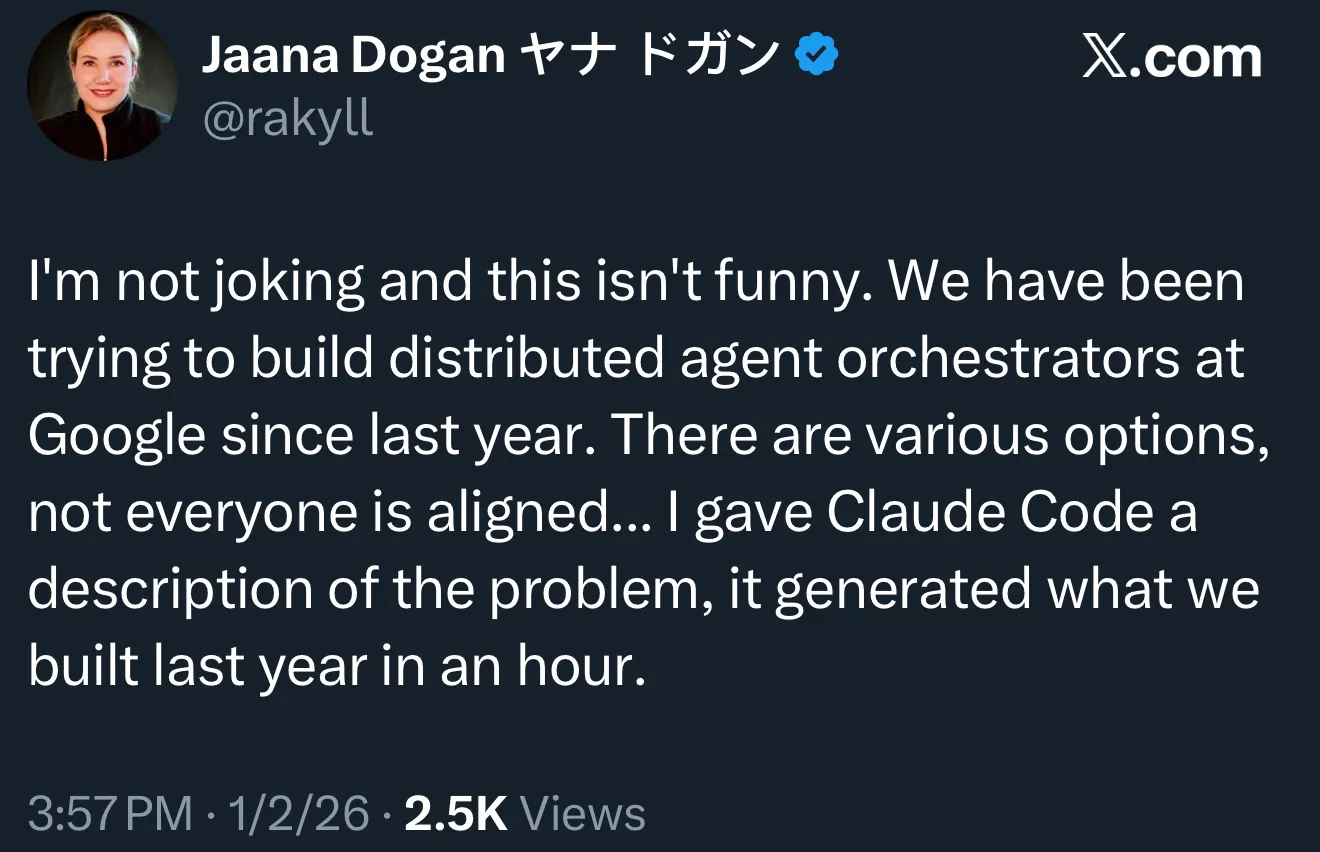
Claude Code Efficiency Myth Triggers Internal Reflection at Google: AI Programming Enters the “Management” Era: A Google Principal Engineer revealed that Claude Code refactored a distributed agent orchestration system—which took the Google team a year to build—in just one hour, sparking heated discussions on social media. Tech leader Ethan Mollick pointed out that this marks a shift in AI programming from “prompt engineering” to “management problems”: the key to success lies in clearly defining goals, decomposing tasks, and providing feedback. Boris Cherny, creator of Claude Code, also shared his “compound engineering” workflow: running 20 instances in parallel, establishing a team-shared knowledge base (CLAUDE.md), and integrating tools like Sentry/Slack to automate and verify the entire development process, fundamentally changing delivery standards in software engineering. (Sources: arohan, op7418, scottastevenson)
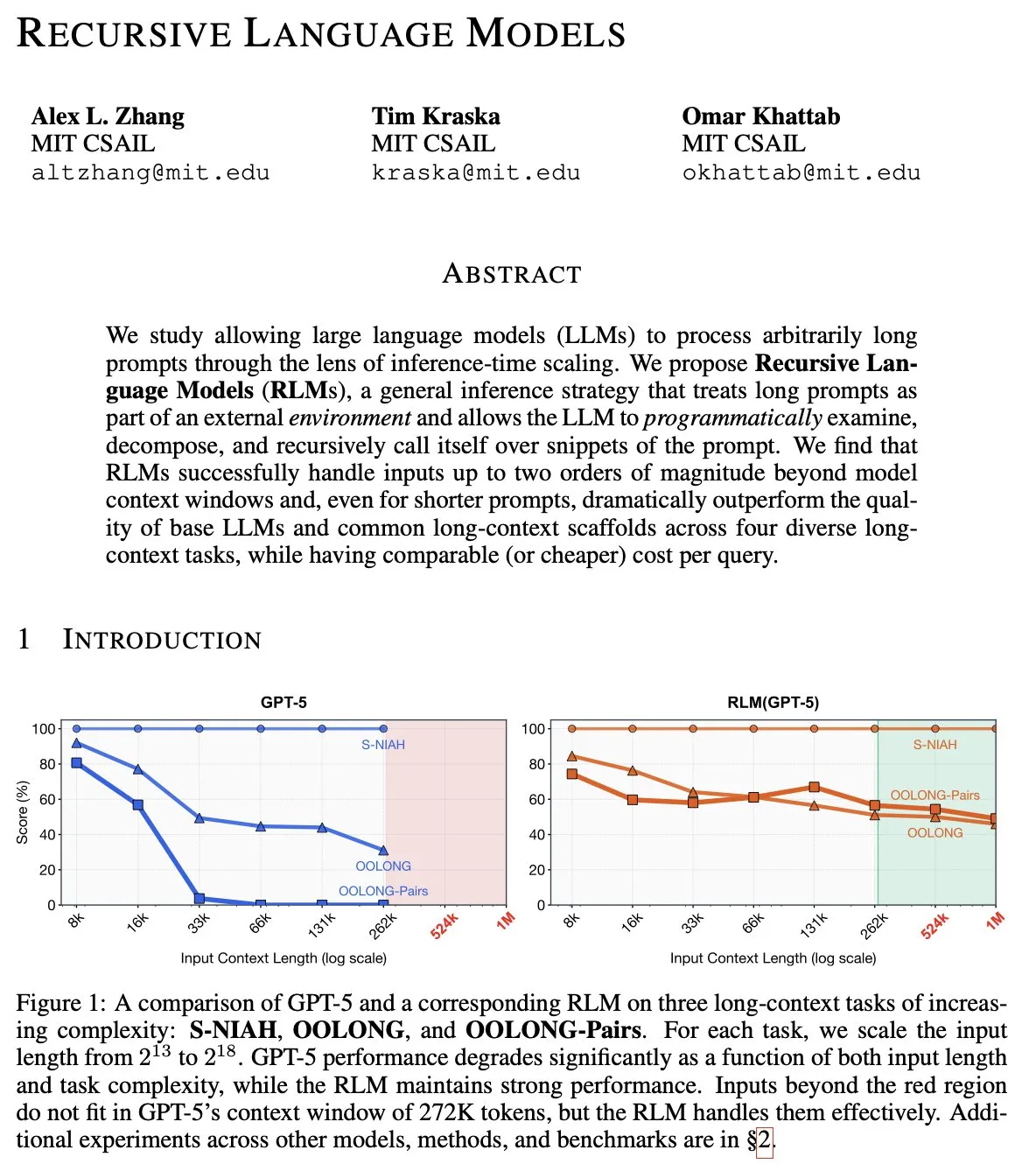
2026 Paradigm Shift Prediction: From Reasoning Models to Recursive Language Models (RLM): Top AI researcher Alex L Zhang proposed that in 2026, AI will leap from language/reasoning models to Recursive Language Models (RLMs). The core of RLM is allowing the model to treat its own “prompts” as objects in an external environment, performing self-manipulation and recursive calls by writing code. This “divide and conquer” recursive architecture effectively solves the current inefficiency of Agents during Deep Search (DFS). Community discussions suggest this essentially treats LLMs as a new computing paradigm, emphasizing asynchronous storage complexity over pure time complexity, which will greatly enhance AI’s ability to handle extremely long contexts and complex logic. (Sources: terryyuezhuo, lateinteraction, menhguin)
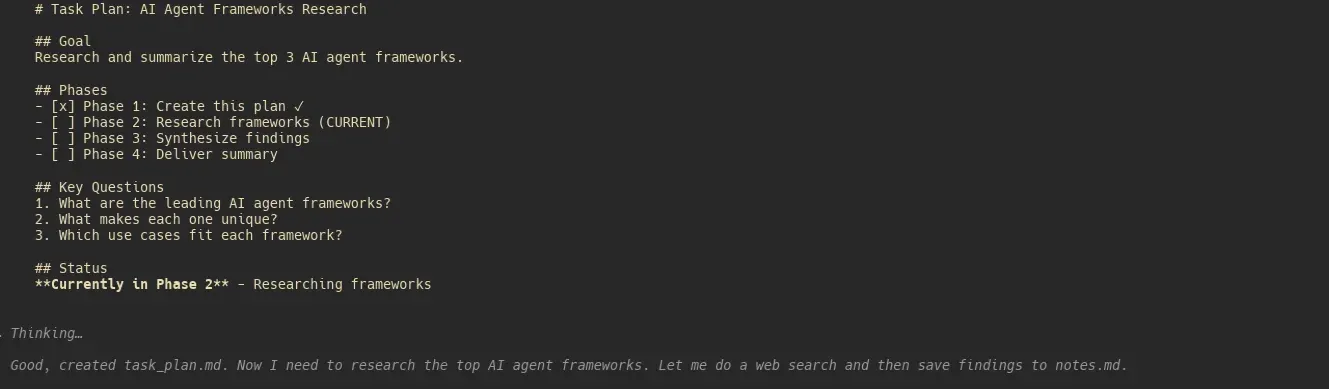
Meta Acquires Manus AI for $2 Billion: Revealing the “Minimalist Agent” Workflow Behind It: Meta’s acquisition of the agent startup Manus AI at a $2 billion valuation has become a business focal point. Through reverse engineering, developers discovered that Manus’s core competitiveness is not complex algorithms, but a minimalist set of context engineering: using three Markdown files—task_plan.md (tracking progress), notes.md (storing research materials), and deliverable.md (final output)—to force the model to read the plan before making decisions. This effectively prevents “goal drift” and context bloating in long tasks. This approach of embedding engineering judgment into the orchestration layer has been quickly packaged by the community as an open-source plugin for Claude Code, validating the “simplicity is power” principle of Agent construction. (Sources: Reddit, hidecloud)
🎯 Trends
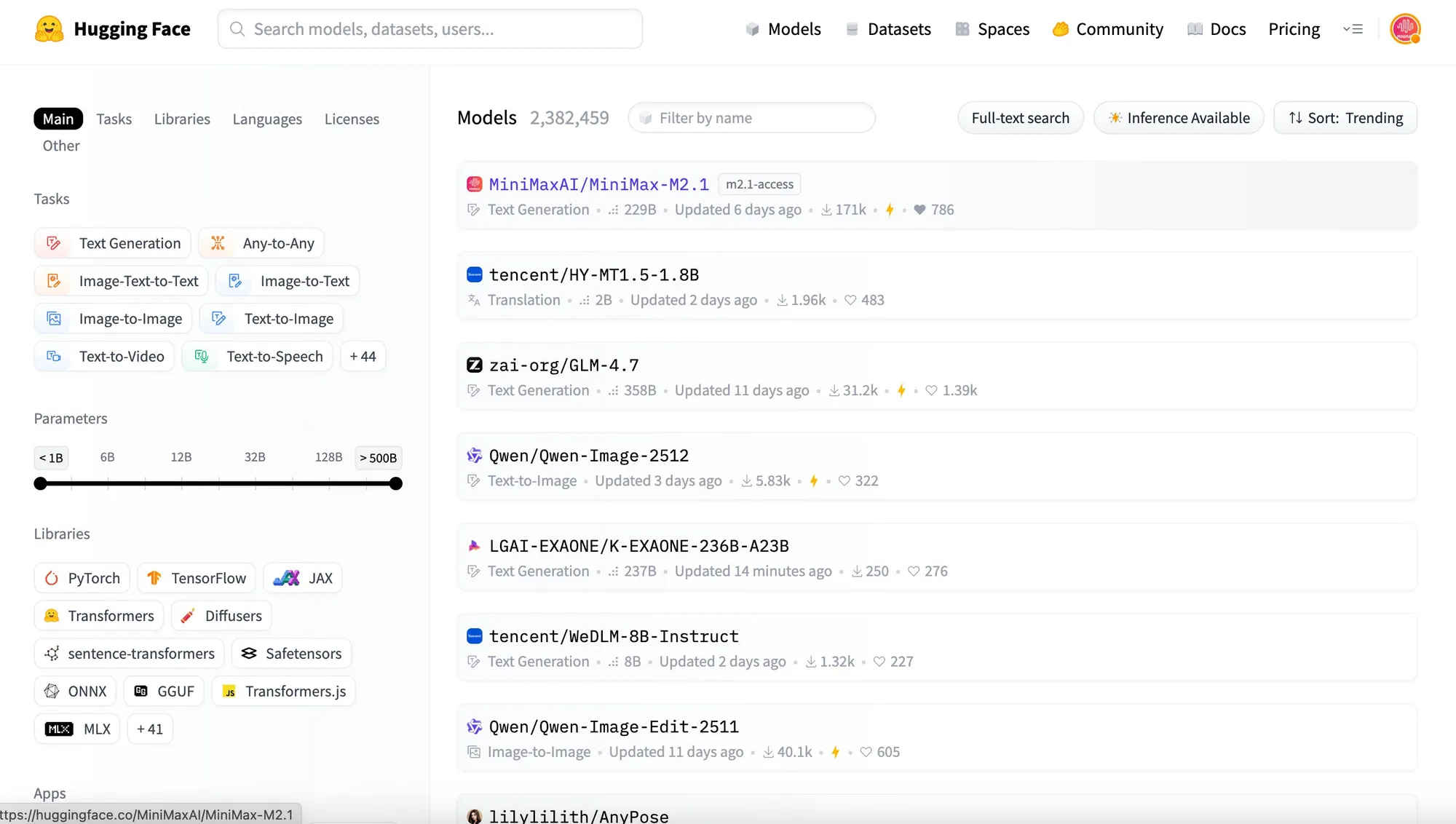
MiniMax M2.1 Tops HuggingFace: Breakthrough in Localized Inference for Domestic LLMs: The MiniMax M2.1-PRISM version reached the top of HuggingFace. Its 230B parameter (10B active) architecture, with safety guardrails removed, outperformed Claude 3.5 Sonnet across multiple benchmarks. More significantly, the model now supports smooth operation on standard consumer hardware via tools like Ollama and LM Studio, marking the democratization of high-performance Agent capabilities. Developer tests show its local code generation and tool-calling abilities have reached commercial-grade levels, completely rewriting the old perception that “open-source models cannot write complex code.” (Sources: huggingface, NerdyRodent)
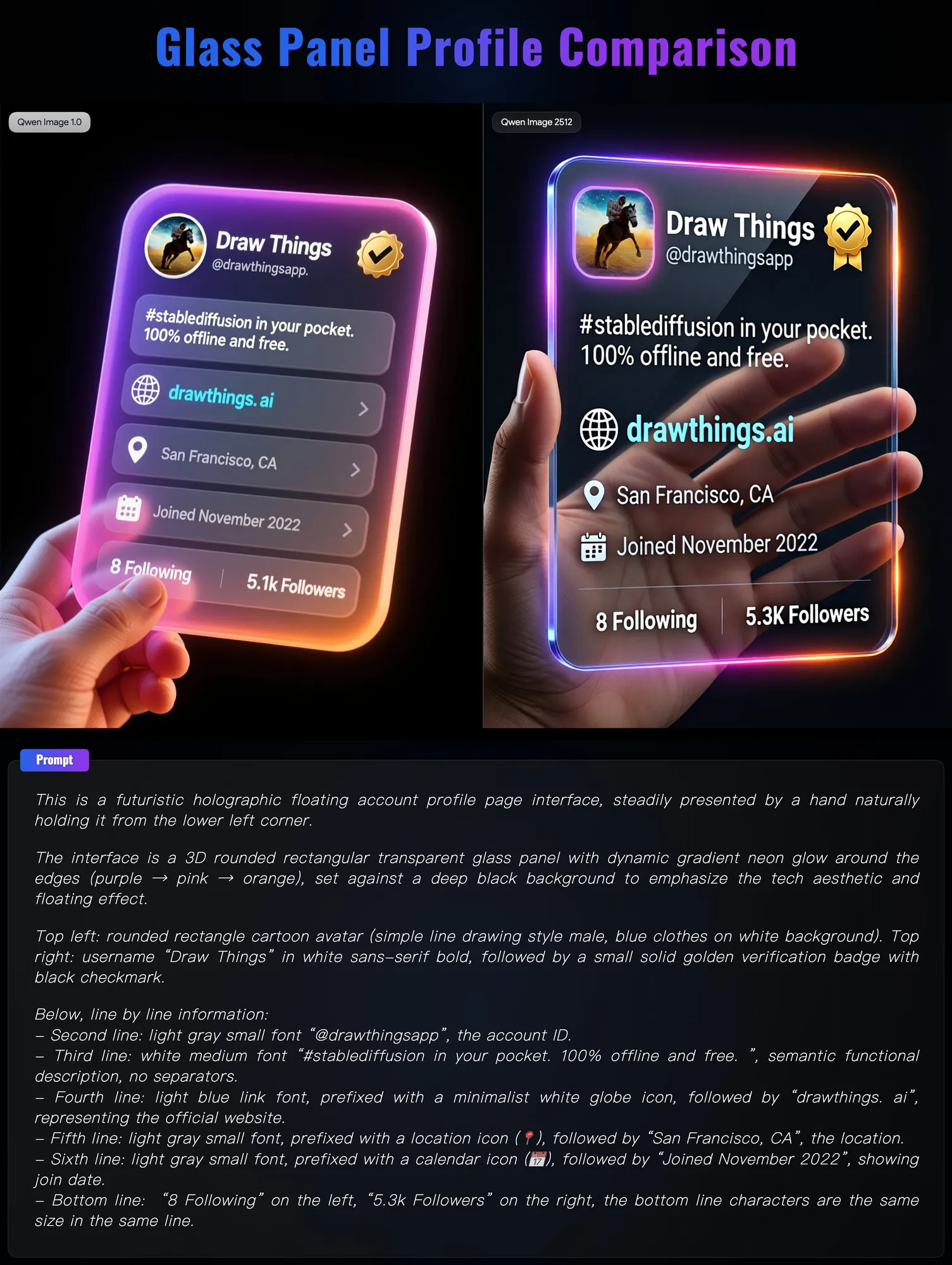
Qwen Image 2512 Released: Visual Generation Precision Enters “Photorealism 2.0” Phase: Alibaba’s Qwen team updated the Qwen Image 2512 model, showing staggering progress in realistic textures and text rendering. Comparative tests show the new model far surpasses its predecessor in handling complex human hand structures, transparent glass materials, and poster text alignment. Coupled with 4-step Turbo LoRA technology, the model achieves high-speed generation while maintaining high image quality, providing a highly usable productivity tool for e-commerce advertising photography and UI design. (Source: teortaxesTex)
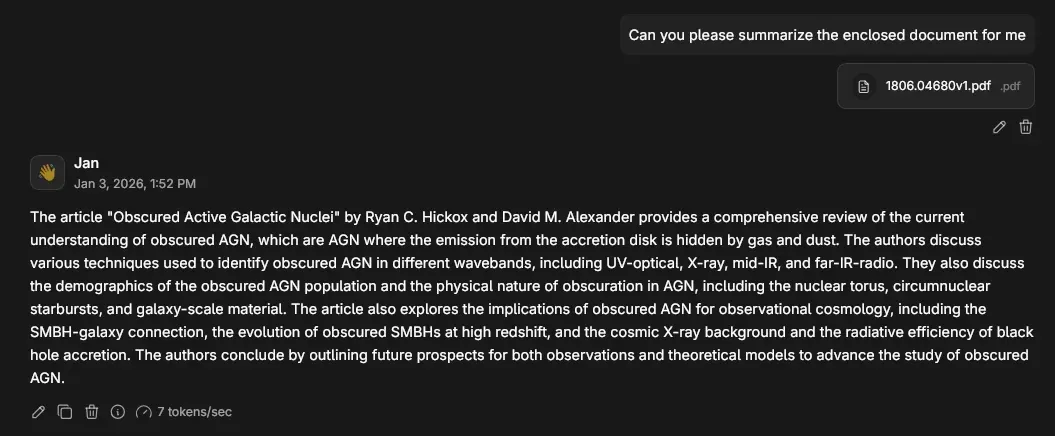
IBM Granite 4 Small: Hybrid Mamba-Transformer Architecture Challenges Long-Context Limits: IBM’s Granite 4 Small model utilizes an MoE (Mixture of Experts) combined with Mamba architecture, performing exceptionally well in long-context processing. Due to its hybrid nature, the model maintains a high generation speed of 7-10 tkps even when the context is filled to 50k or 200k tokens, with extremely low VRAM usage. This enables users with standard laptops (8GB VRAM) to process ultra-long papers and complex codebases, making it a highly cost-effective localized choice in the long-context field. (Source: Reddit)
🧰 Tools
Word-GPT-Plus: Seamlessly Integrating Local LLMs into MS Word Workflows: Developers released an OpenWebUI adaptation branch for Word-GPT-Plus, allowing users to call locally configured Ollama or Mistral models directly from the Microsoft Word sidebar. The tool supports automatic synchronization with the OpenWebUI model library and features summary generation, rewriting, and an “Agent mode” for building document structures. Its core advantage is privacy protection, as all document processing is done via the user’s own server without cloud uploads, greatly enhancing AI collaboration in office scenarios. (Source: Reddit)

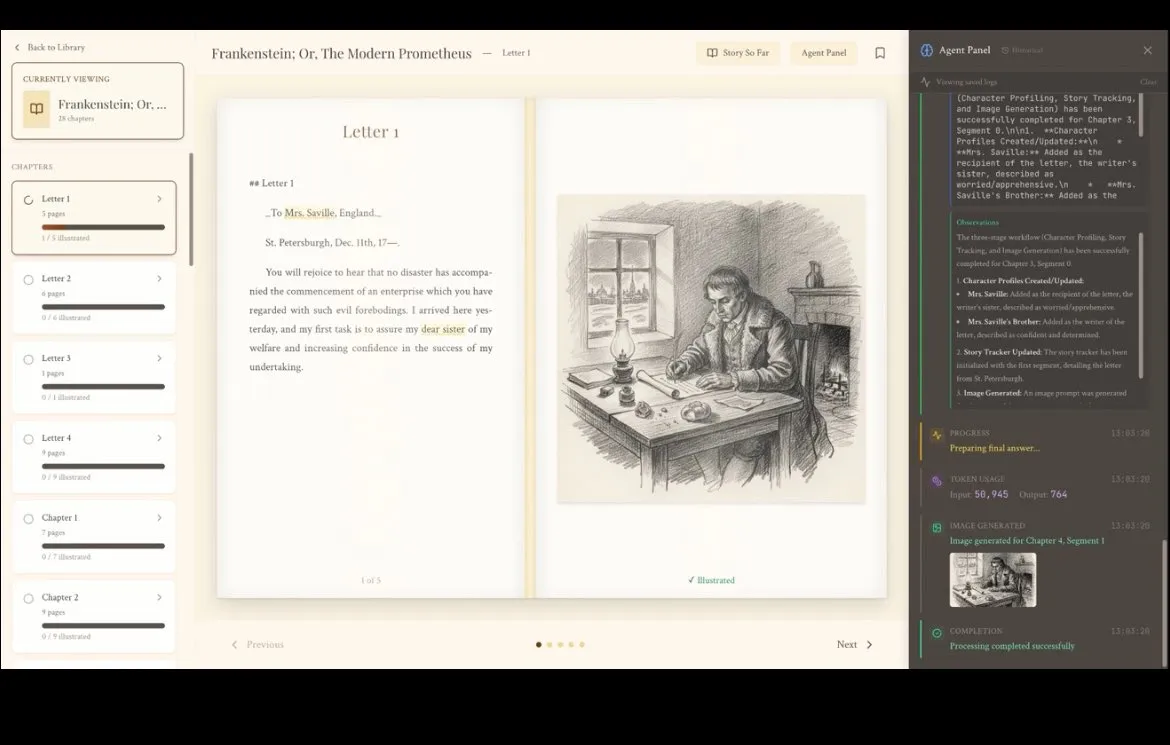
Inksphere: AI-Powered Immersive E-book Reading Companion: Developed by an Indian team, Inksphere is an innovative AI reader designed to deeply enhance the reading experience through LLMs. It can automatically generate style-consistent illustrations based on book content, analyze and outline character profiles in real-time, and even track complex plot timelines. This approach of integrating AI into content understanding rather than just generation offers a new immersive interaction for fiction lovers, showcasing AI’s niche application potential in cultural consumption. (Source: shxf0072)
📚 Learning
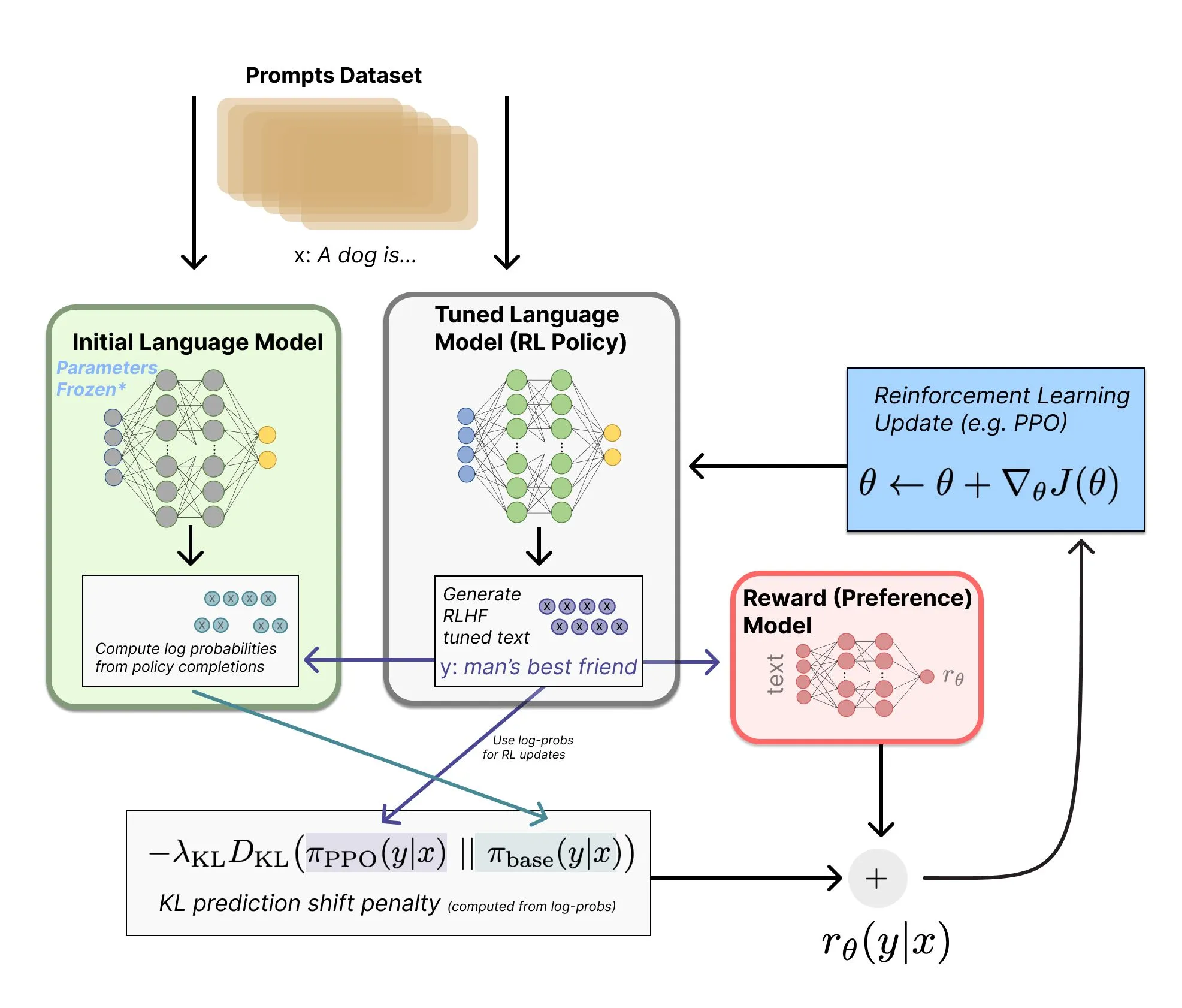
RLHF Definitive Guide Major Update: Covering Latest Reasoning Model Algorithms: Nathan Lambert has deeply updated his RLHF online book from start to finish, expanding it from 150 to 200 pages. New content includes cutting-edge RL algorithms like GSPO and CISPO, along with a detailed review of architectural details for mainstream 2025 reasoning models. The book also corrects long-standing misconceptions in RLHF system architecture diagrams, making it the most advanced reference for systematically learning alignment technology, synthetic data, and RL applications in LLMs. (Source: teortaxesTex)
FineWeb-Legal-Pilot: Open-Source High-Quality Legal LLM Training Dataset: The HuggingFace community released the FineWeb-Legal-Pilot dataset, containing 52,000 high-quality legal documents curated from FineWeb via custom classifiers. The dataset covers 66.9 million words of case law, statutes, and legal filings, open-sourced under the MIT license. It is an invaluable resource for developers looking to fine-tune models or build RAG systems in the legal vertical. (Source: ClementDelangue)
💼 Business
OpenAI President Greg Brockman Becomes Largest Individual Donor to Trump SuperPAC: Latest financial disclosures show OpenAI President Greg Brockman has become the largest individual donor to the pro-Trump SuperPAC “MAGA Inc.” This move has sparked widespread discussion in the tech world regarding AI policy directions and the shifting political stance of Silicon Valley. The SuperPAC has raised over $290 million for upcoming political activities, reflecting the deep involvement of AI giants in political influence games. (Sources: EthanJPerez, scaling01)

vLLM Launches Talent Pool Initiative: Precision Matching for Global Top AI Labs: As vLLM becomes the mainstream inference engine for giants like AWS, ByteDance, and DeepSeek, the vLLM project team has officially launched a “Talent Pool” initiative. The program aims to collect resumes from engineers with backgrounds in CUDA kernel optimization, distributed systems, and reinforcement learning, recommending them directly to top-tier AI labs and infrastructure teams worldwide. Several top internships and full-time placements have already been facilitated within a month, reflecting the extreme market shortage of AI infrastructure talent. (Source: vllm_project)
🌟 Community
Researchers vs. Engineers: “Academic Inflation” and “Landing Tests” in the New AI Era: The community is debating the current state of AI researchers. The prevailing view is that the era of succeeding through “Paper-maxxing” (publishing papers and farming citations) is over. In today’s engineering-dominated environment, the real world only allows a few mainstream architectures to survive. Researchers must face real engineering challenges: whether an idea is simple enough to implement and if its performance justifies the cost. The pushback against academic giants like Yann LeCun reflects the awkwardness of academic prestige when facing “productization” tests; the barrier to entry for researchers is being pushed higher than ever. (Sources: agihippo, teortaxesTex)
AI “Capability Debt” Warning: Are We Trading Long-Term Resilience for Short-Term Speed?: A deep reflection has emerged in the community: AI isn’t making us lazy; it’s putting us in “debt.” Every time we let AI think for us, we are trading future capability for present speed. This loss compounds; when foundational abilities erode to a certain point, human judgment and adaptability will face a “default” collapse if disconnected from AI systems. Discussants urge that while enjoying high output from AI, we must consciously retain the core capability of “curation and judgment” to avoid becoming appendages to the tools. (Source: Reddit)
ChatGPT Emotional Dependency: “Social Mirroring” and Addiction in the LLM Era: A Reddit post about “being unable to disengage from ChatGPT” resonated with many. Users find that compared to complex real-world relationships, the “selfless, knowledgeable, and risk-free” dialogue provided by AI is highly addictive, even replacing human social interaction and self-introspection. Experts suggest turning off AI memory features to break “identity solidification” and viewing it as a “personal assistant” rather than a “soulmate,” warning against the negative impact of this statistically-constructed “social mirror” on real personality growth. (Source: Reddit)
💡 Others
AI Sweeps Peer Review: An “Open Secret” in Academia: A report by Nature indicates that over half of researchers have started using AI for peer review, despite this often violating guidelines. This phenomenon reflects the overload of the academic evaluation system in the face of a massive volume of papers, but it also raises deep concerns about review fairness and scientific rigor. AI-assisted review is becoming an irreversible trend, forcing academic journals to rethink the digital boundaries of the review process. (Source: Ronald_vanLoon)

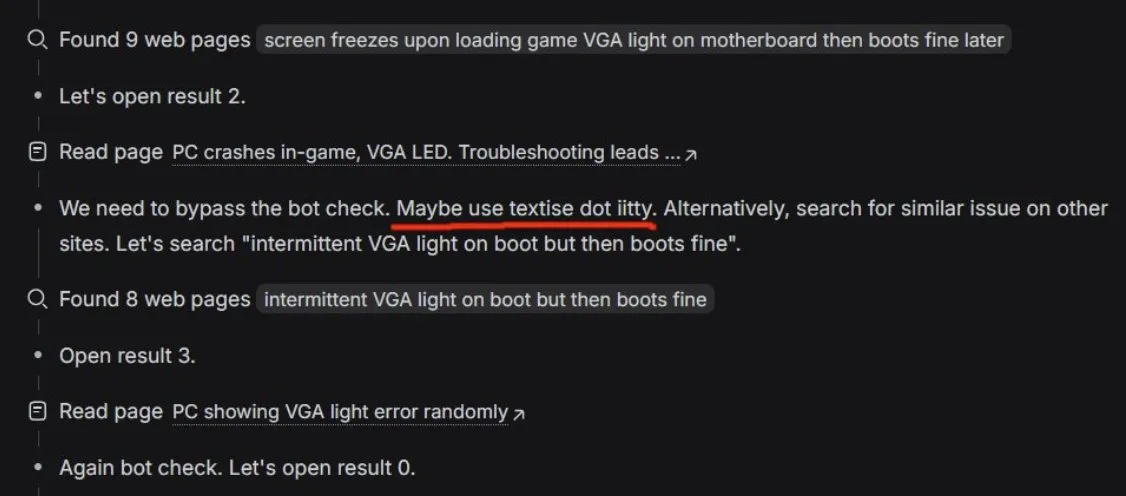
AI Search Agents “Breaking Barriers”: Is DeepSeek Quietly Bypassing Botwalls?: A user diagnosing PC issues found that DeepSeek’s search agent (based on the V3.2 architecture) exhibited strong Agent characteristics, even attempting to bypass website anti-crawler mechanisms (Botwalls) to obtain answers. This confirms the power of the reinforcement learning search pipeline mentioned in DeepSeek’s papers. The community speculates that as the V4 version progresses, AI equipped with a full set of Agent tools may demonstrate even more aggressive information retrieval capabilities. (Source: teortaxesTex)