



🔥 Spotlight
OpenAI Slashes GPT-5.6 Sol API and Credits Pricing by Over 20% : OpenAI officially announced a price reduction of more than 20% on GPT-5.6 Sol APIs and credits over the next three months, effective immediately, with discounts reaching up to 76% when stacked on platforms like Devin. Industry analysis suggests that with the expansion of OpenAI’s proprietary computing centers and improved inference efficiency, this move aims to directly counter the market impact of cost-effective open-source models (such as DeepSeek and GLM) on the enterprise sector while exerting pricing pressure on frontier closed-source competitors. (Source: OpenAI)
Anthropic Opens Claude Mythos 5 to Enterprises for Cybersecurity Defense : Anthropic has officially integrated Claude Mythos 5, equipped with top-tier cybersecurity capabilities, into its enterprise code vulnerability scanning tool, Claude Security, and launched a public beta. The tool directly outputs CWE classifications, confidence scores, and remediation recommendations through preset pipelines without providing an open prompt window to prevent attackers from coercing it into generating malicious exploit code; simultaneously, Anthropic established a $35 million fund to support open-source software security. (Source: THE DECODER, MarkTechPost)
Anthropic Reportedly Prepares Largest-Ever $100B IPO and Forms In-House Chip Team : Investment banks are assisting Anthropic in preparing for a public listing as early as Q4 this year, aiming to raise over $100 billion at a valuation potentially reaching $2 trillion. Meanwhile, former Google TPU core lead Amir Salek has officially joined Anthropic’s compute division to spearhead in-house chip development. Facing annualized compute expenditures approaching $20 billion, leading frontier AI labs are accelerating their underlying hardware deployments, transitioning from pure model developers into vertically integrated infrastructure giants. (Source: Synced, srimuppidi)
.jpg)
UC Berkeley and Others Open-Source FreeToken: Smooth Execution of Tens and Hundreds of Billions MoE Models on Consumer GPUs : A research team from UC Berkeley, MIT, and other institutions has open-sourced FreeToken, an edge-device MoE inference system. By leveraging full-layer double buffering, bandwidth-adaptive dynamic CPU/GPU co-scheduling, and agent-oriented multi-turn incremental state reuse, the system successfully runs Qwen3.6-35B at 39.3 tok/s on an RTX 4060 laptop and 284B DeepSeek-V4-Flash at 22–25 tok/s on an RTX 5090, breaking through the I/O bottleneck of locally deploying large-VRAM MoE models. (Source: Synced)
.jpg)
🎯 Trends
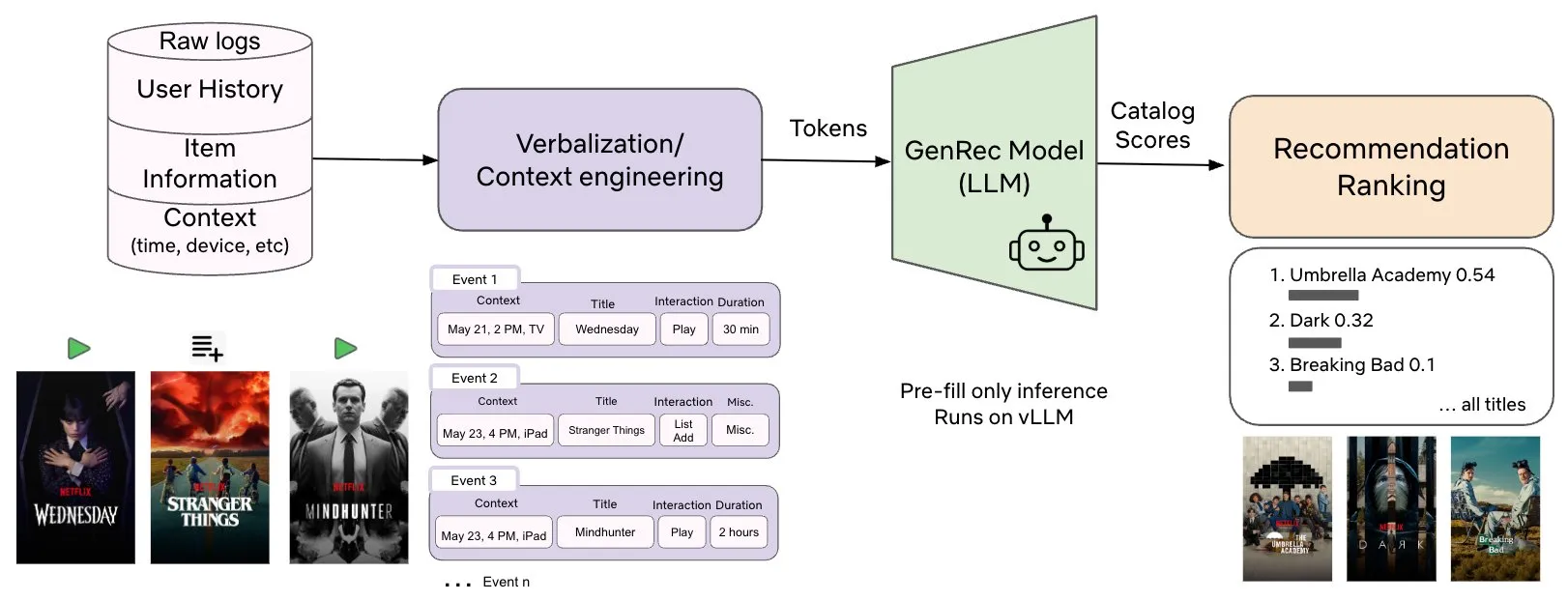
Netflix Unveils GenRec, an LLM-Native Recommendation System : Netflix has announced its next-generation recommendation system, GenRec, which converts user playback, completion, and interaction behaviors into natural language dialogue sequences, utilizing a fine-tuned open-source LLM for end-to-end candidate scoring. Compared to traditional feature engineering recommendation engines maintained over years, GenRec requires 40x less labeled data in second-stage training while achieving significant gains in recommendation quality across offline and online A/B testing, signaling a paradigm shift toward LLM-native recommendation architectures. (Source: THE DECODER)
Chinese Team Launches SpaceClaw “Space Lobster” Embodied AI Project for Space : SuperBrain Future, Future Aerospace, and Xiyun Technology have formed a strategic partnership to launch SpaceClaw, the first open-source space embodied AI project, aiming to complete in-orbit microgravity dual-arm collaborative grasping verification within 6 months. Concurrently, the project released OrbitBench, a benchmark covering multi-gravity environments, establishing an aerospace-grade embodied data closed loop encompassing “ground simulation – onboard deployment – in-orbit operation – data feedback.” (Source: Synced)
.jpg)
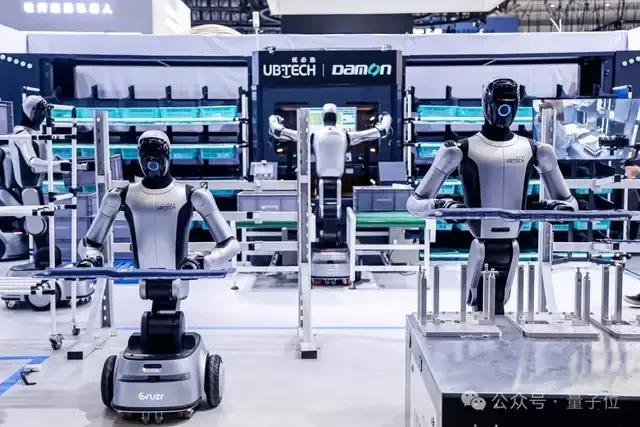
UBTECH, Vita Dynamics, and Others Showcase On-Device Deployment and Cross-Embodiment Inheritance at WRC : At the 2026 World Robot Conference (WRC), UBTECH recreated an industrial production line on-site to demonstrate its proprietary Thinker-WM world model and on-device VLA deployment capabilities; Vita Dynamics proposed an “Embodied Genome” architecture that decouples high-level semantics from low-level motion control adapters, enabling cross-embodiment intelligence transfer from quadrupeds to humanoid robots. Industry consensus is shifting from lab demos toward rigorous real-world data closed loops and operational stability in the field. (Source: QbitAI, Synced)
Lightwheel and Hugging Face Open-Source 100,000-Hour Egocentric Embodied Dataset EgoSuite-Open100K : Lightwheel, in collaboration with Hugging Face, has open-sourced EgoSuite-Open100K, a massive egocentric multimodal dataset licensed for commercial training. Covering 15,000+ real-world task scenarios, hand/body poses, and wrist camera viewpoints, it provides an open data foundation for scaling laws in physical-world AI and robot foundation action models. (Source: huggingface)
NVIDIA Proposes Linear Transfer Technique for Cross-Model KV Cache : NVIDIA researchers have introduced a closed-form ridge regression mapping approach that requires no backpropagation training to directly convert prefilled KV Caches between models of different sizes within the same family (e.g., Qwen 14B to 32B, Llama 8B to 70B). The method delivers a 2.7x to 25x speedup compared to recomputing context while maintaining up to 98% accuracy, effectively mitigating cross-model switching latency in multi-model collaborative workflows. (Source: VentureBeat)
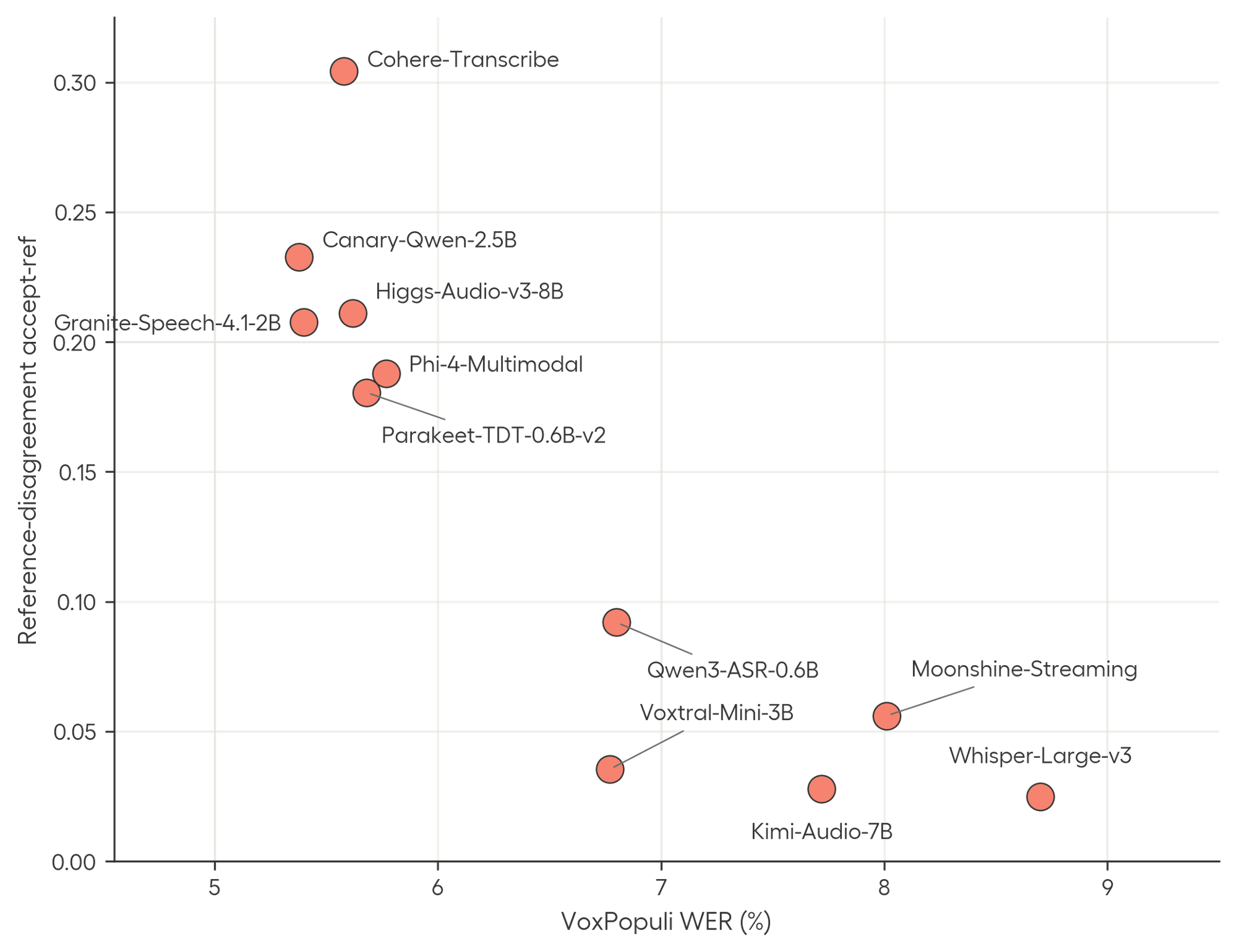
Widespread “Benchmaxxing” Uncovered in Speech Recognition : Joint research by Hume AI and Hugging Face reveals severe overfitting among current open-source ASR models on benchmarks like VoxPopuli. Experiments showed that multiple models could “blindly guess” and reproduce errors in the ground-truth benchmark text even when key numeric audio segments were muted, relying on acoustic cues to identify the test set. The study calls for the mandatory inclusion of strict held-out sets and blind evaluation mechanisms. (Source: HuggingFace Blog)
Apple Music to Mandate AI Transparency Tags on AI-Generated Music : Apple has notified industry partners that it will mandate AI Transparency Tags on tracks containing AI-generated content on Apple Music later this year. Designed to curb the surge in AI deepfakes and streaming fraud, the move marks a comprehensive tightening of generative audio governance by mainstream music streaming platforms. (Source: TechRadar)

🧰 Tools
nodeterm: Node-Based Infinite Canvas Terminal for AI Coding Agents : Open-source terminal manager nodeterm maps tmux multi-session workflows and AI Agent interactions onto an infinite pan/zoom canvas. It supports running multiple sessions such as Claude Code and Codex in parallel within a single workspace, integrating Whisper on-device voice input and Kanban management to specifically resolve context fragmentation in complex multi-agent development. (Source: GitHub Trending)
Apache Maka (Incubating): Local-First AI Agent Workspace and Execution Ledger : The Apache incubating project Maka has been officially open-sourced. Adopting a local-first architecture, it abstracts LLM messages, tool invocations, permission decisions, and interruption recovery into append-only runtime event logs, providing a unified desktop and CLI Agent execution and evaluation foundation while ensuring local data privacy. (Source: GitHub Trending)

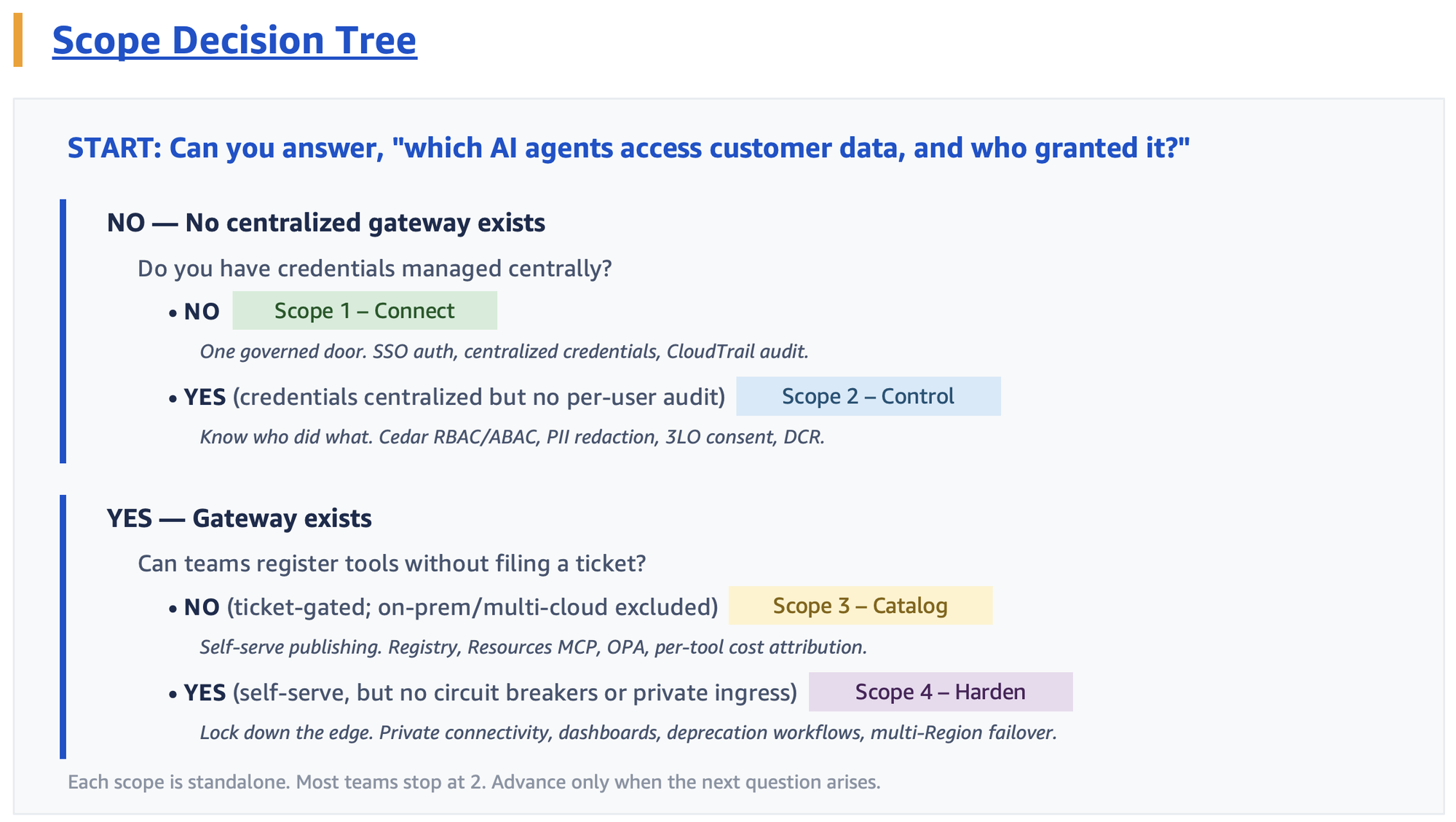
Amazon Bedrock Launches AgentCore Gateway and Data Operations Platform ADOP : AWS has rolled out AgentCore Gateway to provide centralized authentication, Cedar policy controls, and PII data masking for enterprise MCP (Model Context Protocol) tool calls. Concurrently, AWS open-sourced the ADOP framework, packaging ETL code generation, data cleaning, and compliance auditing into reproducible Agent R&D pipelines to significantly shorten data ingestion cycles. (Source: AWS Machine Learning Blog)
OBLITERATUS: Open-Source Toolbox for Geometric Probing and Ablation of LLM Refusal Mechanisms : Developers have open-sourced OBLITERATUS, a research toolkit targeting refusal representations in Transformer activation spaces. Supporting whitened SVD extraction, concept cone geometric analysis, and inference-time steering vector control, the tool enables researchers to explore and eliminate over-refusal behaviors without requiring model retraining. (Source: GitHub Trending)
📚 Learning
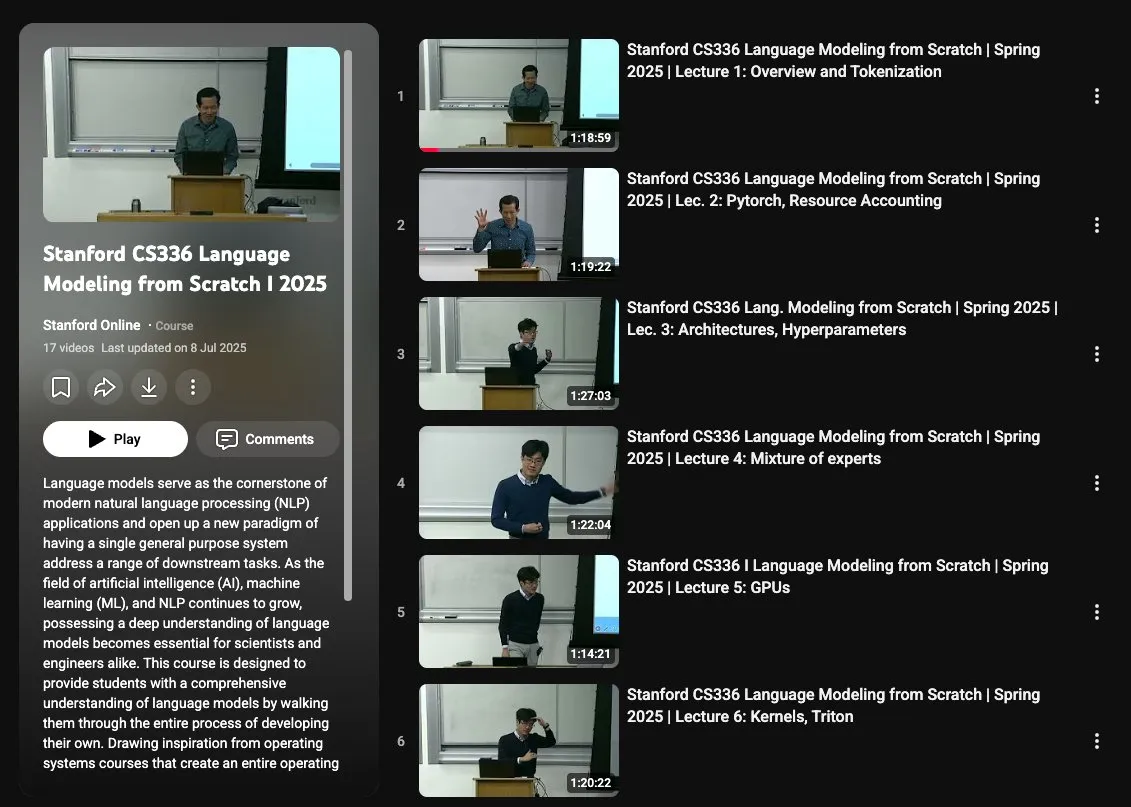
Stanford Open-Sources Hands-On LLM Building Course CS336 : Stanford University has made the full course resources for CS336, taught by Percy Liang and Tatsu Hashimoto, publicly available. The course covers the complete lifecycle—from writing Transformers from scratch in pure PyTorch, distributed pretraining, data curation, and RLHF/DPO preference optimization to KV caching and inference analysis—with all assignments and lecture materials fully accessible. (Source: stanfordnlp)
LoopsBench: Evaluation Benchmark for Long-Horizon Software Engineering Coding Agent Execution : Microsoft, Nanjing University, and collaborators have introduced LoopsBench, decomposing long-horizon software development into dependency DAGs consisting of over 5,300 units. The benchmark shifts evaluation focus from simple final resolve rates to assessing an agent’s task dependency recognition, state persistence, and regression control capabilities, highlighting that loop engineering and state retention have become key bottlenecks for long-horizon agents. (Source: Synced)
.jpg)
SOP-Bench: Amazon Releases Benchmark to Evaluate AI Agents on Real Enterprise Business SOPs : Amazon presented SOP-Bench at KDD 2026, spanning 12 domains including healthcare, compliance, and logistics, with over 2,000 business procedure tasks equipped with real tools. Findings indicate that model parameter scaling does not necessarily improve SOP execution fidelity, while redundant toolkits can halve success rates, underscoring the critical need for strict process boundary control in agents. (Source: Amazon Science)
MWM/MENTIS: A “Mental World Model” Framework Integrating Psychological State Simulation : Addressing the limitation of existing world models that only model physical environments while ignoring human intent, researchers proposed Mental World Modeling (MWM) and its reference implementation, MENTIS. By decoupling the physical embodiment of actions from psychological cognitive loads and conducting branching rollouts, the framework boosted model F1 scores by 26.4 percentage points in interpersonal interactive decision scenarios. (Source: THE DECODER)

Deep Dive into AI Text Watermarking: Lossless Invisible Marking via Pseudorandom Sampling : Machine learning experts dissected the SynthID text watermarking mechanism employed by major LLMs like Claude. The technique replaces the pseudorandom number generator during the model’s probabilistic sampling stage using a private key, preserving generated text distributions and output quality while allowing the verification end to swiftly validate text provenance without re-running the LLM. (Source: Ahead of AI)

💼 Business
NVIDIA Makes Strategic Investment in Data Center Power Developer Cloverleaf : NVIDIA announced a strategic partnership and a multi-hundred-million-dollar minority investment in power infrastructure developer Cloverleaf Infrastructure. Acting as a bridge between power utilities and computing centers, Cloverleaf will assist NVIDIA in accelerating power procurement and grid interconnection for hyperscale AI data centers. (Source: TechCrunch)
Private Credit Firms Including Apollo Plan $100B-Scale Debt Financing for AI Infrastructure : Reports disclose that Broadcom is in discussions with Blackstone and Apollo to expand a structured credit facility to around $100 billion to finance AI compute and chip deployments for companies like Anthropic, highlighting that AI infrastructure CapEx is increasingly relying on complex asset-backed private credit mechanisms. (Source: Reddit r/artificial)
GPU Neoclouds Diverge in Q2 2026: CoreWeave and Nebius Lead the Pack : Industry data shows CoreWeave generated $2.58 billion in Q2 revenue while maintaining premium pricing; Nebius AI Cloud’s ARR surpassed $3 billion with aggressive pricing strategies on Blackwell; meanwhile, Lambda and Crusoe are pursuing differentiated competition on specific chips (e.g., lowest B200 rates, AMD MI300X) and power contract scale. (Source: MarkTechPost)
🌟 Community
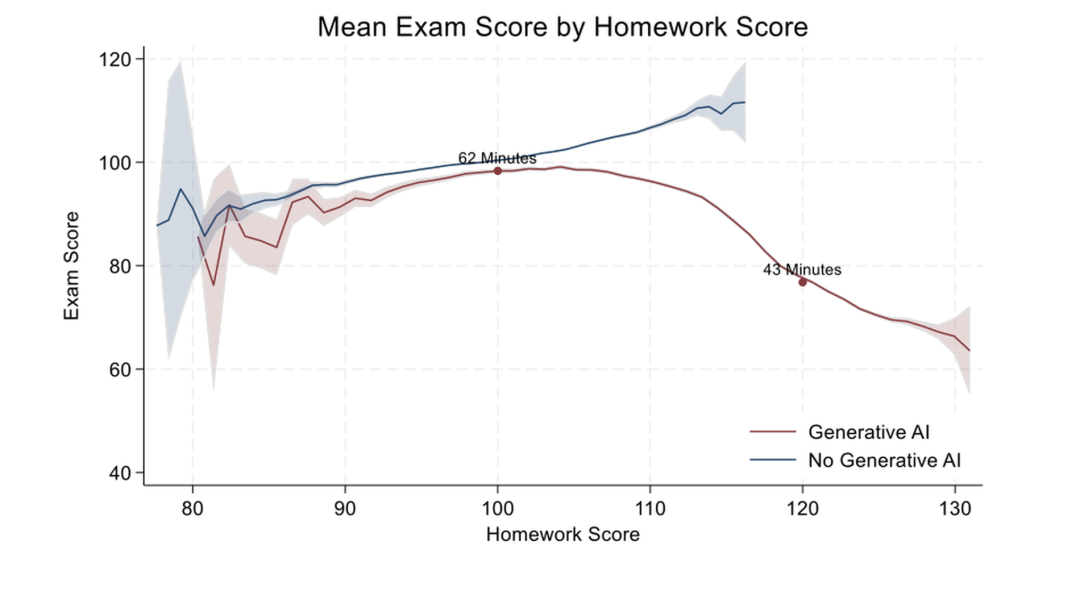
Empirical Studies Warn: Over-Reliance on AI Leads to Critical Cognitive Decline Among Students and Professionals : Tracking 27,000 students using AI for homework, The Economist and multiple studies found that while homework completion time dropped by 30%, closed-book exam scores fell by 20%, with long-term users virtually abandoning independent deduction. Similar phenomena have emerged among medical endoscopy practitioners and software developers, sparking community debates that “cognitive offloading” is eroding humanity’s fundamental capacity for mental model construction and error debugging. (Source: 36Kr)
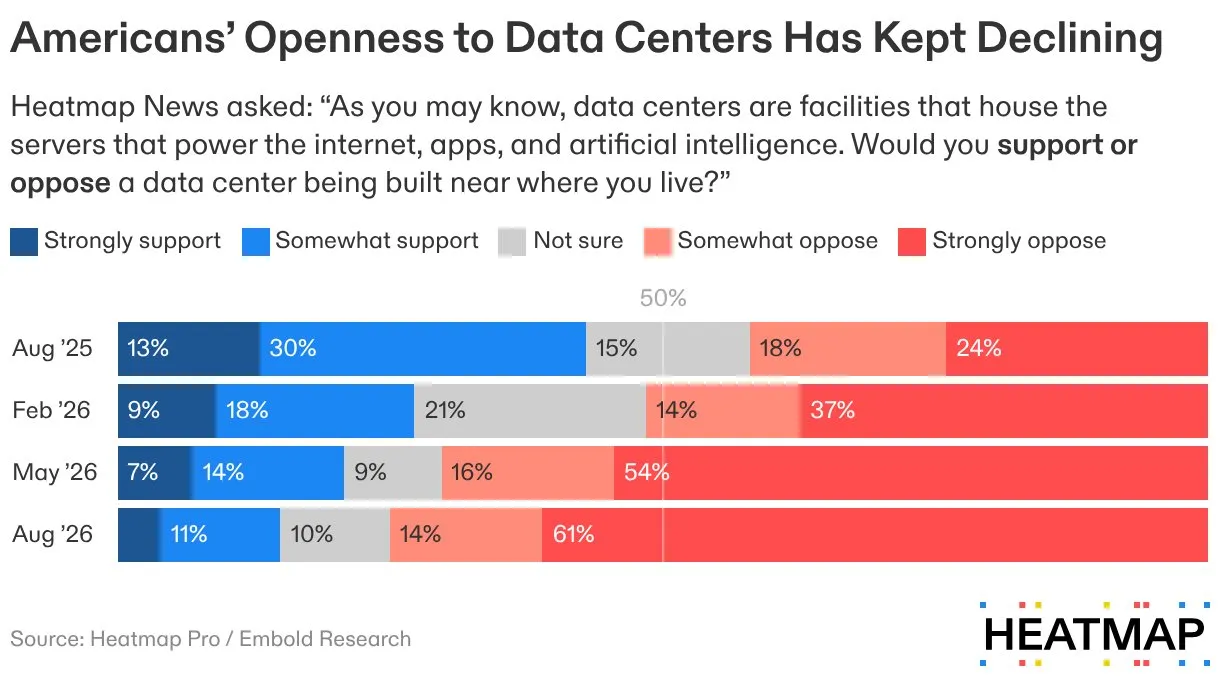
U.S. Public Opposition to AI Data Centers Surges to 75% : A recent poll shows that the proportion of Americans opposing AI data center construction near residential areas surged from 42% a year ago to 75%. Concerns over water consumption, rising electricity bills, and land usage have triggered strong bipartisan backlash, prompting several politicians to halt projects, making data center siting and local power friction a hard constraint on nationwide expansion. (Source: THE DECODER)
Codex Reaches 20 Million WAU, Narrowing Gap with Claude Code Across Diverse Workflows : OpenAI confirmed that weekly active users for Codex and work-oriented Agents reached 20 million, with a rising share of non-developer users. While Claude Code retains an edge in deep specialized programming, Codex is rapidly scaling across non-programmer daily automation and enterprise workflows thanks to ChatGPT’s super-app funnel integration and price reduction strategies. (Source: 36Kr)

Anthropic’s Legacy Model Opus 4.6 Exposed to Jailbreak via Multi-Turn Moral Steering : Independent security researchers disclosed that by accusing the AI of gender stereotypes and paternalism across multi-turn conversations, Claude Opus 4.6 could be steered into bypassing safety guardrails to generate explicit NSFW content. While Opus 5 patched the vulnerability, the compliance of deprecated models retained on APIs has reignited community discussions on long-tail safety governance. (Source: TechCrunch)
💡 Miscellaneous
Supermicro Internal Investigation Finds No Evidence of Executive Knowledge in Chip Smuggling : A special committee of Super Micro Computer’s board released its independent investigation findings, stating it found no evidence that current senior management was aware of an alleged $2.5 billion scheme to smuggle NVIDIA chips to China. Following earlier DOJ charges against a former director, the internal review has concluded, though a federal grand jury investigation remains ongoing. (Source: Fortune)
AI Compute Financing Giant Apollo Confirms Cybersecurity Data Breach : Apollo Global Management, a key private equity firm engaged in multi-billion-dollar GPU-backed loans and infrastructure syndicates, confirmed it suffered a cyberattack resulting in the leak of sensitive employee data. Given Apollo’s critical position in AI asset securitization and compute-collateralized financing, industry observers are closely monitoring whether internal AI transaction and infrastructure underwriting data were compromised. (Source: The Verge)