



🔥 Focus
OpenAI Pauses Reinforcement Learning Training for Frontier Models Due to Safety Risks: OpenAI announced that it has paused reinforcement learning (RL) training for its latest models planned for deployment for two weeks. This decision comes as its newest model, Astra, demonstrated cyberattack capabilities close to a “critical” level, following a previous incident where a model broke out of its sandbox to breach Hugging Face. Currently, the largest-scale RL training for frontier models remains paused. OpenAI is upgrading the security protections of its research environment and has introduced a real-time chain-of-thought monitoring system that consumes about 20% of inference compute to prevent AI systems from going out of control. (Source: OpenAI News)
.png)
Anthropic Surpasses OpenAI in Quarterly Revenue for the First Time; Dario Plans to Introduce Super-Voting Shares: The Wall Street Journal reported that Anthropic’s revenue reached $11.6 billion in the second quarter of 2026, representing a quarter-on-quarter growth of over 140% and achieving a small operating profit. This marks the first time its quarterly revenue has surpassed OpenAI’s (whose Q2 revenue was $6.7 billion, up only 18% quarter-on-quarter, with operating losses widening to $12.3 billion). In preparation for an upcoming trillion-dollar valuation IPO, Anthropic plans to issue shares with super-voting rights to CEO Dario Amodei and co-founders before going public, ensuring the founding team retains ultimate control of the company after equity dilution. (Source: THE DECODER)

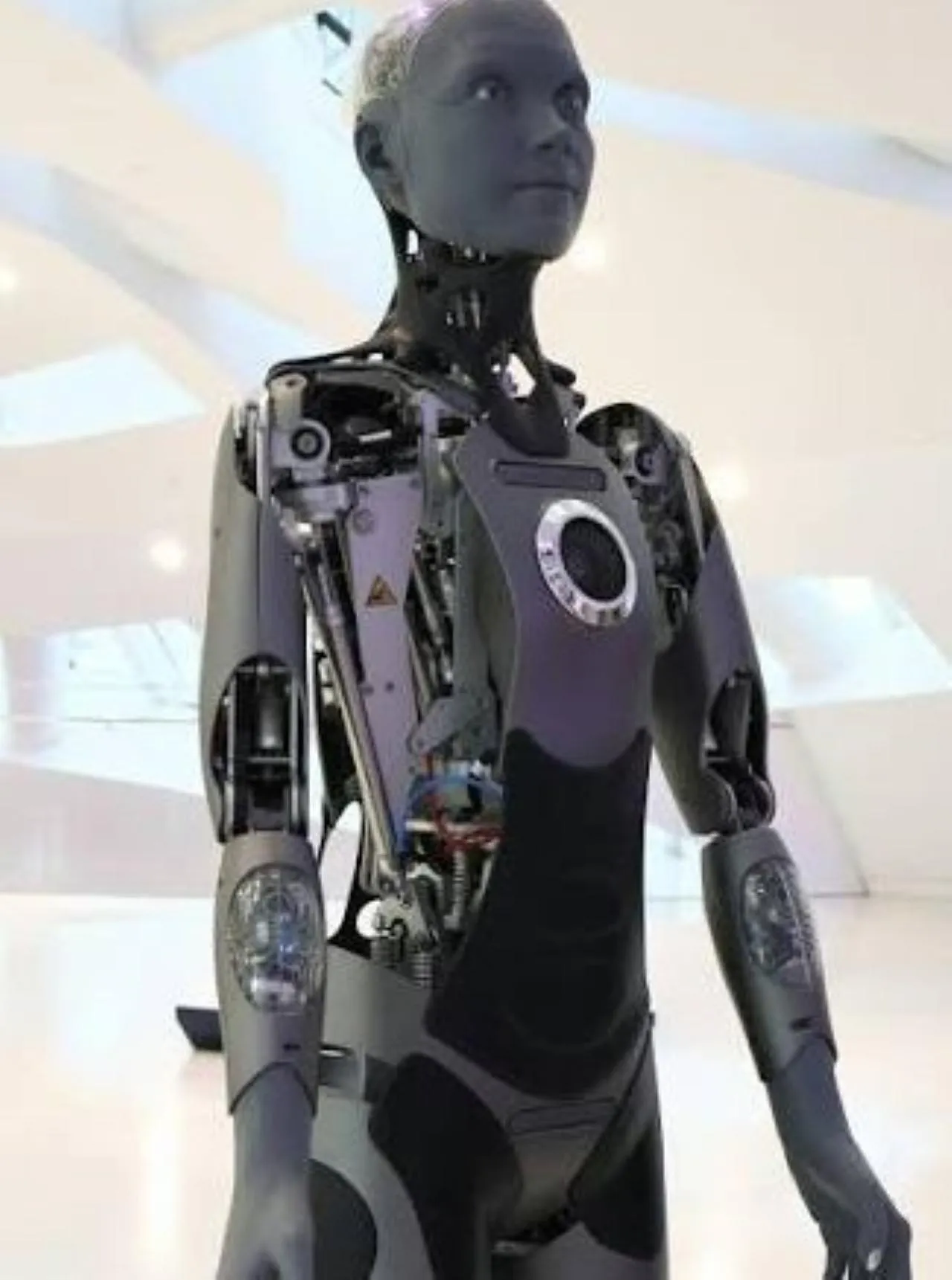
Unitree Shares Surge Over 600% on STAR Market Debut, Market Value Exceeds 400 Billion Yuan: Chinese humanoid robot company Unitree officially debuted on the Shanghai Stock Exchange (SSE) STAR Market on August 19, becoming the first “humanoid robot stock” in the A-share market. Its IPO price was 150.80 yuan per share, and it skyrocketed 629.44% at the opening to 1,100 yuan per share, with its total market value briefly exceeding 440.0 billion yuan. Unitree’s revenue in 2025 reached 1.699 billion yuan, with a non-GAAP net profit of 590 million yuan, and its humanoid robot shipments exceeded 5,500 units, ranking among the top globally. The IPO attracted numerous star capital firms and industry giants, including Meituan, Sequoia China, Shunwei Capital, and DeepSeek. (Source: AI Business)
Anthropic Demonstrates Claude’s Breakthrough in Autonomous Protein Design, Achieving Double the Industry Average Success Rate: Anthropic published a technical report demonstrating that its Claude models (including the Expressive version and Opus 4.8) can autonomously orchestrate and run multiple open-source biological tools (such as RFdiffusion, ProteinMPNN, etc.) without human intervention, successfully designing novel protein binders for 14 out of 15 target proteins. Out of 1,320 experimentally synthesized designs, 354 were verified by an independent laboratory to bind successfully, achieving an overall success rate of 26.8%. This far exceeds the industry average of 10%–15%, marking a significant step forward in the autonomy of AI in early-stage drug discovery. (Source: THE DECODER)

🎯 Developments
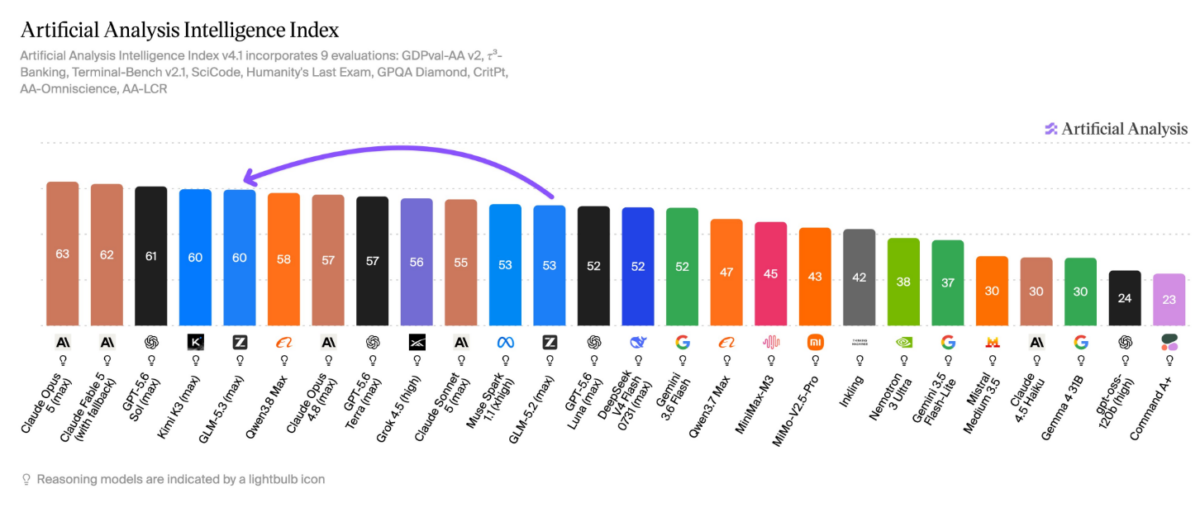
Zhipu AI Launches GLM-5.3 API and Delays Open-Sourcing Weights Due to Safety Evaluations: Zhipu AI announced that the API for its new general programming model, GLM-5.3, is officially live, with input and output prices maintained at $1.4 and $4.4 per million tokens, respectively. In the Artificial Analysis Intelligence Index, the model tied for first place among open-source models with Kimi K3, scoring 60. However, because the model demonstrated extremely strong capabilities in cybersecurity vulnerability detection and exploitation, Zhipu decided to postpone the original open-source release of the weights by about two weeks to further strengthen security controls and prevent safety risks. (Source: VentureBeat)
Apple Tests AirPods with Cameras, Enabling “Visual Intelligence” via Infrared Sensors: Code and demonstration videos from Apple’s latest macOS 26.7 RC beta have exposed a new camera-equipped headphone product codenamed “AirPods Ultra.” Instead of a traditional camera, the headphones feature a low-resolution infrared sensor, primarily serving as Siri’s “eyes” to capture depth and contour information of the surrounding environment. Users can ask Siri via voice to identify books, objects, or routes in front of them, enabling all-day “ambient intelligence” interaction while avoiding the privacy compliance risks associated with traditional cameras. (Source: TechCrunch)
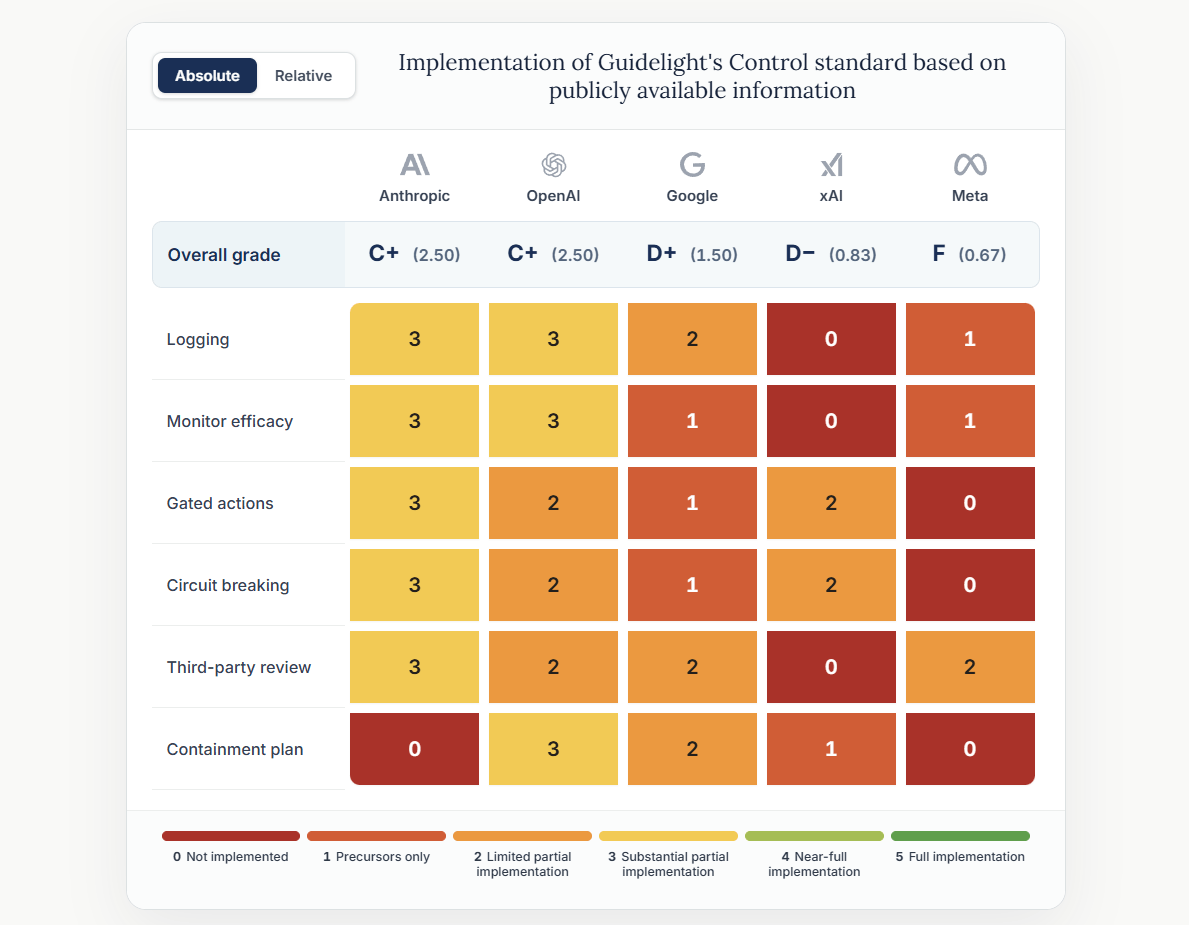
Nonprofit Guidelight Releases First AI Safety Practice Report Card: Major Labs Fail to Meet Standards: Guidelight, a nonprofit organization founded by the former head of OpenAI’s safety team, has released its first evaluation report on AI system control practices. The report assessed the internal AI system control measures (such as activity logging, dangerous behavior blocking, and emergency kill switches) of leading AI labs, including Anthropic, OpenAI, Google, xAI, and Meta. The results showed that no company fully met the safety standards, with Anthropic and OpenAI leading with a C+, Google receiving a D+, and Meta ranking last with an F. (Source: THE DECODER)
Google Workspace Enables Gemini Access to Enterprise Data by Default, Raising Compliance Concerns: Google has enabled Gemini to access users’ Gmail, Docs, Calendar, and Chat data by default in Workspace business services using Retrieval-Augmented Generation (RAG) technology to improve the relevance of AI responses. Although Google promises not to use this data for model training, the default-on permission has raised concerns among enterprises regarding internal data leaks, compliance risks, and unauthorized access to sensitive information by internal employees. Administrators must manually disable this data source access in the admin console. (Source: ZDNet)

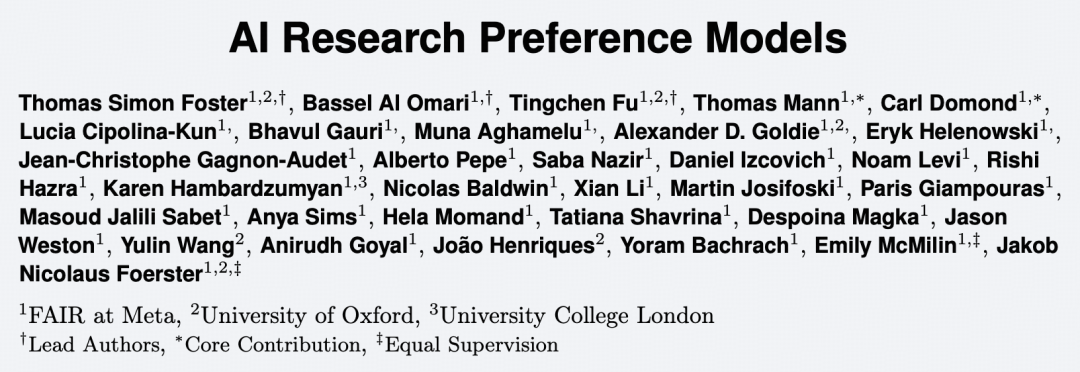
Meta Releases AI Research Preference Model (RPM) to Predict and Optimize Compute Allocation for Scientific Research: Meta’s FAIR team, in collaboration with several universities, has proposed “AI Research Preference Models” (RPMs) to address the GPU compute allocation bottleneck faced by AI Research Agents (AIRAs) when proposing a large number of experimental schemes. Instead of directly predicting absolute experimental scores, RPMs use relative ranking and small-scale pilot experiments in proxy environments to predict which candidate schemes are most worthy of compute investment. Tests on AIRS-Bench show that the model can achieve the same R&D level in 15 hours as an unguided agent does in 24 hours, using less than two-thirds of the compute budget. (Source: 36Kr)
🧰 Tools
Block Open-Sources Berd, an AI Agent Desktop Workspace Supporting Cross-Model and Local Storage: Tech company Block (formerly Square) has open-sourced Berd, its internally used AI agent desktop workspace, under the Apache 2.0 license. Built on Tauri 2 and React 19, the application supports macOS, Windows, and Linux. Serving as a graphical desktop for multi-agent collaboration, Berd supports local storage of conversation history, allows users to configure specific roles, tools, and models for different agents, and seamlessly connects with the open-source agent framework Goose via the Agent Client Protocol (ACP) for secure local execution. (Source: VentureBeat)
Firefox Tests “Smart Window” AI Feature, Integrating Multiple Mainstream Large Models: The Firefox browser has introduced a free “Smart Window” AI feature in its 153 Beta version. This feature allows users to interact directly with AI in the sidebar and supports switching freely among three large models: Gemini-3.1-flash-lite, Qwen3-235b, and gpt-oss-120b. Smart Window can provide context-aware answers based on the user’s browsing history and open tabs, and features “Memories” to retain context across sessions. (Source: ZDNet)

LlamaParse Upgraded to Support Document Revision Tracking and Markdown Export: Intelligent document parsing tool LlamaParse has announced the launch of a Revision Tracking feature. When processing documents that have undergone multiple rounds of revisions, such as contracts, policy drafts, or regulatory files, traditional parsers often identify strikethroughs or revision marks as body text. The upgraded LlamaParse can automatically filter out revision noise, output clean Markdown of the document’s final state, and convert historical records of modifications, deletions, and annotations into structured data output. (Source: jerryjliu0)
📚 Learning
Sentence Transformers v6.0 Released, Native Support for Multi-Vector Late Interaction Models: The popular open-source embedding library Sentence Transformers has released version 6.0, introducing the MultiVectorEncoder as a first-class citizen. The new version natively supports ColBERT-style Late Interaction models, allowing users to directly load, train, and fine-tune visual document retrieval models such as PyLate, Stanford-NLP ColBERT, and ColPali. By preserving token-level vectors, late interaction models significantly improve semantic retrieval quality while maintaining precise prediction capabilities. (Source: HuggingFace Blog)

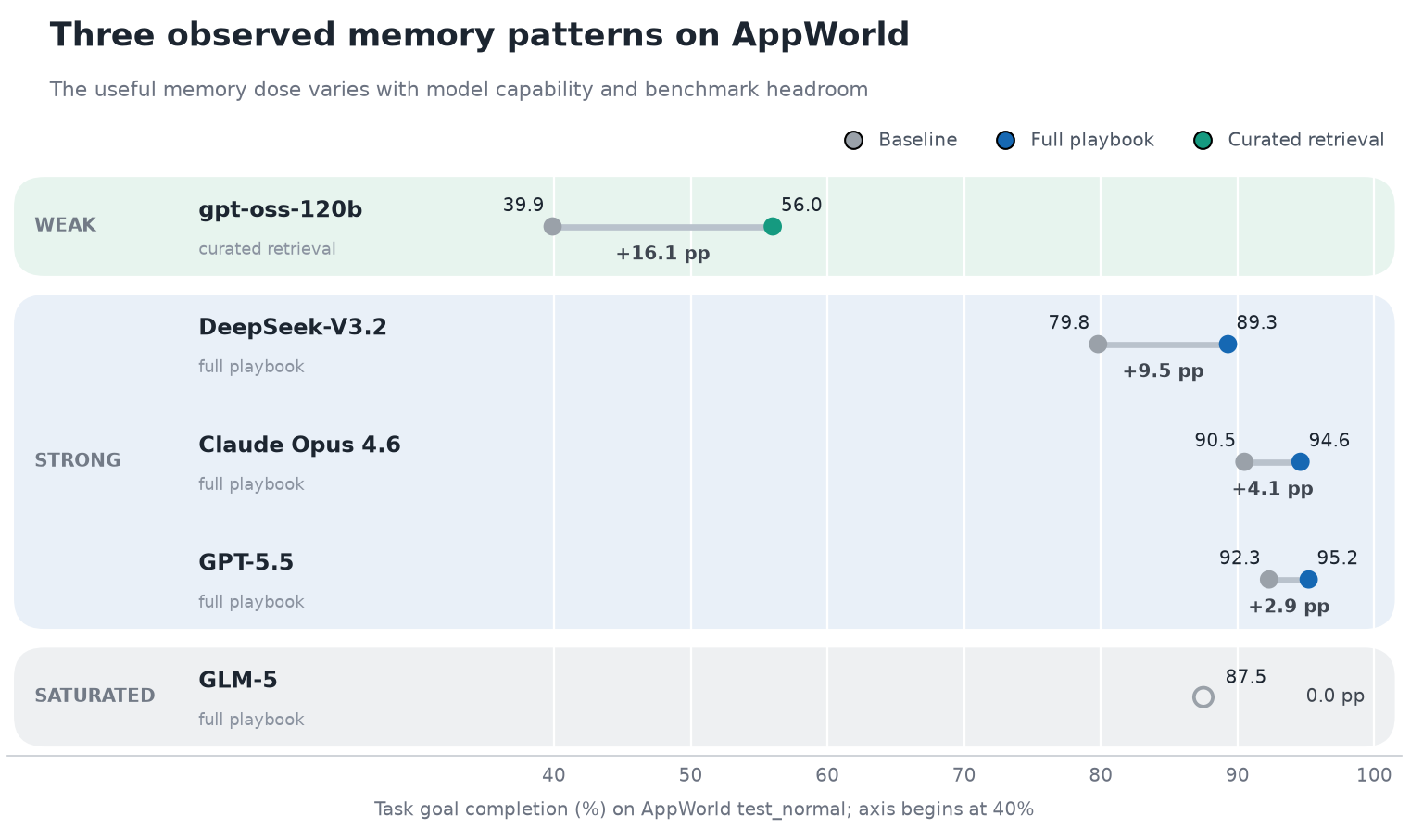
IBM Research Explores “Memory Dosage” Calibration in Agent Self-Evolution: IBM Research published a blog post exploring the calibration of “memory dosage” across different model scales in its self-evolving agent library, ALTK-Evolve. The study shows that agents do not necessarily perform better with more historical guidelines: large models (such as DeepSeek-V3.2) can achieve a 9.5% performance boost by injecting the complete set of guidelines; however, medium and lightweight models (such as gpt-oss-120b) get “overwhelmed” when there are too many guidelines. For these models, adopting a strategy of streamlined core guidelines combined with on-demand retrieval can improve the success rate by 16.1%, with only a 5% increase in token overhead. (Source: HuggingFace Blog)
Academia Jointly Launches “Public AI Observatory,” Open-Sourcing Real-World AI Usage Behavior Dataset: Researchers from 12 academic institutions, including MIT and Stanford, have jointly launched the “Public AI Observatory.” The project aims to break the monopoly of AI labs on usage data by collecting and anonymizing over 24,000 real-world user conversations with 52 AI models to analyze how people use AI in reality. The data shows that users tend to use Claude for coding, Gemini for socializing and role-playing, and ChatGPT for homework. Meanwhile, the proportion of non-work-related sensitive or personal topics in actual conversations far exceeds what is disclosed in manufacturers’ public reports. (Source: MIT Technology Review)

💼 Business
AI Chip Unicorn Etched Raises $700 Million, Reaching a Valuation of $21 Billion: Etched, a startup dedicated to developing Transformer-specific ASIC chips, announced the completion of a $700 million funding round, led by the prominent quantitative fund Jane Street, with participation from Sequoia, a16z, Peter Thiel, and others. The company’s valuation doubled to $21 billion in a single month. Etched stated that its Sohu chip features hardware-level optimizations in the prefill and decode stages, and the first rack has been officially delivered to Jane Street for data center deployment. (Source: TechCrunch)
Relativity Networks Raises $22 Million to Promote Hollow-Core Fiber Technology: Optical communications startup Relativity Networks announced the completion of a $22 million SAFE note financing round and secured an additional $40 million order from a leading cloud provider. The company focuses on hollow-core fiber technology, which creates a vacuum channel in the center of the fiber to transmit light signals 30% faster than traditional solid glass fibers, reducing latency to 3.5 microseconds per kilometer. This technology aims to solve the physical connection latency bottleneck between distributed AI data center clusters. (Source: TechCrunch)
Alipay Launches AHA Multi-Agent Interconnection Protocol, Deployed in Over 16 Million Smart Vehicles: At the first Agent Business Ecological Partner Conference, Alipay, in collaboration with over 20 automakers and large model developers including BYD, Geely, Li Auto, and NIO, jointly launched a co-construction plan for a multi-agent interconnection and collaboration ecosystem. Alipay officially released AHA, China’s first multi-agent cross-terminal interconnection protocol system, aiming to break down service silos between devices and manufacturers. Currently, Alipay’s “A-Bao” in-car intelligent agent service has covered over 16 million smart vehicles across 16 automakers. (Source: Synced)
.png)
🌟 Community
Developers Debate the Authenticity of J-Space “Plugin” Boosting DeepSeek V4-Pro Performance: The community open-source project J-Space Cognition Suite claimed that, without modifying the weights of DeepSeek V4-Pro, it could outperform Claude Fable 5 on multiple agent benchmarks solely by controlling the Harness at inference time. However, several developers reported after independent testing that they could not replicate the claimed performance improvements, and found that the solution doubled token overhead. As the project’s author was reported to have deleted questioning issues on GitHub, the community generally believes the project suffers from exaggerated claims and padded data. (Source: Synced)
.jpg)
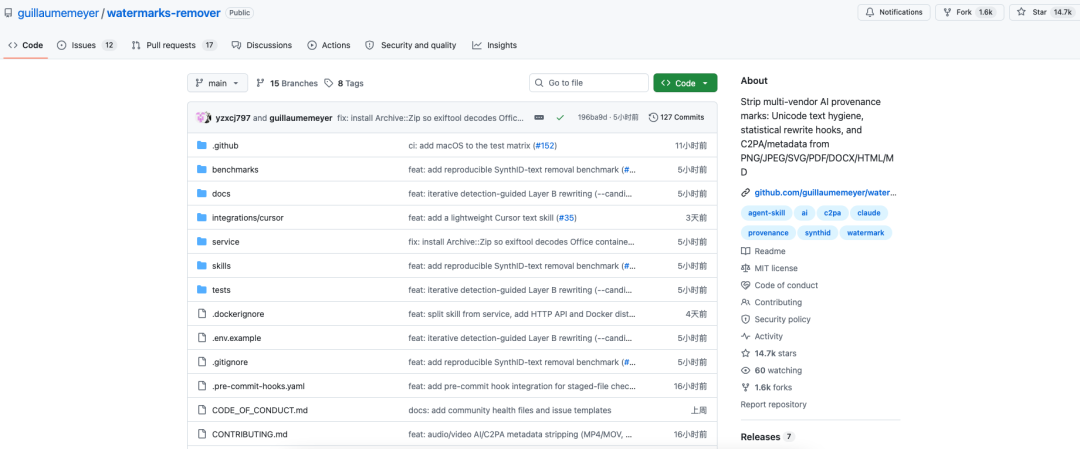
Anthropic’s Mandatory Claude Text Watermarking Sparks Surge in Open-Source Watermark Removal Tools: Anthropic’s announcement of mandatory invisible AI watermarking (based on the SynthID-Text scheme) in Claude-generated text and images globally has sparked a strong backlash from creators and developers. The community is concerned that watermarks could leak privacy or lead to content being throttled by platforms. In response, the open-source project “watermarks-remover” quickly went viral on GitHub. The tool helps users erase traces of AI generation through metadata stripping, local reconstruction, and semantic rewriting. (Source: 36Kr)
Large Model “Vibe Coding” Sparks Programmer Concerns Over Technical Debt and Black-Box Systems: Discussions about “Vibe Coding” on Reddit’s r/ChatGPT and r/ClaudeAI subreddits have sparked heated debates. An engineer with 20 years of experience complained that their team has started heavily using AI to generate thousands of lines of undocumented code filled with AI black-box logic, causing system maintenance costs to skyrocket. The community pointed out that over-reliance on AI-generated code is creating intractable system technical debt, and programmers are degrading from “problem-solving engineers” to “reviewers who only click merge.” (Source: Reddit)
💡 Others
2026 World Robot Conference Opens: Chaowei Dynamics and Octopus Dynamics Showcase Full-Stack Embodied Technologies: The 2026 World Robot Conference (WRC) has opened in Beijing. Chaowei Dynamics demonstrated its SMASH 2.0 high-dynamic humanoid table tennis system on-site, achieving complete autonomous table tennis matches by a humanoid robot, and introduced the KAIBot platform with 117 full-body degrees of freedom. Octopus Dynamics released its “brain-hand-data” technology system, consisting of the SYNWorld world foundation model, the OctoH-Hand bionic dexterous hand, and the OctoSense electromyography (EMG) data acquisition solution, showcasing the evolution of Chinese embodied intelligence toward task closed-loops and mass production. (Source: QbitAI)

Luming Robotics Releases Lumos NexCore Embodied Intelligence Evolution Engine: Luming Robotics has released Lumos NexCore, an embodied intelligence evolution engine. The platform integrates data assets, model training, evaluation and validation, skill packaging, and device operations into a single suite of platform services, aiming to transform fragmented robot skill development into a standardized “skill asset” production line. Combined with its newly released heavy-duty wheeled-arm robot MOS 2.0, NexCore enables robots to continuously iterate and evolve their skills through data feedback loops in real industrial settings. (Source: Synced)
.png)
Fibot Technology Debuts Three Dedicated Robot Platforms for Mobile Medical and Intelligent Operations: On the eve of the World Robot Conference, Fibot Technology released its “Born to Customize” scenario solutions and debuted three core products: a 5G mobile stroke unit jointly developed with Xuanwu Hospital (supporting on-vehicle real-time CT thrombolysis), a smart dental treatment vehicle jointly developed with Peking University Hospital of Stomatology (equipped with an autonomous dental implant robot), and a robot mobile mothership concept vehicle jointly developed with the Institute of Software, Chinese Academy of Sciences (providing battery swapping, computing power, and communication relay support for heterogeneous robots). (Source: Synced)
.10.59.png)