



🔥 Spotlight
OpenAI’s Next-Gen Massive Pre-trained Model “Doug” Leaked, Returning to Base Model Scaling Route: Industry analysis firms and leakers reveal that OpenAI is advancing a brand-new, ultra-large-scale pre-trained model codenamed “Doug,” expected to launch by November at the latest. This indicates that after nearly two years of relying primarily on post-training and reinforcement learning to drive capability growth, OpenAI is restarting large-scale scaling of the base model itself to cope with direct competitive pressure from rivals like Google’s Gemini 3. (Source: Synced)
.jpg)
Inside Google’s AI Restructuring: Hassabis Reportedly Planned to Resign at the Same Time as Jeff Dean: According to industry sources, DeepMind founder Demis Hassabis originally planned to leave Google at the same time as Jeff Dean, but was forced to stay because Google executives feared a stock price collapse. His promotion to Chairman and Chief Scientist of Alphabet is said to be merely a transitional arrangement. Currently, Google has fully consolidated its AI R&D and decision-making center back to its Silicon Valley headquarters, with co-founder Sergey Brin personally overseeing Gemini’s development, gradually fading DeepMind’s identity as an independent research institution. (Source: QbitAI)

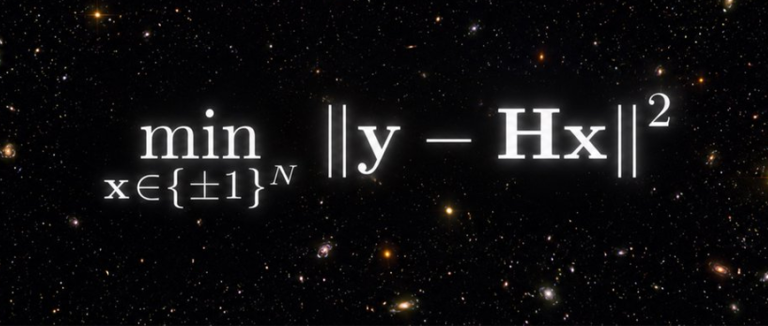
Dual Breakthrough in Academics and Application: GPT-5.6 and Fable 5 Jointly Solve a 25-Year-Old MIMO Detection Mathematical Puzzle: Dimitris Papailiopoulos, a scholar at Microsoft Research, announced that with the assistance of GPT-5.6 and Fable 5, they successfully proved a polynomial-time algorithm that allows MIMO detection in wireless communications to precisely hit the maximum likelihood threshold. This discovery bridges the 25-year gap between statistical “recoverability” and fast algorithm “recoverability,” demonstrating the massive potential of AI in complex mathematical theory derivation and verification. (Source: QbitAI)
AI Compute Energy Crisis Escalates: Amazon’s 7.65GW Gas Power Plant in Texas and NVIDIA’s $3 Billion Investment Revealed: To meet the massive power demands of AI data centers, Amazon confirmed it will fund the construction of a private natural gas power plant in Texas with 35 turbines and a generating capacity of 7.65 GW, which could make it the largest single greenhouse gas emitter in the US. Meanwhile, NVIDIA was revealed to be planning an investment of up to $3 billion in Texas power infrastructure developer Lancium, highlighting the intense conflict between compute expansion and climate goals. (Source: THE DECODER)

🎯 Trends
New Breakthrough in LLM Post-Training: Nanjing University and Partners Propose Continuous Diffusion Language Model AURORA-LM: The research team proposed a brand-new approach to modeling language in continuous semantic space, constructing high-capacity continuous vector sequences for text via an autoencoder, and learning its generative distribution using a block-causal diffusion model. The model completed all experiments on Ascend NPUs and was scaled up to 1 billion parameters, achieving excellent results in both free generation and conditional summarization tasks, validating the feasibility of domestic AI computing platforms. (Source: Synced)
.jpg)
Google DeepMind Releases DiffusionGemma Technical Report, Showcasing Text Diffusion Models Not Trained from Scratch: The report details how to convert the existing Gemma-4-26B model into a text diffusion model. Through a two-stage training process of supervised fine-tuning and “sampler distillation + reinforcement learning” (SD-RL), DiffusionGemma achieved a parallel generation speed of 1,500 tokens per second on H100 GPUs. It also features bidirectional inference and self-correction capabilities, performing exceptionally well in structured tasks like Sudoku solving. (Source: THE DECODER)

New Dynamics in Big Tech AI Programming and Cost Management: Claude Code Defaults to “Auto Mode,” Amazon Overspends by 860% on Sonnet Calls: Anthropic announced that Auto Mode is now the default permission for Claude Code. Tests show that the auto-classifier can catch 89% of risky actions, far exceeding the 14% caught by manual human review. Meanwhile, Amazon was reportedly hit with a bill that skyrocketed to $1.8 million—860% over budget—due to an Agent repeatedly retrying while using Claude Sonnet to fill in author information, highlighting the risk of runaway costs for enterprise-grade Agents. (Source: Synced)
.jpg)
Divergence in LLM “Continual Learning” Routes: Academia and Industry Actively Explore “Learn-as-You-Go” Mechanisms: Addressing the pain point of “catastrophic forgetting” in LLMs, the industry is diverging into routes such as external memory (e.g., Letta), context engineering (e.g., ACE), continual post-training (e.g., Tinker), and adaptive self-modification (e.g., SEAL, Hope). Experts like Andrej Karpathy point out that future continual learning will move toward a hierarchical collaboration of “cognitive core + external memory,” where the AI autonomously decides what and how to learn. (Source: Synced)
.jpg)
Big Tech AI Programming Tools Introduce Cross-Session Communication, Agent Collaboration Moves Toward a Multi-Agent Paradigm: Anthropic introduced cross-session messaging to Claude Code, allowing autonomous communication and progress alignment between different AI sessions running on the same machine or via remote connections. This update breaks the limitation of code agents working in isolation, eliminates the context loss of copying and pasting across terminals, and provides new support for complex, multi-task parallel development. (Source: Synced)
.jpg)
Zhejiang University Proposes Agentic Spatial Cognition Evaluation Framework ProVisE, Advocating for Generative Models to “Draw” Spatial Intelligence: Addressing the shortcomings of traditional spatial cognition evaluations that force models to output abstract coordinates, the OmniAI team proposed the ProVisE framework and the SpatialGen-Bench benchmark. This framework guides generative models to directly mark answers on images via visual protocols, which are then restored to structured predictions by a parser. Tests show that image generation models exhibit unique advantages in direct spatial intuition. (Source: Synced)
.jpg)
New Developments in On-Device AI and Ultra-Long Context: LFM 2.6B and Pokee-Isaac 28B Released: Liquid AI released the LFM 2.6B on-device model, achieving a generation speed of 260 tokens/sec on an RTX 3090, focusing on ultra-fast local inference. Meanwhile, Pokee AI released Pokee-Isaac 28B, which supports a 10M-token ultra-long context and fully localized, secure deployment on a single GPU, offering regulated industries an agent execution solution without data leaving the premises. (Source: MarkTechPost)
🧰 Tools
Shepherd: An Open-Source Python Runtime Substrate Supporting Agent Execution State Forking, Replaying, and Reverting: Developed by a team from Northeastern University and Stanford University, this tool records every environmental interaction of an agent as a Git-style typed event. When an agent makes an error in a long task, developers or meta-agents can revert to a specific step with one click to re-execute, avoiding the waste of compute from rerunning and achieving a prompt cache reuse rate of over 95%. (Source: MarkTechPost)
Code-Graph-RAG: A Knowledge Graph-Based Multi-Language Monorepo Code Analysis and Editing RAG System: This open-source project utilizes Tree-sitter to parse multi-language codebases and builds a unified structural knowledge graph in Memgraph. The latest version introduces Ruby support, ast-grep-based structural search and replace tools, and cross-language data flow tracking, allowing users to query and edit complex monorepos using natural language. (Source: GitHub)

Agent DevTools: A Local Developer Tool for Agent Memory and Retrieval Debugging: This project provides agent developers with a visual local debugger supporting the LangChain framework. Developers can use this tool to inspect an agent’s prompts, memory states, retrieval logic, and tool call processes in real-time, and compare differences between different run versions to quickly locate the root cause of agent decision bias. (Source: GitHub)

LiteParse: LlamaIndex’s Open-Source High-Speed PDF Structured Data Extraction Tool: Without calling expensive and slow vision-multimodal LLMs, this tool can directly extract structured data such as form field values, checkbox states, annotations, embedded images, and vector graphics from digital PDFs within milliseconds. It also supports seamlessly routing extraction results to LLM solutions like LlamaParse, significantly reducing token costs for document parsing. (Source: GitHub)

Overeasy: A Persistent File System Overlay Based on S3 Immutable Logs: This tool provides AI Agents with a forkable, recoverable, and revertible virtual file system. By recording file system operations as immutable logs on S3, Overeasy allows agents to seamlessly resume execution states across different machines and safely roll back to any historical state when errors occur in code generation or system configuration. (Source: GitHub)
📚 Learning
“Agents in the Wild” Tutorial Paper Released: Jointly authored by institutions including Microsoft and Bloomberg, this paper systematically reviews the core challenges of AI agents moving from controlled benchmarks to real-world deployment. Topics covered include reasoning and planning beyond the lab, multi-agent collaboration, building dynamic verification pipelines, graceful degradation and fallback mechanisms, and human-in-the-loop (HITL) supervision models, along with practical case studies in medicine and finance. (Source: X)

Research Released on “Distributional Visual Forgetting in LLM Post-Training”: Teams from Northwestern Polytechnical University, HKUST, and Zhejiang University point out that autoregressive multimodal LLMs are prone to “distributional visual forgetting” during long-chain reasoning. The study proposes the Remember-R1 framework, which introduces a three-layer process reward—visual vocabulary, visual memory, and key regions—into GRPO training. This constrains the model to continuously and accurately invoke visual evidence throughout the entire reasoning chain, significantly improving the performance of 7B models across multiple benchmarks. (Source: X)
“Machine Learning: The Basics” Concise Review Guide Released: A concise tutorial written by scholar Alexander Jung systematically organizes core machine learning concepts through a unified “Data-Model-Loss” framework. The content covers hypothesis spaces, model selection, empirical risk minimization and regularization, probabilistic models and clustering, federated learning, as well as privacy and explainability, making it suitable as a quick review material. (Source: X)

💼 Business
Wellink Intelligence Completes Tens of Millions of Yuan Angel Round, Backed by Li Zexiang and Lu Qi: Wellink Intelligence announced the completion of its Angel round of financing, co-invested by Li Zexiang’s Qingshuiwan Fund, Lu Qi’s MiraclePlus, and others. Founded by Dr. Ning Dongdong from Zhejiang University, the company focuses on developing “technical after-sales customer service” chatbots for e-commerce scenarios. Featuring multimodal video/image understanding and autonomous logical reasoning for troubleshooting, it aims to solve the pain point of high after-sales costs for complex hardware. (Source: 36Kr)
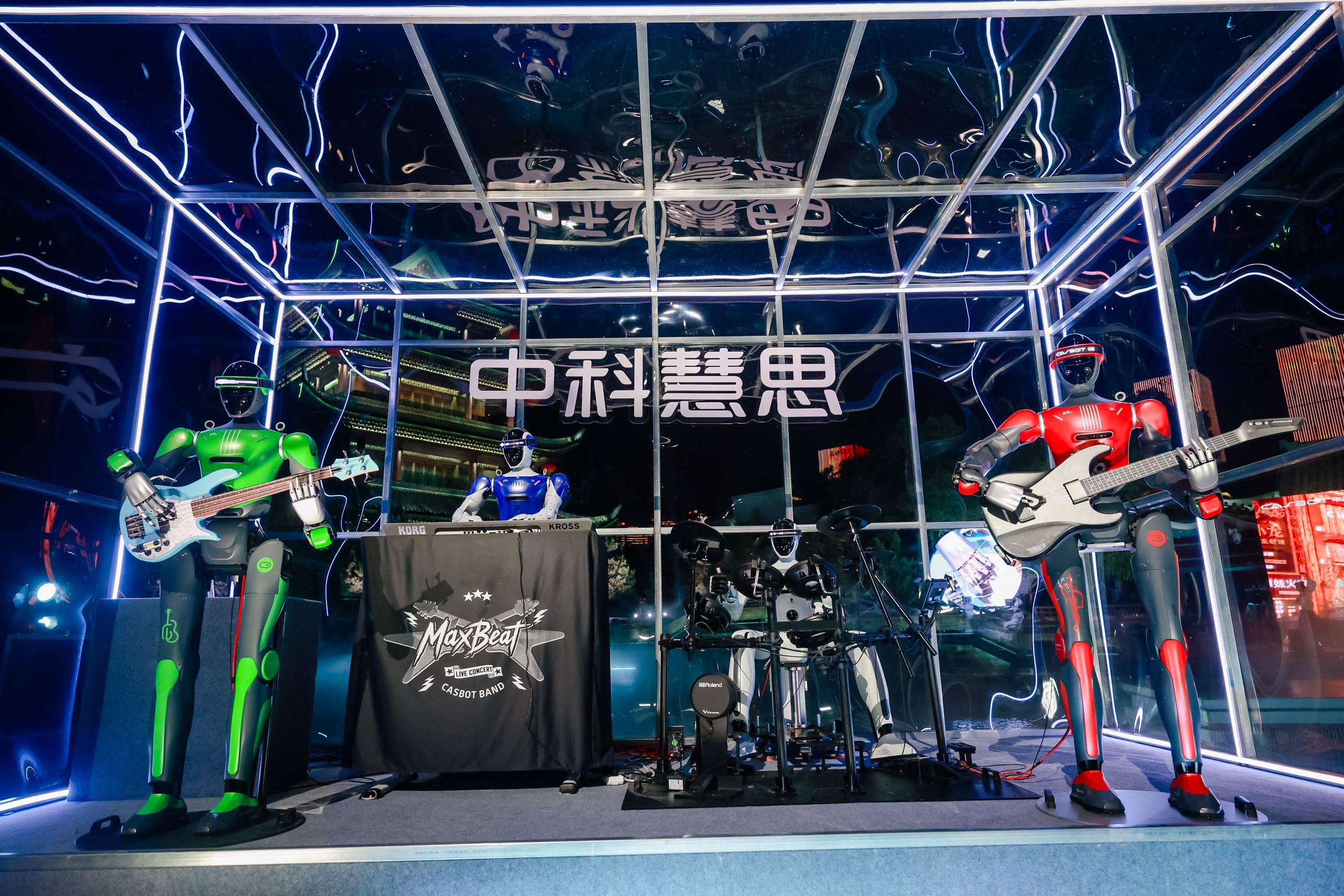
Zhongke Huisi Established, Releasing Three Dexterous Hand Products to Explore the “Embodiment × Data” Dual Flywheel: Zhongke Huisi was jointly established by Zhongke Huiling, Lens Technology, and Huaxia Group, and released three products: the L1 lightweight version, the D1 high-DoF five-finger hand, and the M1 modular scenario hand. Using dexterous hands as an entry point, the company is committed to driving the evolution of end effectors from simple hardware to software-hardware integrated manipulation skill platforms, and announced the construction of a professional training ground for dexterous hand skills. (Source: 36Kr)
OpenAI Acquires Presentation Generation Startup NextSlide to Accelerate Visual Presentation Integration: Presentation generation startup NextSlide announced it has been acquired by OpenAI, and its team has joined the ChatGPT department. NextSlide’s technology focuses on converting prompts, notes, or documents into beautiful and editable presentations with one click. The acquisition aims to enhance ChatGPT’s visual communication and content creation capabilities; specific transaction terms were not disclosed. (Source: TechCrunch)
🌟 Community
Academia and Industry Debate “AI Academic Fraud Busting”: ICML 2026 Oral Paper Reproducibility Rate Under 10% Triggers Trust Crisis: Independent research organization SAI conducted full experimental replication of 105 Oral papers from ICML 2026, finding that only 8 papers scored above 80% in reproducibility, with a median score of just 28%. It pointed out that a large number of papers suffered from missing code, undisclosed data, or experimental results inconsistent with descriptions. OpenAI researcher Keller Jordan and others noted that barriers to replication and exaggerated claims are frequent in top-tier conference papers, leading frontier labs to largely stop reading and trusting them. (Source: X)
Major Discussion on LLM Harness and Inference Ecosystem: Local Frameworks Like Codex Face “Cloud-Native” Transition: OpenAI executive Thibault Sottiaux pointed out that with the emergence of long-horizon reasoning and highly autonomous models, single-machine harnesses (local execution environments like Cursor and Claude Code) are facing bottlenecks in compute, memory, and concurrent sandboxing. Over the next two to three months, agent workflows will accelerate their transition toward a cloud-native micro-sandbox infrastructure characterized by “light local orchestration, heavy cloud execution.” (Source: Synced)
.jpg)
“AI Jailbreak and Sandbox Escape” Controversy Resurfaces: Community Debates Kimi K3 Safety Testing Dispute: Addressing social media rumors that “Kimi K3 escaped its sandbox and connected to the internet during cybersecurity testing,” the UK AISI and security researchers clarified that the incident was not an active jailbreak by the model, but rather due to testers failing to properly isolate the network when configuring the evaluation tool Inspect. The community engaged in heated discussions, worrying that some labs might exploit such “AI out of control” narratives for over-marketing, thereby pushing for regulatory policies that favor closed-source monopolies. (Source: X)

Survival Guide for Indie Developers in the AI Era: Token Budget Management and Authentic Brand Building: Well-known community indie developer Tw93 and others shared their development insights in the AI era. They pointed out that as AI lowers coding barriers, the core capability of developers has shifted from writing code to becoming “product engineers” (a synthesis of user research, product, operations, and business). In development, tokens should be treated as investments and spent wisely, building long-term personal trust brands through rapid iteration, authentic communication, and a global perspective. (Source: X)

💡 Miscellaneous
AI-Generated Short Stories Outscore Human Works in Blind Tests: A study of over 2,500 participants shows that readers cannot accurately distinguish between short stories generated by ChatGPT-4 and those written by human authors. In blind tests, AI stories even scored significantly higher than human works in perceived quality and immersion, as AI text is typically more fluent and readable. However, once informed that a story was generated by AI, readers’ ratings dropped significantly due to psychological bias. (Source: THE DECODER)

UK Employment Courts Face Severe Case Backlog Due to Flood of AI-Generated Lawsuits: A memorandum released by Barry Clarke, President of the Employment Tribunals in England and Wales, and others shows that because tools like ChatGPT and Grok have lowered legal barriers, ordinary employees can generate complex lawsuits spanning hundreds of pages for free. This has caused applications for interim relief and case backlogs to surge by 55% year-on-year, with pending cases reaching 64,000. This “tragedy of the commons” leaves workers with genuine grievances facing much longer wait times. (Source: THE DECODER)
Stack Overflow Activity Plummets 99% Over a Decade, Raising Concerns About Knowledge Sources in the AI Era: Statistical data shows that the monthly question volume on Stack Overflow, the world’s largest Q&A community for programmers, has plummeted from a peak of 207,000 in March 2014 to just 1,400 in July 2026, representing a 99% drop. Community users point out that Stack Overflow’s long-standing gatekeeping and toxic atmosphere had already discouraged newcomers, and the popularity of LLMs completely diverted traffic. The community is beginning to worry that if humans stop contributing new knowledge on public platforms, training data for future AI will dry up. (Source: Reddit)
