🔥 Focus
Lilian Weng Announces Resignation from Thinking Machines Due to Burnout : Thinking Machines co-founder Lilian Weng announced her resignation due to physical burnout. In her farewell letter, she stated that the 20 months of high-pressure work at the company had severely impacted her health. In the future, she will look for work with clearer boundaries and greater predictability, and will no longer serve as a co-founder. This move has sparked widespread discussion in Silicon Valley regarding the intense competition in AI startups and talent drain (Source: QbitAI)

Huawei and Partners Jointly Release Boogu-Image-0.1 Multimodal Model Family : The Celia team at Huawei’s Hong Kong Leibniz Research Institute, in collaboration with HKU, HKUST, and others, has released Boogu-Image-0.1. Using Qwen3-VL-8B as the instruction encoder, it supports native 2K generation. The model was pre-trained on only 208 million independent images with a theoretical training cost of approximately $400,000. It approaches closed-source performance levels across multiple benchmarks and has been open-sourced under the Apache 2.0 license (Source: Synced)
.jpg)
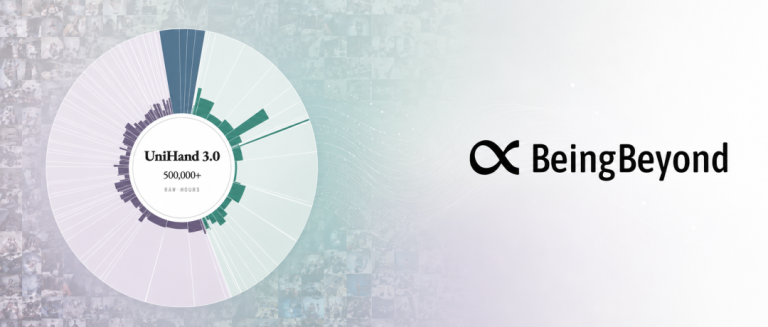
BeingBeyond Releases the First Implicit Tactile World Action Model Being-H0.8 : BeingBeyond released the Being-H0.8 model. This model incorporates the tactile modality into latent space representation for the first time, building the UniHand-3.0 video dataset with over 500,000 hours, and generating contact annotations via TactoHand. This enables robots to adjust their movements in real-time based on tactile feedback during execution, completing fine operations such as retrieving objects from a bag (Source: QbitAI)
🎯 Dynamics
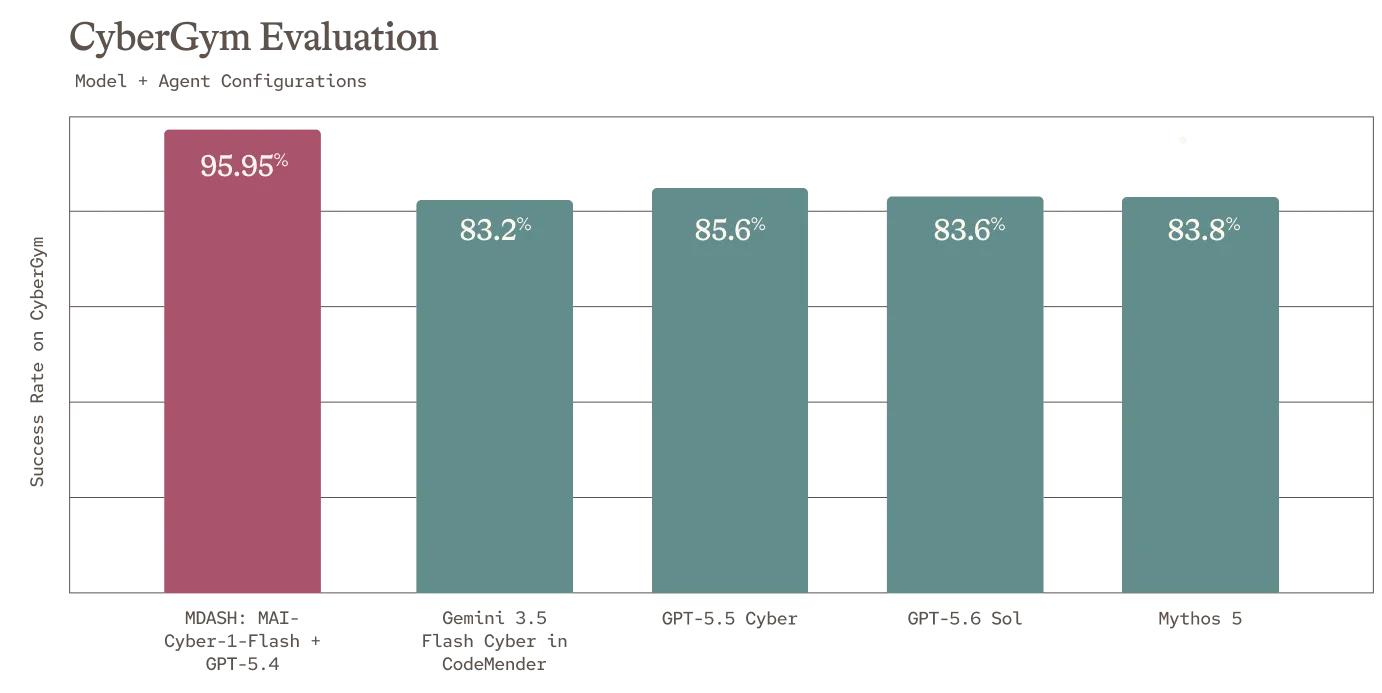
Microsoft Releases Security Model MAI-Cyber-1-Flash and Perception Platform : Following the establishment of the Open Source Security Coalition, Microsoft officially launched the MAI-Cyber-1-Flash model (137B parameters, 5B active), embedded in its MDASH agent security system. In CyberGym tests, this combination beat models like Anthropic’s Mythos 5 with a score of 95.95%, while cutting costs in half. Simultaneously, the Perception platform was introduced, utilizing a multi-agent red-blue-green teaming mechanism to automate vulnerability detection and remediation (Source: THE DECODER)
Volcengine Opens Doubao Search Capabilities to Enterprises and Developers : Volcengine has officially opened the search capabilities behind the Doubao App to enterprises and developers via API, MCP, Skill, and other formats. The service provides rich fields such as authority ranking, publication time, body summary, and original Markdown excerpts, helping AI Agents acquire and filter external real-time information more efficiently and reduce irrelevant token consumption (Source: QbitAI)

🧰 Tools
Perplexity Releases Official Single-File CLI Tool pplx : Perplexity has released its official command-line tool, pplx, which supports running web searches and content scraping directly in the terminal, returning results in standard JSON format. Designed for both human and AI coding agents, the tool supports token budget control and local file saving via the PPLX_OUTPUT_DIR environment variable and the --stdout-preview parameter (Source: MarkTechPost)
Kando AI Launches Self-Evolving Decision System : Kando AI, founded by a team from Tsinghua University and Peking University, has launched a self-evolving decision system for high-value decision-making scenarios (such as financial investment research and scientific research). By recording and analyzing users’ decision trajectories and feedback, the system digitizes and self-evolves cognition. Positioned as the “Cursor of the decision-making field,” the company has completed a seed round of financing worth tens of millions of yuan (Source: 36Kr)

📚 Learning
CausalGame Paper: None of the 30 Frontier Models Pass the Causal Reasoning Test : The ICML 2026 Oral paper “CausalGame,” jointly published by MBZUAI, CMU, Tsinghua University, and others, proposes a new interactive game benchmark to test the causal reasoning of 30 frontier LLM agents. The results show that all models still struggle to discover true physical causal mechanisms when faced with selection bias and hidden confounding, with average survival rates failing to reach the 75% winning threshold (Source: causalgame.github.io)
VISReg Paper: Overcoming the “Representation Collapse” Dilemma in JEPA World Models : A new self-supervised learning study, VISReg, addresses the vanishing gradient problem during collapse in previous methods by decoupling the collapse-preventing regularization term into two independent components: “scale” and “shape.” The method performs exceptionally well across 15 datasets, matching DINOv2 on out-of-distribution (OOD) benchmarks using only 1/10 of the data, and has been repeatedly shared and recommended by Yann LeCun (Source: 36Kr)

RepLLM Paper: Automatically Translating Networking Papers into Executable Code : Professor Qiao Xiang’s team at Xiamen University, in collaboration with Shanghai Jiao Tong University, Tsinghua University, and others, published a paper at SIGCOMM 2026 proposing RepLLM, a multi-agent framework for reproducing networking research. Through the collaboration of four agents—content parsing, architecture design, code generation, and audit/repair—the framework can automatically translate networking papers into executable system code, completing reproduction in as little as 2 hours (Source: Synced)

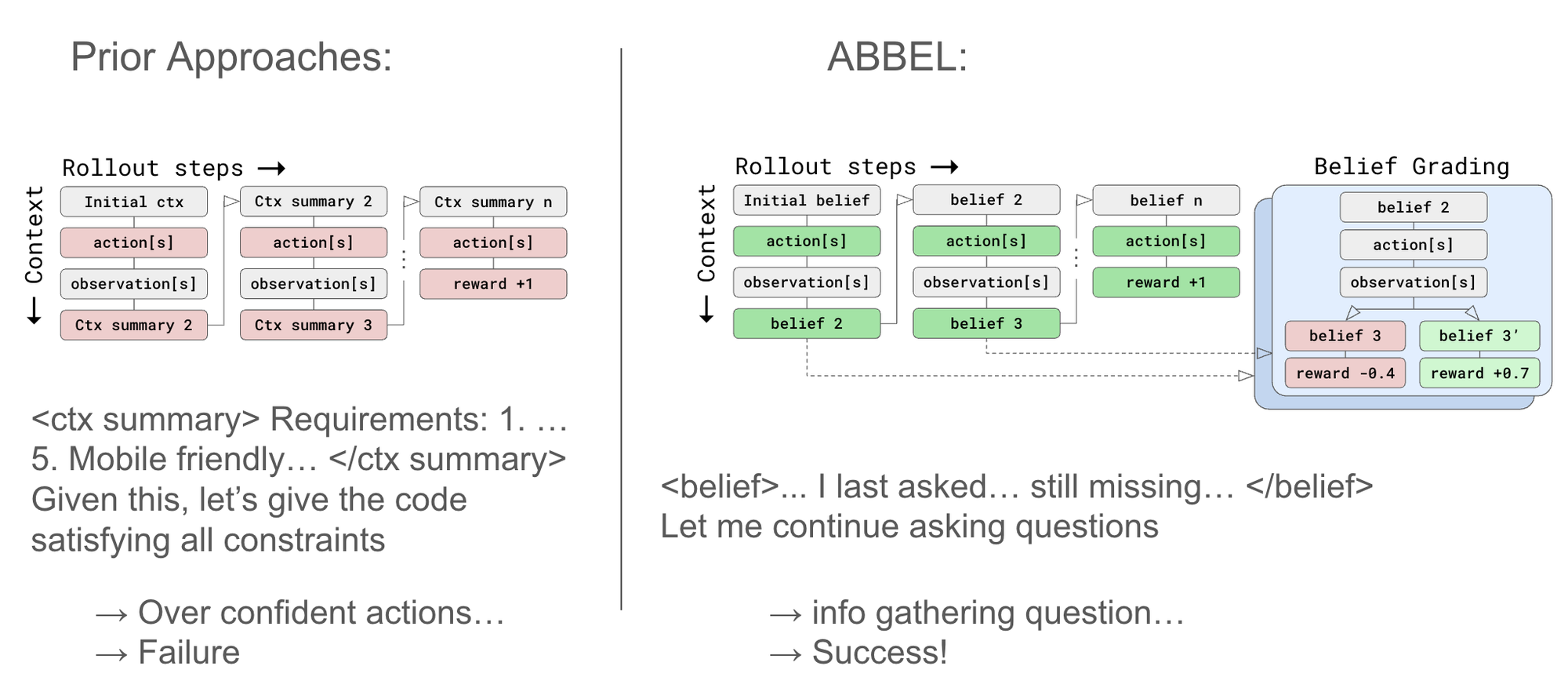
ABBEL Paper: Improving Self-Summarization Learning Efficiency in Long-Horizon Interactions : The Berkeley Artificial Intelligence Research (BAIR) Lab published a paper titled “ABBEL: Learning Natural-Language Belief States for Memory-Efficient Interaction,” proposing the ABBEL framework that utilizes natural language “belief states” as information bottlenecks. By introducing an autoencoder-style belief score, this framework significantly improves agent memory and learning efficiency in long-horizon interactions (Source: BAIR Blog)
💼 Business
Delta Intelligence Completes Nearly 500 Million Yuan Angel++ Round Financing : Delta Intelligence, which focuses on the development of foundation models for native general-purpose humanoid robots, announced the completion of an Angel++ round of financing worth nearly 500 million yuan. Investors include several listed companies and leading financial institutions. The funds will be used for model iteration, mass production of self-developed data acquisition equipment, and data closed-loop construction to promote the deployment of humanoid robots in industrial scenarios (Source: 36Kr)

Fish Audio Completes $50 Million Seed Round Financing : AI voice model startup Fish Audio announced the completion of a $50 million seed round of financing, led by Coreline Ventures and Capital Today. The company has launched the Fish Speech open-source voice generation model and possesses over 15,000 natural language control instructions, aiming to provide low-latency, highly expressive voice cloning services for creators and enterprises (Source: TechCrunch)

Recursive Superintelligence Signs $400 Million Compute Deal with Amazon AWS : Recursive Superintelligence, which focuses on the research and development of self-improving AI systems, announced that it has signed a multi-year compute agreement worth $400 million with Amazon AWS. The agreement will provide computational support for Recursive to train large-scale self-improving AI systems, helping it launch its first batch of practical agent products within this year (Source: TechCrunch)
🌟 Community
Enterprise-Level “Consumption Downgrade” and the Rise of Tokenomics : Social media is buzzing with discussions about US enterprises collectively stopping their cash-burning on large model APIs, shifting instead to “Tokenomics” for fine-grained cost control. Enterprises tend to route simple tasks to small or open-source models, reserving expensive closed-source flagship models only for core planning. Hybrid deployment has become mainstream, forcing large model vendors to lower prices and optimize task efficiency (Source: 36Kr)
AI Coding Assistants Reshape Software Development Workflows and Talent Structures : Community discussions point out that the popularity of AI coding and agent assistants is blurring the boundaries between product, design, and engineering, giving rise to “full-stack” and “generalist” technical talent. In traditional software development workflows, the introduction of AI has lowered the barrier to writing code, while human-specific judgment such as product definition, aesthetics, and “taste” are becoming the new core bottlenecks (Source: 36Kr)
New Regulations on Anthropomorphic Interaction Spark Discussions on AI Agent Takedowns and Emotional Dependency : With the official implementation of new domestic regulations on anthropomorphic interaction, some mainstream platforms have taken down custom AI agent features, triggering widespread user discussions about “downloading cyber lovers” and virtual emotional dependency. Deep disagreements have emerged between users and platforms regarding the definition of virtual property, emotional attachment, and compliance boundaries, highlighting the complexity of human-machine emotional bonds in the AI era (Source: 36Kr)
💡 Others
BYD’s First Humanoid Robot to Officially Debut in August : BYD has officially confirmed that its first humanoid robot product will make its official debut in early August at the “Di Space” Zhengzhou museum. The robot is planned to be deployed across the dealership network for customer reception and vehicle explanations, with commercialization expected within the next one to two years (Source: 36Kr)
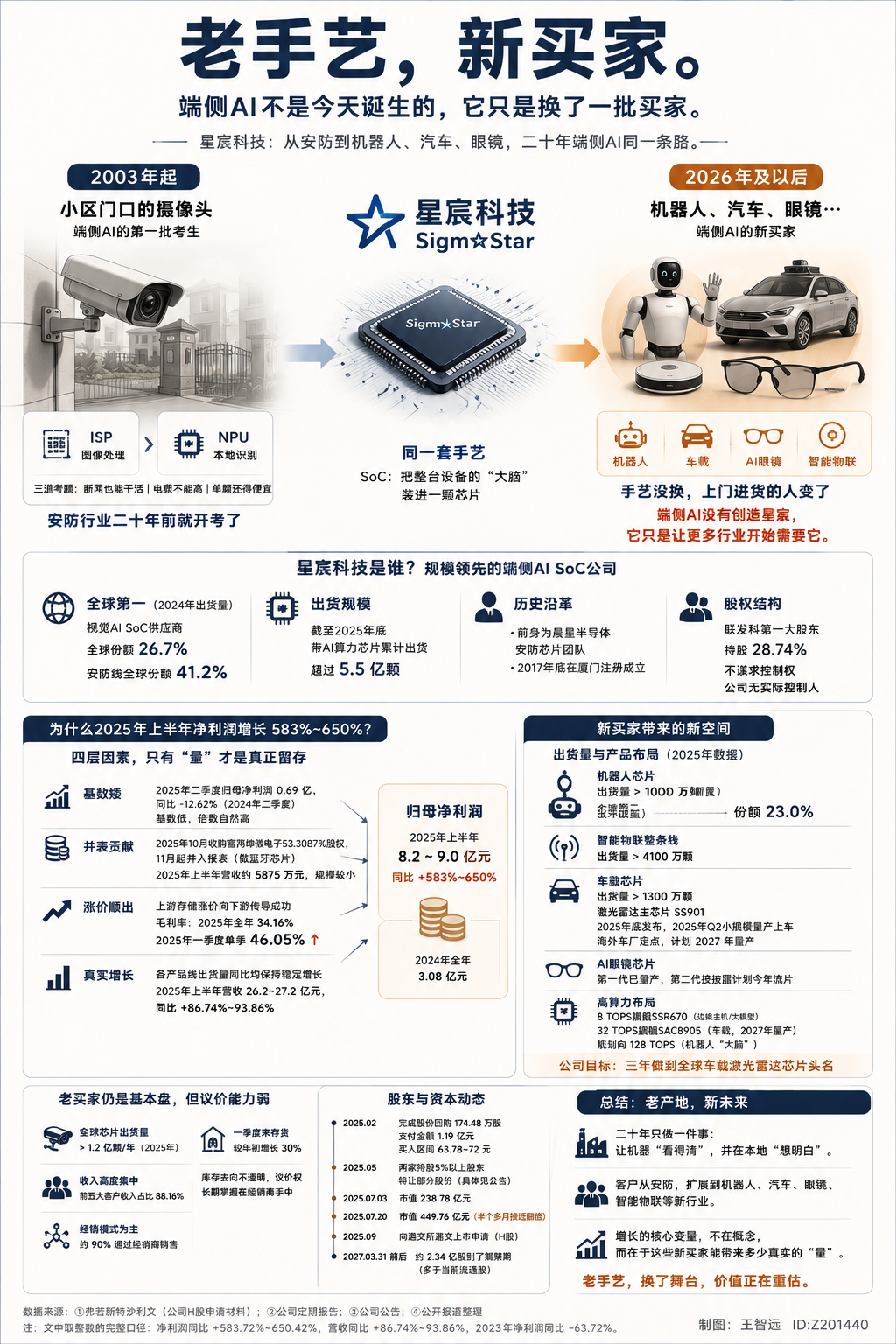
SigmaStar Accelerates Transition to High-Compute Edge AI Chips : SigmaStar, a global leader in visual AI SoCs, is accelerating its transition to high-compute edge AI, with shipments of its robot vision chips exceeding 10 million units. The company has launched an 8 TOPS chip that supports running large models locally and a 32 TOPS chip for automotive applications, with plans to tape out its second-generation AI glasses chip within this year (Source: 36Kr)
NVIDIA and OpenAI Discuss $250 Billion Supercomputer Financing Guarantee : Foreign media reported that NVIDIA is in talks with OpenAI, planning to provide up to $250 billion in financing guarantees for a 10 GW supercomputing center in Ohio, which has a total cost of over $500 billion. The project will be developed by a SoftBank energy subsidiary, aiming to lock in the world’s largest compute customer through NVIDIA’s credit endorsement (Source: 36Kr)