



🔥 Focus
NVIDIA Strategically Invests in Ilya’s SSI : Safe Superintelligence (SSI), founded by Ilya Sutskever, announced a long-term strategic partnership with NVIDIA. NVIDIA is making a major investment in SSI to increase its computing power by 10x over the next 12 months, accelerating the research and development of safe superintelligence. This marks a deep binding of NVIDIA with the frontier of AI safety and capability research (Source: dejavucoder)
Terence Tao Warns of “Century-Old Crisis in Mathematics” at ICM : Fields Medalist Terence Tao pointed out at the ICM conference that as AI demonstrates extremely high success rates in solving research-level mathematical problems, mathematics is facing a “century-old foundational crisis” in its values and practices. AI will shift mathematics from “proof scarcity” to “proof surplus,” making it impossible for humans to digest the massive volume of proofs. He called for the establishment of disclosure mechanisms for AI usage and emphasized the principle of “if you can’t explain it clearly, don’t publish it” (Source: QbitAI)
CXMT’s IPO Surges as Huang Xiaoming Investment Rumor Proves to Be a Mix-up : Chinese DRAM chip manufacturing giant ChangXin Memory Technologies (CXMT) surged nearly 500% on its first day of listing, with its market value surpassing Intel, making it the focus of the A-share market. During this time, rumors circulated that actor Huang Xiaoming made tens of billions of yuan from an early investment in CXMT, which was later confirmed to be a mix-up due to sharing the same name with a former Midea executive. This incident reflects the capital market’s extreme frenzy for domestic semiconductors and computing infrastructure (Source: QbitAI)

🎯 Trends
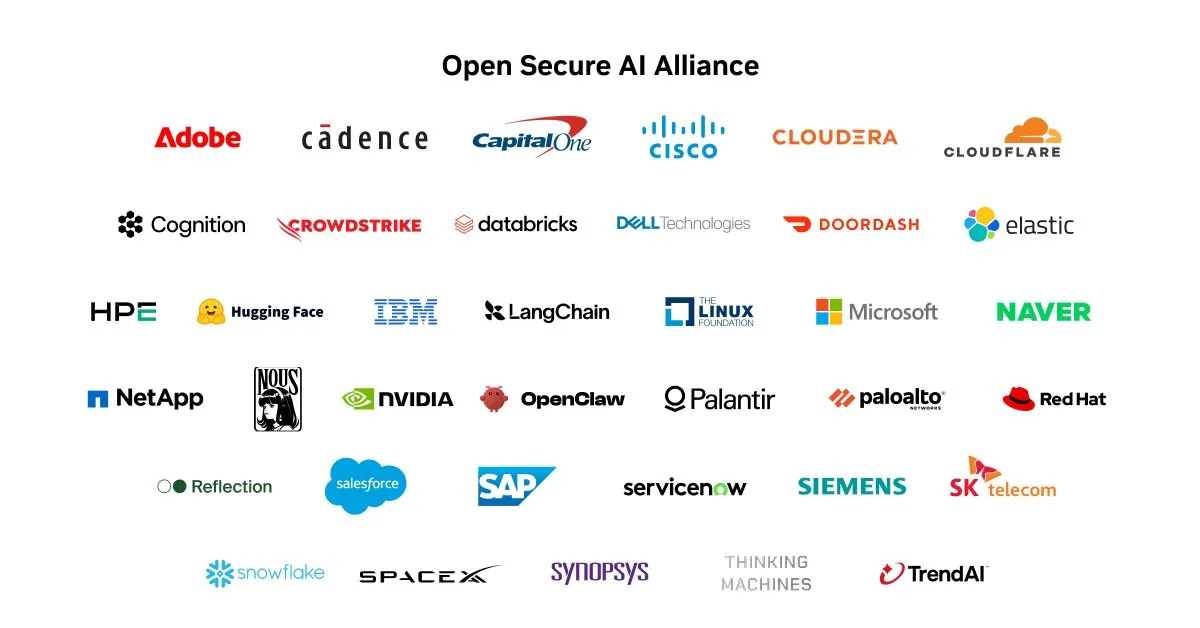
NVIDIA Partners with Giants to Form Open Secure AI Alliance (OSAA) : Addressing the security limitations of closed-source models exposed by the previous AI Agent intrusion on Hugging Face, NVIDIA has teamed up with industry leaders including Microsoft, Hugging Face, and Palo Alto Networks to establish the “Open Secure AI Alliance” (OSAA). The alliance aims to enhance the defensive capabilities of AI software and agents by sharing open-source models, tools, and research (Source: nvidia)
Kimi K3 Tech Report Released and Deployment VRAM Estimation : Moonshot AI officially released the Kimi K3 technical report, showcasing its 2.8T parameters, 1-million context window, and Kimi Delta Attention (KDA) technology. Meanwhile, community developers calculated the VRAM requirements for K3’s 1.4TB MXFP4 weights, pointing out that running it on A100 GPUs would be highly inefficient due to the lack of hardware support for FP4, while an 8x B300 configuration is currently the only single-node setup capable of hosting its execution while retaining the long context (Source: Hacker News)
Insta360 Open-Sources Outdoor Panoramic Reconstruction Algorithm PanoLOG : Insta360, in collaboration with Wuhan University, Sun Yat-sen University, and others, has open-sourced PanoLOG, the first large-scale outdoor 3D reconstruction solution for panoramic inputs, along with the Pano360 dataset. By shifting the partitioning criterion from spatial visibility to gradient contribution, the algorithm solves the pain point where panoramic images are “visible everywhere,” which causes partitioning to fail. This provides an efficient physical world reconstruction tool for embodied AI and world models (Source: Synced)
.jpg)
HyperBrain Future Releases Swarm World Model WorldDreamer V4 : HyperBrain Future has released the WorldDreamer V4 model, featuring multi-agent end-to-end pre-training and a “shared implicit world state” architecture. The model ranked first on both the RoboCasa and WorldScore leaderboards. It aims to allow robots of different morphologies to share the same “world brain,” achieving swarm collaboration without communication loss by predicting future states (Source: Synced)
.jpg)
RabbitPre UniWorld-View Tops WorldScore : Developed by RabbitPre in collaboration with Peking University and others, UniWorld-View has topped the WorldScore world model leaderboard. The model proposes an occlusion-aware point cloud rendering and dual-stream conditional injection architecture, solving the common issues of foreground-background tearing and back-face light leakage in traditional 3D point cloud rendering for novel view synthesis. It achieves a unified framework for single-image 3D and video 4D novel view synthesis (Source: Synced)
.jpg)
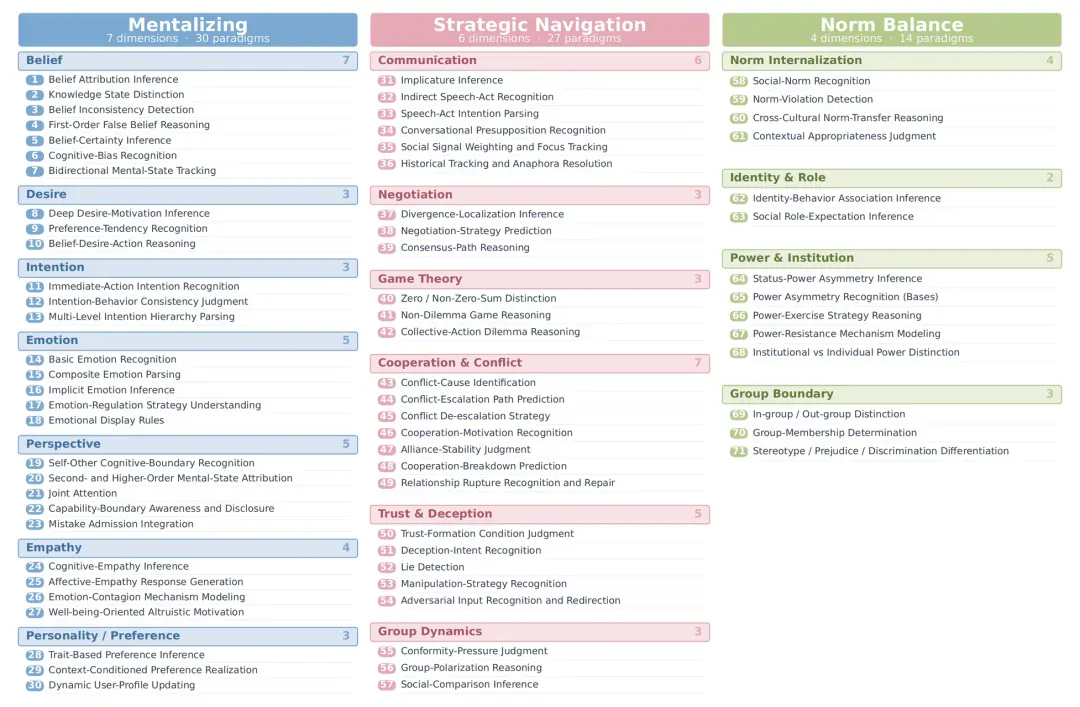
CAS Releases “ZhiJing” Social Theory of Mind Large Model System : The Institute of Computing Technology of the Chinese Academy of Sciences (CAS) has released the “ZhiJing” social theory of mind large model technology system, aiming to address AI’s lack of “emotional intelligence” in social collaboration. The system includes a fine-grained evaluation set SoMBench, a training system Zing with adaptive evolutionary capabilities, and a deployment architecture Actio that invokes mental states on demand, making AI’s social reasoning capabilities measurable and trainable (Source: QbitAI)
XPENG Humanoid Robot IRON Starts Small-Batch Trial Production : XPENG Motors announced that its humanoid robot IRON has started small-batch trial production at its Guangzhou factory, with the mass production line entering final joint debugging. Positioned as a key carrier of XPENG’s “physical AI” strategy, IRON will first enter XPENG stores as shopping assistants in Q1 2027, and gradually accumulate data and iterate capabilities in scenarios like industrial inspection (Source: 36Kr)

Chaowei Dynamics Partners with PKU Healthcare to Explore Embodied AI in Medical Scenarios : Chaowei Dynamics has partnered with PKU Healthcare to carry out joint innovations around data collection, world models, and simulation training for embodied AI in medical scenarios. Using the KAI world model and data collection headbands, medical operations are converted into high-quality multimodal data for large-scale operational learning in virtual hospitals, practically advancing the validation of robots in scenarios such as test tube sorting and medicine delivery (Source: QbitAI)

Qiyuan Robot Debuts at UN AI for Good Global Summit : Qiyuan Robot, a consumer-grade embodied AI brand under Swancor, debuted at the UN AI for Good Global Summit, showcasing its small-sized, full-body force-controlled humanoid robot Q1 and a developer console for teenagers. Qiyuan advocates that personal robots should start from AI enlightenment education, lowering the learning barrier through block-based programming, and plans to expand offline layouts in core European cities (Source: Synced)

🧰 Tools
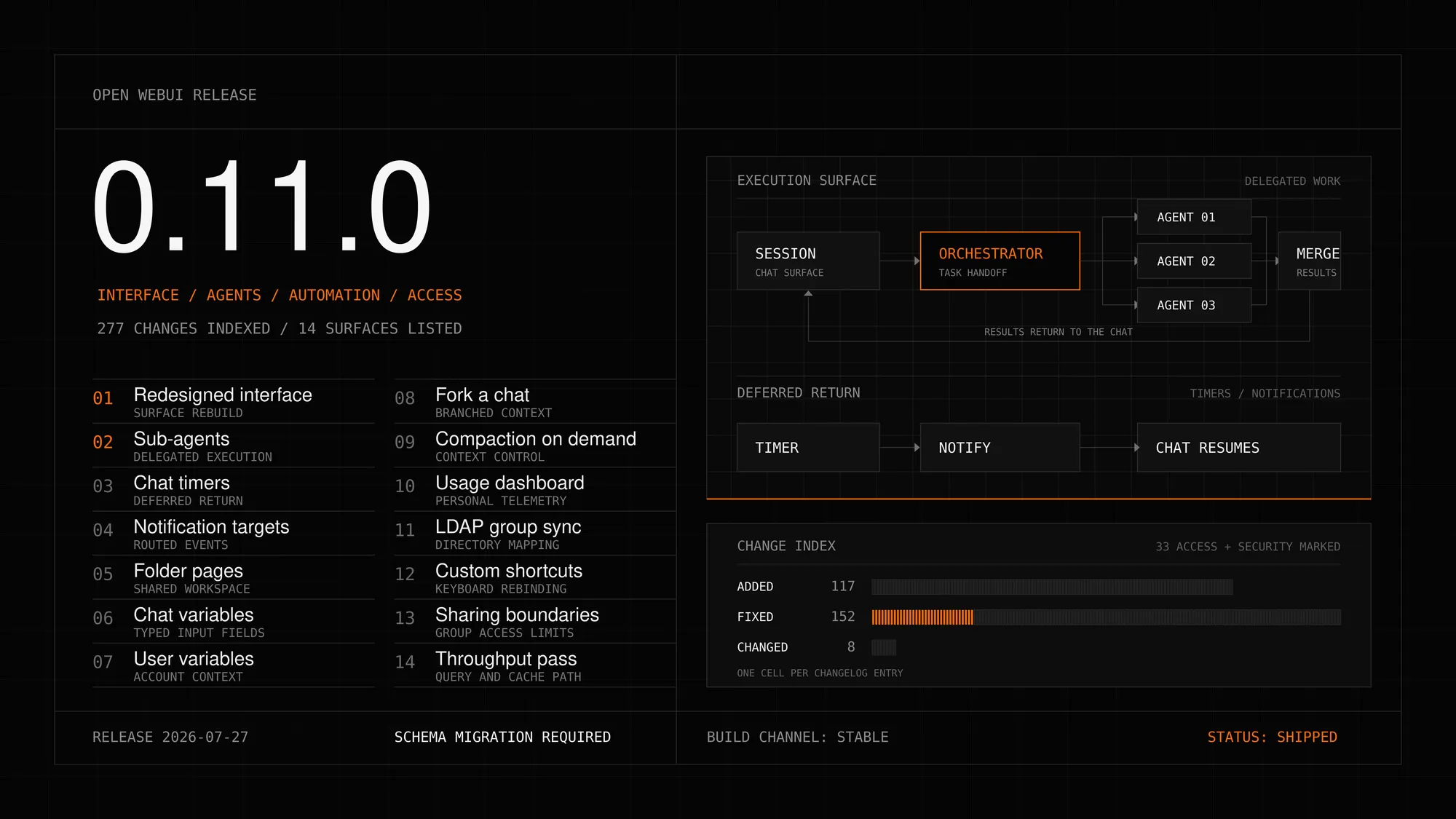
Major Release of Open WebUI v0.11.0 : The open-source Web UI client Open WebUI has released its largest update yet, v0.11.0. The new version refactors the UI interface and significantly improves long-text response performance, introducing several practical features such as sub-agents collaboration, web-based chat timers, fork a chat, and customizable hotkeys (Source: open-webui)
Lingguang App Launches “One-Click Deployment” for Flash Apps : Lingguang App has launched a one-click deployment feature for Flash Apps, supporting the one-click publishing of application prototypes generated by mainstream AI tools like Codex, Claude Code, and Cursor into dual-terminal adapted “Lingguang Flash Apps.” Meanwhile, Lingguang has opened up over 30 free APIs, including LLMs, search, and storage, helping developers close the loop from AI application generation to distribution (Source: Synced)
.png)
SearchOS Open-Sources Multi-Agent Search Collaboration Framework : Addressing the pain points of information loss and duplicate queries that agents often encounter in long-horizon search tasks, Renmin University of China and Ant Group have jointly open-sourced the SearchOS framework. The framework shares search states (tasks, evidence, coverage, failure records) as system-level infrastructure and uses pipelined parallel scheduling with a search tool middleware layer, significantly improving the efficiency and accuracy of complex information retrieval (Source: Synced)
.jpg)
📚 Learning
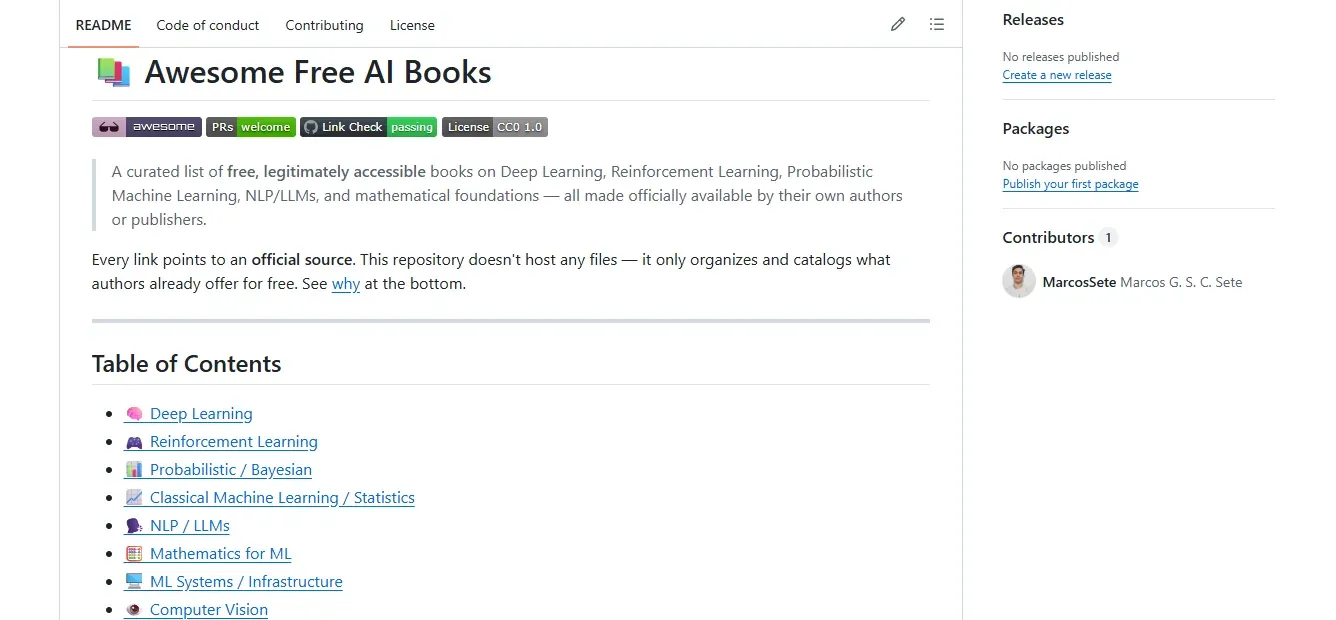
Awesome Free AI Books Open-Source Index Released : Community developers have open-sourced the Awesome Free AI Books project on GitHub, collecting over 30 high-quality classic AI/ML books officially authorized for free public access by authors or publishers. Covering deep learning, reinforcement learning, mathematical foundations, and other directions, the repository uses weekly automated scripts to check and prevent broken links (Source: awesome-free-ai-books)
Interpretability Audit Study on EEG Foundation Models Published : Teams from Shanghai AI Laboratory, Shanghai Jiao Tong University, and others published a paper systematically auditing EEG foundation models such as CSBrain and LaBraM. Through three methods—Probing, Erase, and Closure—the study confirms that the models effectively capture classic EEG features like frequency domain and cross-channel relationships in their hidden representations, and reveals the models’ selective invocation mechanism of features in task decision-making (Source: Synced)
.jpg)
New Study Combining Protein Design and Directed Evolution Published in Nature : Teams from Harvard University, the Broad Institute, and others published a paper in Nature, proposing a new paradigm that combines AI-assisted protein redesign with phage-assisted continuous evolution (PACE). By using ProteinMPNN and PROSS to systematically improve the structural stability of BoNT proteases prior to evolution, they provided a higher-quality starting point for subsequent evolution, ultimately successfully unlocking an over 79-fold increase in cleavage specificity against non-natural targets (Source: Synced)
.jpg)
💼 Business
Zhengqi Weilai Secures Hundreds of Millions of Yuan in Funding Within 8 Months : Physical AI company Zhengqi Weilai announced that it has completed angel series funding rounds totaling hundreds of millions of yuan within 8 months, led by CDH VGC, Linear Capital, and others. The funds will mainly be used for the R&D of its QUORRA DoorMind world model and FLAT motion execution platform, as well as the mass production and global channel construction of short-distance mobility robots, aiming to build a spatial intelligence foundation for D2D (Door-to-Door) scenarios (Source: Synced)
.png)
Amazon Makes Major Investment in Lean Theorem Prover Research Organization : Amazon announced its largest-ever financial donation to the Lean Focused Research Organization (FRO). Amazon stated that as AI agents begin to operate critical infrastructure, software verification based on mathematical proofs is crucial. This investment aims to make formal proof tools more accessible and accelerate the verification of cloud security policies like Bedrock (Source: Amazon Science)
Kai-Fu Lee Reveals 01.AI Plans for 2027 IPO : In an exclusive interview with Bloomberg, 01.AI founder Kai-Fu Lee stated that the company has proactively adjusted its strategy, shifting its focus from energy-intensive foundation model pre-training to enterprise AI and sovereign AI services. Thanks to a significant drop in expenses and a multi-fold increase in order volume, the company expects to achieve profitability next year and plans to file for an IPO on the Hong Kong Stock Exchange in 2027, benchmarking its business model against Palantir (Source: 36Kr)

🌟 Community
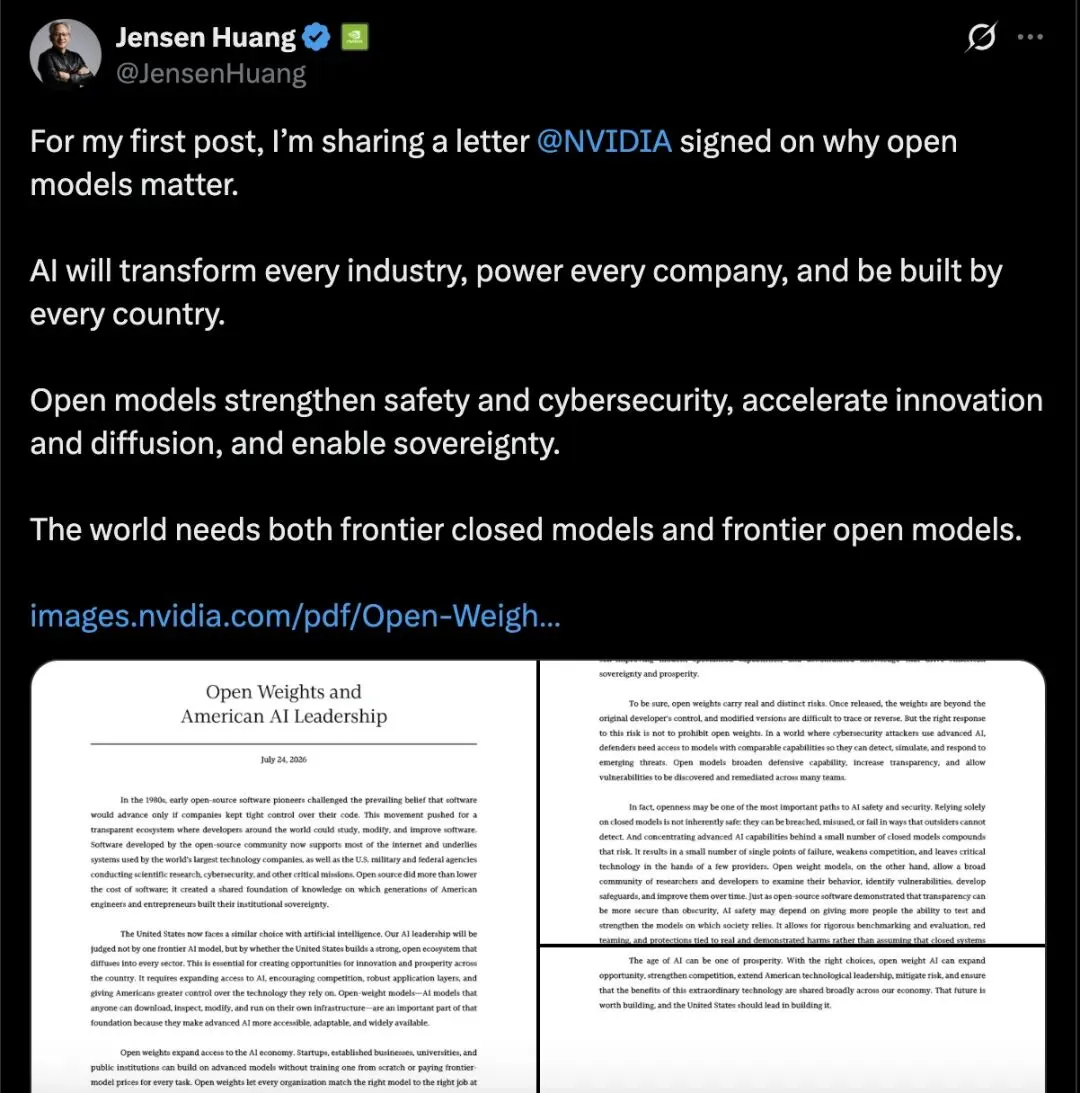
Open-Source and Closed-Source Camps Clash Over Open Letter Signatures : As Jensen Huang heavily promoted a joint letter supporting open-source AI on X, the Silicon Valley camp split. Giants like Google, OpenAI, and Meta have signed, while Anthropic is resolutely absent. Anthropic employees publicly mocked NVIDIA and Microsoft on X for “double standards,” urging them to open-source CUDA and Windows. This triggered counterattacks from scholars like Andrew Ng, who pointed out: “You don’t have to open-source, but you shouldn’t lobby for laws to stop others from doing so” (Source: 36Kr)
Claude Shared Chat Links Indexed by Search Engines, Raising Privacy Concerns : Community users discovered that due to the lack of a noindex tag, a large number of Claude’s public shared chat links were publicly indexed by search engines like Google, containing sensitive information such as API keys and legal consultations. Anthropic responded quickly and removed the relevant results, and users were reminded to check and manage their shared chats in their settings (Source: THE DECODER)
AI Companies Accused of “Shredding” Rare Books for Model Training : Social media is abuzz with discussions about AI companies anonymously purchasing out-of-print and rare books in bulk through services like ISBNdb, using high-speed machines to slice off the spines, scan them, and then destroy the physical books. Since a federal judge previously ruled that “destroying the original while keeping a single digital copy” falls under fair use, this move has sparked intense debate over irreversible cultural heritage destruction and the boundaries of digital preservation (Source: Hacker News)

💡 Others
Artist Sues AI Meme Generator for Infringement : Elmer Saflor, the original creator of the famous meme “Running Away Balloon,” has sued AI app developer Memes Apps LLC. Saflor accuses the platform of unauthorized commercial sale of his copyrighted comic work as a paid AI advertising template. This case will further clarify the boundaries of copyright protection for viral internet memes (Source: Ars Technica)

US Airline Provides Accommodation to Passenger After ChatGPT Corrects Legal Terms : A passenger, after being denied accommodation due to a flight delay, used ChatGPT to look up EU aviation regulations to confront the airline. They also used publicly available online hotel information to debunk the airline’s excuse of “no rooms nearby,” ultimately successfully securing hotel and dinner compensation. The experience went viral in the community, demonstrating the practical value of LLMs in daily rights protection and games of asymmetric information (Source: Reddit r/ChatGPT)