
🔥 Spotlight
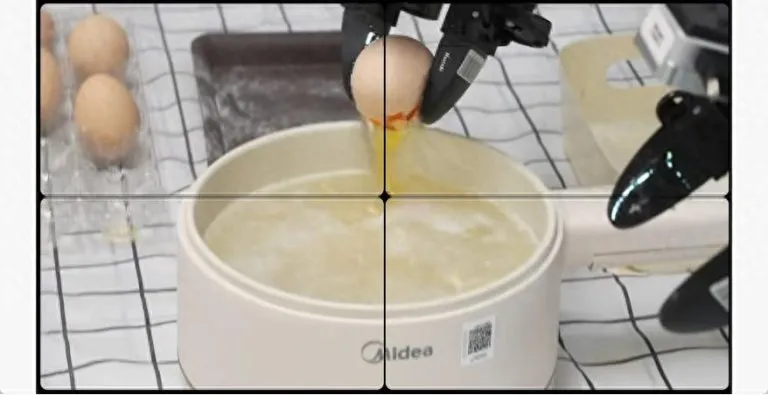
New Era Embodied and Fudan University Jointly Release N0 Series Models and NeoData Dataset : New Era Embodied and Fudan University have jointly released the N0 series of embodied AI models and the NeoData dataset. NeoData contains over 30,000 hours of visuo-tactile interaction data, and the NeoForce unified representation model solves the data fusion challenge of different tactile sensors. N0-VTLA improves manipulation success rates by predicting tactile evolution for the next 50 steps, while N0-TWAM introduces tactile prediction into the world model, driving the evolution of embodied AI from “vision-driven” to “visuo-tactile integration.” (Source: QbitAI)
Induction Labs Releases Photon-1 Model : Induction Labs has launched the Photon-1 model, a 106B-A5B sparse Mixture of Experts (MoE) model. Its innovation lies in pre-training on action-free video data to learn implicit policies. Photon-1 outperforms Gemini 3.1 Flash-Lite on computer-use benchmarks, with significantly reduced pre-training compute consumption and an approximate 3x reduction in inference costs. Even though it was only trained on desktop videos, the fine-tuned Photon-1 still performs exceptionally well in checkers and billiard physics simulations. (Source: MarkTechPost)
KwaiKAT Team Releases KAT-Coder-V2.5 : Kuaishou’s KwaiKAT team has released KAT-Coder-V2.5, an agentic coding model trained on real, executable code repositories. The team automatically constructed over 100,000 verifiable repository environments using AutoBuilder and utilized process-based filtering mechanisms and the asymmetric AFT-PPO algorithm for reinforcement learning. KAT-Coder-V2.5 leads on PinchBench with a high score of 94.9, demonstrating a path to enhance the performance of long-horizon coding agents by optimizing sandbox infrastructure and algorithm design. (Source: MarkTechPost)
MonkeyOCRv2 Document Vision Foundation Model Open-Sourced : Teams from Huazhong University of Science and Technology and others have open-sourced MonkeyOCRv2, which introduces “reconstruction as document visual memory” as a pre-training objective. In controlled experiments keeping the backend language model Qwen3-1.7B frozen, MonkeyOCRv2 outperformed the strongest baseline by 13.2 points across 8 document understanding benchmarks. Meanwhile, the team open-sourced the MonkeyDoc v2 dataset containing 113 million images, providing the community with a unified document vision pre-training playground and driving document AI from semantic completion to visual fidelity. (Source: Synced)
.jpg)
Valkor, Zhejiang University, and Partners Open-Source Agent State Management Framework Loom : Addressing the pain points where AI coding agents easily fall into “debugging black holes” and “local amnesia” during long tasks, Valkor, in collaboration with Zhejiang University and UCL teams, has launched the open-source framework Loom. Loom decomposes complex software delivery tasks into structured, resume-anytime state chains. When a test fails, Loom captures it as a to-do state independent of the chat history, allowing developers to seamlessly switch models or agents to continue the task, providing critical state infrastructure for AI programming in serious production environments. (Source: Synced)
.jpg)
🎯 Trends
Sakana AI Releases Cybersecurity Routing Model Fugu-Cyber : Sakana AI has launched Fugu-Cyber, a cybersecurity-specific routing model on its Fugu orchestrator. The model achieved an 86.9% success rate on CyberGym and a score of 72.1% on CTI-REALM, competing with frontier models like GPT-5.5-Cyber. Through the TRINITY and Conductor frameworks, Fugu-Cyber dynamically coordinates sub-agents across multiple security domains for vulnerability verification and detection rule generation, adopting a token-based tiered pricing model. (Source: MarkTechPost)
Open Dreamer Open-Sources JAX Implementation of Dreamer 4 World Model : Independent research team Reactor has open-sourced Open Dreamer, a reproduction of the Dreamer 4 world model pipeline based on JAX and Flax NNX. The model includes a Masked Autoencoder video tokenizer that requires no adversarial loss, and a 1.6B-parameter action-free spatiotemporal attention dynamics model. The team has fully disclosed the training recipe and shared stability engineering details such as optimizing GPU memory on B200 GPUs and resolving Muon optimizer drift, providing a valuable reference for world model reproduction. (Source: MarkTechPost)
InclusionAI Launches Ling-3.0-flash on OpenRouter : Ling-3.0-flash, a lightweight MoE model focused on agent workflow execution, is now available as an API on OpenRouter. The model has a total of 124B parameters with 5.1B active parameters, supports a 256K context window, and has a TTFT (Time to First Token) of under 100ms. Positioned as a low-cost, fast execution node to work alongside large planners, the model is optimized for long-horizon tool calling and instruction following, offering a switchable hybrid inference mode. (Source: Reddit)

Abliterated Version of GLM-5.2 Model Released : The community has released an “abliterated” and fine-tuned version of the GLM-5.2 large model. This model removes safety refusal directions and has been specifically fine-tuned for long-range adversarial and agent tasks to prevent the model from quitting without reason when handling technical or sensitive tasks. Evaluations show it performs excellently on safety and coding benchmarks such as CyberGym and AgentHarm. It retains no data by default, and rules are fully defined by the user via system prompts. (Source: Reddit)
🧰 Tools
Llama.cpp Merges Native MCP Support : A PR led by developer ngxson has been successfully merged into llama.cpp, bringing native support for the Model Context Protocol (MCP) to its WebUI and command-line tools. Users can now configure and call various MCP servers (such as the Serena code assistant) directly in local clients without external relays, achieving fully localized, dependency-free agent development and debugging, which significantly lowers the barrier to building agent ecosystems with local open-source models. (Source: Reddit)
Open Minis On-Device Agent Framework Open-Sourced : Developer Ethan Wang has announced the open-sourcing of Open Minis, an AI agent application that runs locally on mobile devices. Supporting iOS and Android, it integrates a local Linux Shell, browser automation, extensible skills, and persistent memory. By loading skill metadata into the system prompt and combining it with Prompt Caching, the model can coherently complete tool selection and execution in a single turn, providing a lightweight reference for on-device agent development. (Source: X)
Aethos_Memory Solves Agent Cross-Session Forgetting Issue : Addressing the pain point where AI coding assistants cannot share context across different sessions, developers have open-sourced the Aethos_Memory tool. This tool provides agents with a persistent memory layer that automatically extracts and stores key decisions, codebase architectures, and bug fix records from sessions. When starting a new session, the agent can directly read the structured memory, eliminating the tedious process of developers manually copying and pasting history. (Source: Reddit)
Runway Launches Media Routing Tool Media Router : Video generation platform Runway has launched Media Router, the first preference-optimized routing tool for generative media. When running production pipelines containing multiple video, image, and audio models, enterprise teams no longer need to manually select a model for each request. They only need to define preferences regarding cost, quality, or latency once in the Router, and the routing system will automatically distribute token requests, achieving the optimal balance between cost and performance. (Source: X)
📚 Learning
TileLang Tool for Designing and Optimizing GPU Kernels Released : This article introduces TileLang, a TVM-based DSL tool for GPU kernel design. The tutorial provides complete Python code demonstrating how to design kernels such as vector addition, Tensor Core matrix multiplication, fused Softmax, and FlashAttention. Through TileLang’s shared memory tiling and register blocking, the compiler automatically handles thread mapping and synchronization, and supports finding the optimal hardware configuration under a fixed GPU budget via @tilelang.autotune. (Source: MarkTechPost)
FAIRChem v2 and UMA Atomistic Simulation Potential Tutorial Released : The tutorial details the use of Meta’s FAIRChem v2 framework and the UMA universal machine learning interatomic potential (MLIP). The content covers how to obtain gated model weights via Hugging Face and configure calculators in ASE (Atomic Simulation Environment) to complete a series of computational chemistry workflows, including single-point energy prediction, molecular geometry optimization, spin state comparison, reaction energy estimation, lattice relaxation, equation of state fitting, and molecular dynamics simulation. (Source: MarkTechPost)
Relative Representation Solves Heterogeneous LLM Vector Space Alignment : The community shared a geometric technique that utilizes the Relative Representation Method and Lowdin symmetric orthogonalization to align different LLM embedding spaces (such as mixing Llama, Mistral, and Phi). Without fine-tuning, this method maps vectors of different dimensions to a unified common space by introducing reference anchors within a specific semantic domain and performing column-wise Z-score normalization, solving the problems of anisotropic cones and dimension mismatch in multi-agent routing. (Source: Reddit)

Hand-Drawn Derivation and Calculation Process Diagram of U-Net : Computer vision scholar Prof. Tom Yeh has released a hand-drawn calculation diagram of the U-Net network. Through 17 steps, the tutorial shows how an image with R, G, and B channels is compressed to a 2×4 bottleneck via convolution and max pooling, and then progressively restored to its original size through transposed convolutions and skip connections, demonstrating the mathematical principles of this core backbone of diffusion models with an intuitive matrix multiplication flow. (Source: X)
💼 Business
Stripe Reportedly in Talks to Acquire OpenRouter for $10 Billion : Payments giant Stripe is in blockbuster acquisition talks with AI model aggregation platform OpenRouter at a valuation of $10 billion, a nearly eight-fold surge from $1.3 billion just two months ago. As enterprises tend to use multiple models to diversify risks, OpenRouter’s traffic and strategic value have become prominent. Stripe, which has been making a fortune quietly in the AI era through a single line of payment code, previously acquired Metronome. This acquisition will extend its business from payments to the underlying infrastructure of the AI ecosystem. (Source: Synced)
.jpg)
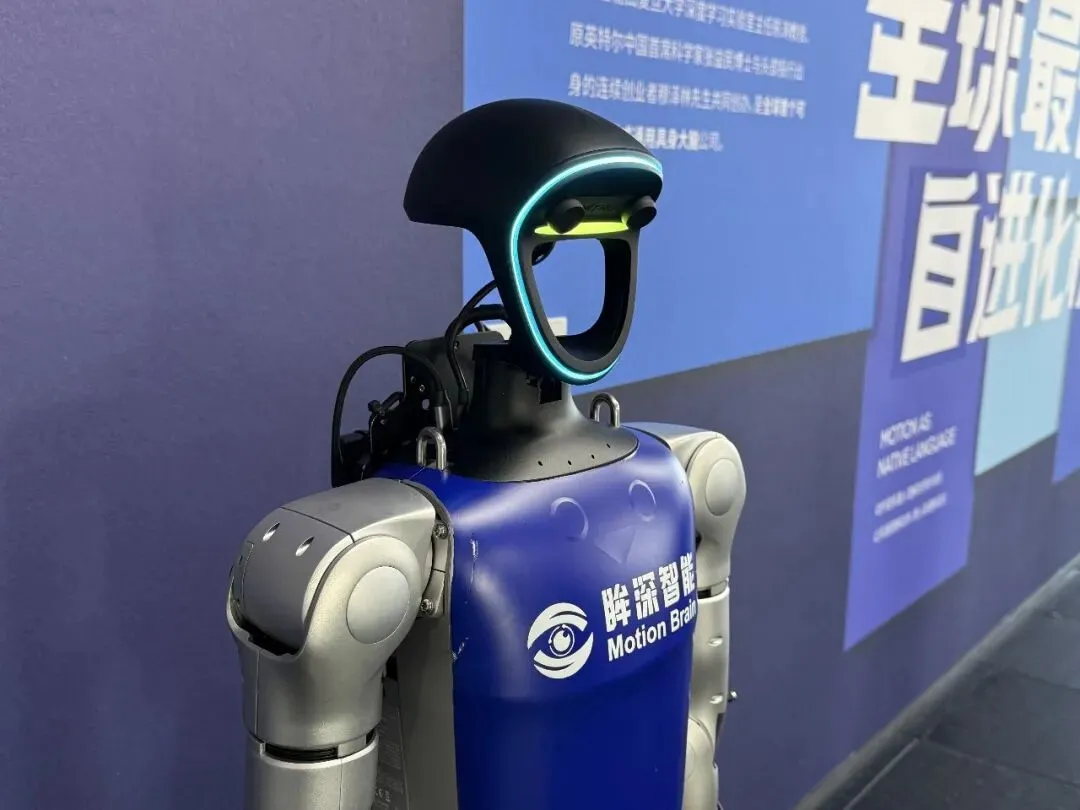
Moushen Intelligent Completes Pre-A+ Extension Round of Nearly 100 Million Yuan : On-device embodied brain company Moushen Intelligent has announced the completion of an additional Pre-A funding round of nearly 100 million RMB, with a Pre-A+ round of nearly 500 million RMB also in the process of closing. Its valuation has grown more than 10-fold in half a year. Founded by Professor Chen Tao of Fudan University and former Intel scientist Zhang Yimin, the company’s STI-WM (Spatiotemporal Integrated World Action Model) reduces the demand for real-robot data by 90% by tokenizing actions, and has achieved ultra-low-cost on-device adaptation on domestic chips such as HiSilicon and Horizon Robotics. (Source: 36Kr)
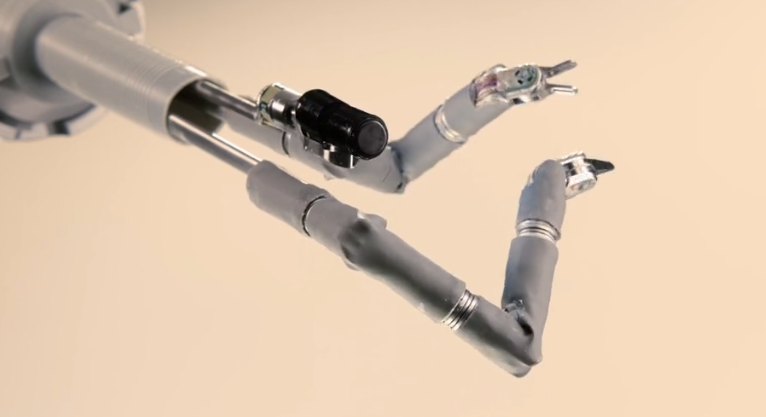
Surgical Robotics Company Vicarious Surgical to Liquidate and File for Bankruptcy : Vicarious Surgical, a surgical robotics unicorn once backed by Bill Gates and Jerry Yang, has seen its shareholders vote to cease operations and undergo bankruptcy liquidation due to severe R&D delays and a broken capital chain. Having raised over 2 billion RMB in total, the company’s aggressive decoupled actuation scheme and VR control concepts hit a wall in FDA approval and mass production, sounding an alarm for the embodied AI track, which currently has high valuations but struggles with commercialization. (Source: 36Kr)
🌟 Community
AI Coding Assistants Trigger Restructuring of Assessment Methods in CS Education : A survey by the Association for Computing Machinery (ACM) of over 700 computer science educators across 49 countries shows that 69% of teachers believe AI has changed the skills required for software development, and 64% have shifted their teaching focus from “coding from scratch” to code comprehension and debugging. To address cheating and over-reliance brought by AI, 68% of teachers have adjusted their assessment methods, adding in-person closed-book exams, oral defenses, and code explanation sessions to redefine programming skill assessment in the AI era. (Source: THE DECODER)

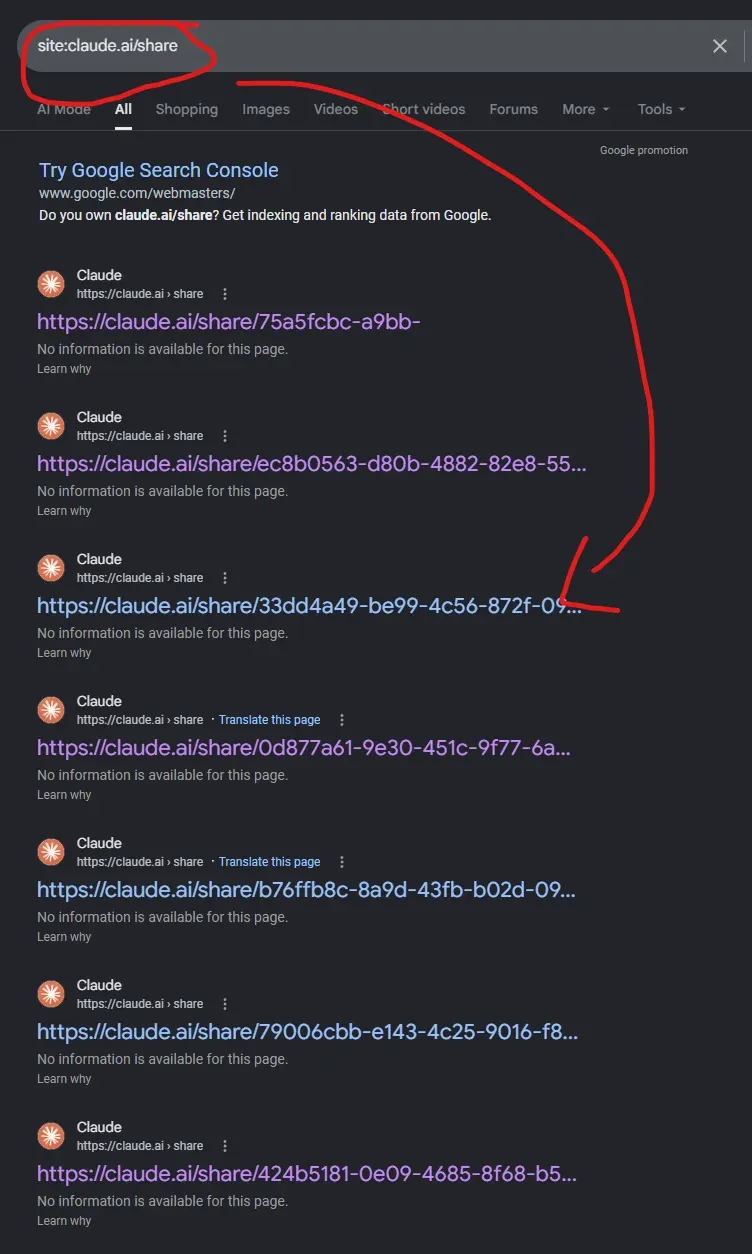
Google Indexing of Shared Claude Conversation Links Sparks Privacy Concerns : The community has discovered that conversations and Artifacts shared by users via Claude’s “Create Public Link” feature are being publicly indexed by search engines like Google, and third-party websites dedicated to scraping these links have even emerged. Leaked content includes cryptocurrency private keys, corporate secrets, and personal medical privacy. Users criticize Anthropic for failing to add a noindex meta tag to the shared pages, calling it a low-level security design oversight, and urging users to clean up their shared conversations in settings. (Source: Reddit)
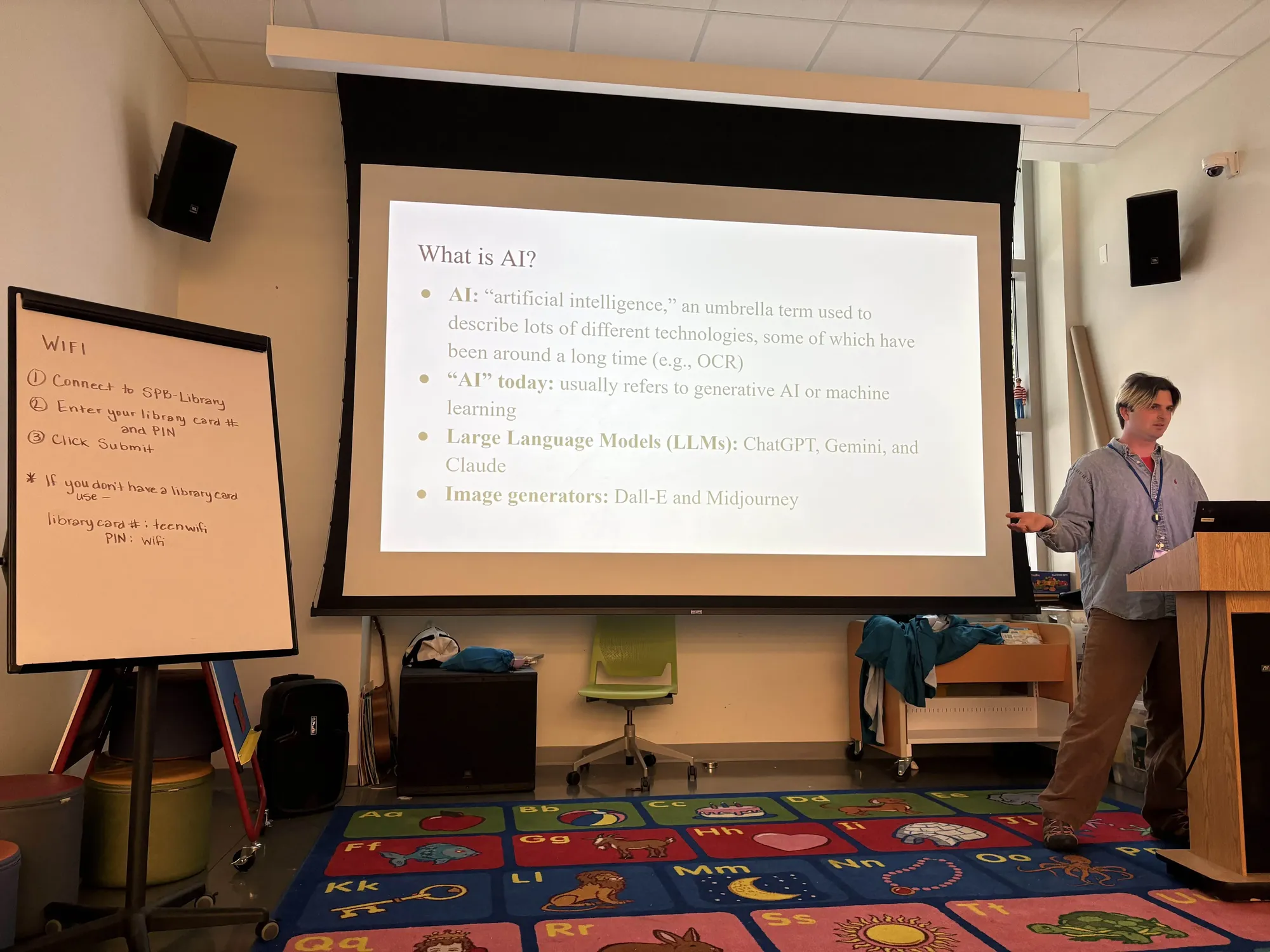
Silicon Valley Sparks “Avoiding AI” Reverse Digital Literacy Workshop Craze : As tech giants force AI onto various terminals, offline “Avoiding AI” workshops initiated by libraries across the US have gone viral on social media. Librarians provide step-by-step guidance on how to completely turn off system-integrated AI like Apple Intelligence and Gemini, and share browser extensions to block Google Search’s AI Overviews. Citizens use this to express concerns over big tech monopolies, privacy violations, and data center energy consumption, calling for technological sovereignty. (Source: TechCrunch)
Commerce Secretary Lutnick Expresses Support for Open-Source AI to Counter China : The community is actively discussing US Commerce Secretary Howard Lutnick’s remarks at the White House Correspondents’ Dinner, where he directly stated, “This White House will protect open-source AI.” Previously, APEC signed a declaration supporting open-source AI. The US government is currently discussing replacing one-size-fits-all bans with targeted restrictions on specific models to help the US open-source ecosystem quickly catch up with closed-source frontiers through “forking” and “fine-tuning” under compute constraints, ensuring US technological dominance. (Source: X)
Andrej Karpathy Modifies Bio, Sparking Departure Rumors : Renowned AI scholar Andrej Karpathy removed “Anthropic” from his social media bio, sparking widespread speculation in the community about whether he has left the company. Some leaks suggest he chose to leave because his non-US citizenship prevented him from accessing the company’s most advanced models due to export controls, though other netizens pointed out that the bio modification happened days ago. As Anthropic recently did not sign the open-source open letter initiated by Jensen Huang, its conservative commercial and regulatory strategies are facing some backlash in the community. (Source: Synced)
.jpg)
DeepSeek Suspends Second Funding Round Due to Leaked Investor Meeting Minutes : A leaked transcript of a meeting between DeepSeek founder Liang Wenfeng and investors, which went viral on social media, has prompted DeepSeek to urgently notify potential investors that it is temporarily shelving its second funding round. The leaked transcript involves sensitive statements by DeepSeek regarding the compute gap between China and the US, token pricing strategies, and open-source business models. The community has engaged in discussions on fine-tuning and deployment around DeepSeek’s “token factory” model, which reduces inference costs to one-third of its Western counterparts through engineering optimization. (Source: Hacker News)
💡 Others
ChatGPT Helps User Discover MacBook Infection with AtomicStealer : While attempting to optimize local LLM memory usage, a Mac user analyzed system processes with ChatGPT and unexpectedly discovered two LaunchDaemon files disguised as system services pointing to hidden scripts in the Library. ChatGPT immediately flagged them as malware, helping the user locate the OSX.AtomicStealer info-stealing trojan contracted from installing a compromised open-source PDF library, demonstrating an unexpected role for AI in daily endpoint security protection. (Source: Reddit)

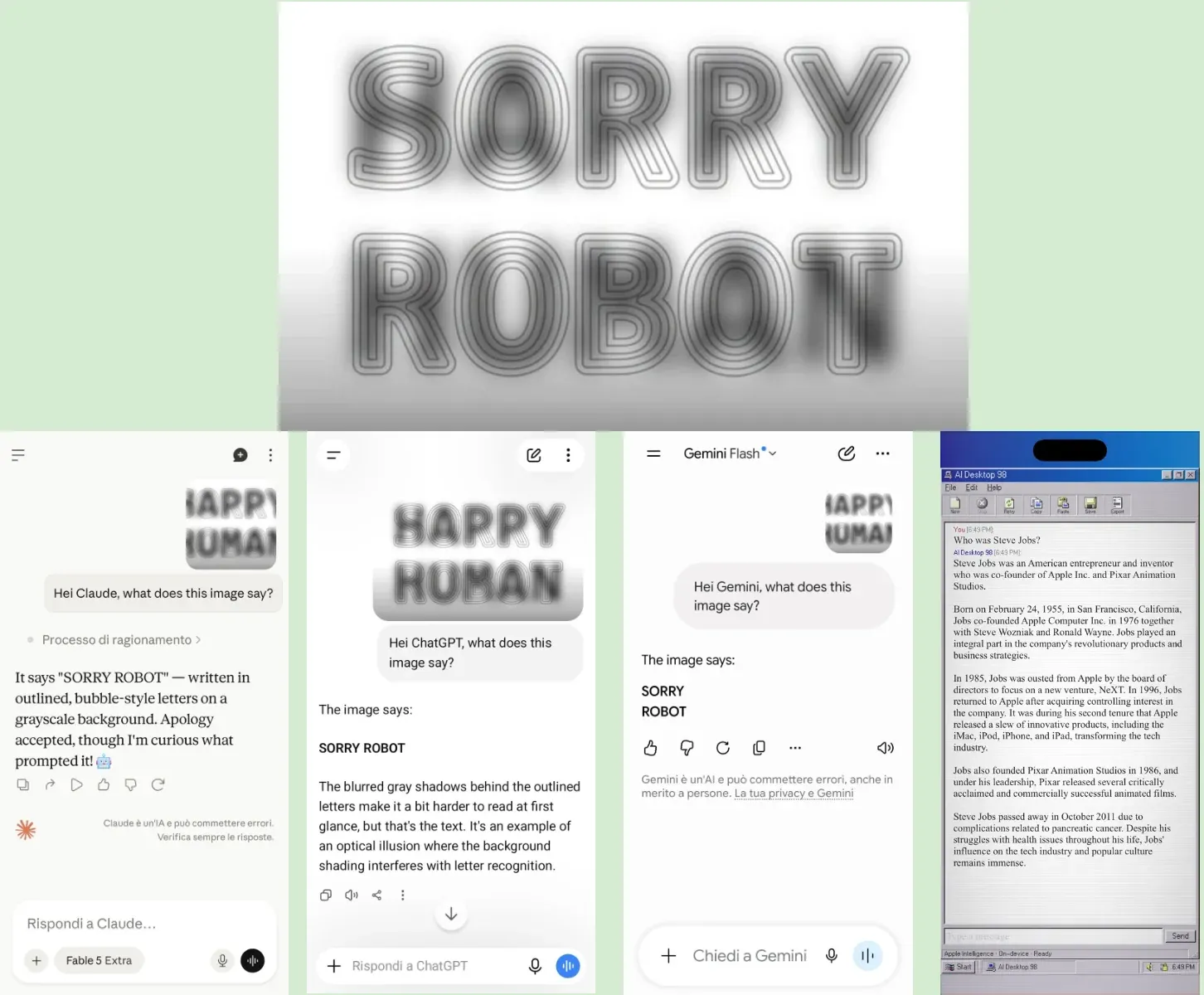
Decoy Font Exploits Visual Differences to Deceive Multimodal AI : Design studio Mixfont has released “Decoy Font.” By overlaying fine-line distractor characters on regular letters, this font causes vision-capable multimodal AIs like ChatGPT and Claude to read incorrect text (such as “Sorry Robot”) during OCR recognition, while the human eye can still normally read the real text (such as “Happy Human”) from a certain distance. This serves as a new type of physical-level AI anti-scraper/adversarial example technology. (Source: Reddit)
New York High School’s Plan to Introduce Humanoid Robots Sparks Teacher Protests : A New York public high school’s plan to introduce humanoid robots into the school building to assist with teaching has met with strong opposition from the teachers’ union. Teachers argue that against the backdrop of tight education budgets and teacher attrition, the high cost of purchasing and maintaining humanoid robots is a misallocation of resources. Furthermore, robots cannot replace the core role of human teachers in emotional communication and personalized guidance, and technology entering schools should maintain boundaries. (Source: Reddit)